
- Puesto en BGG
- BGG #1180
- Puntuación BGG
- 7,5
Conflict of Heroes: Awakening the Bear! – Russia 1941-42
- 1–4 jugadores
- 120 min
- Complejidad 3,0/5
- 2008
2012
Ayuda con las reglas de The Battle of Stalingrad
Explicaciones claras de turnos, efectos de cartas y situaciones dudosas, con referencias a fuentes oficiales e historial de preguntas guardado.

Para 2 jugadores
¿Qué quieres saber?
Las respuestas salen del reglamento oficial, con la página para comprobarlo.
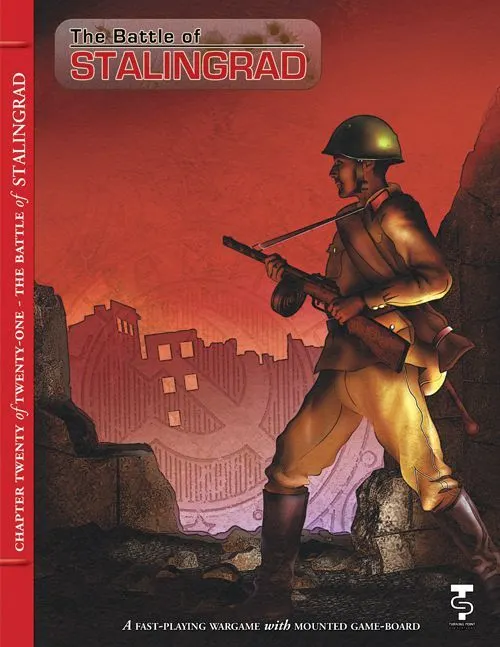
The Battle of Stalingrad es un juego de mesa publicado en 2012 para 2 jugadores. Fue diseñado por Hjalmar Gerber y sus mecánicas principales son Dice Rolling, Hexagon Grid y Simulation.





En inglés
From the publisher's website: Each player will take the role of the operational theater commander. You still have leaders with short names and shorter tempers looking over your shoulder and telling you want to do (handled in game terms with directives and procedures that turn your decision making choices as much into "How do I please him?" as "How do I beat the enemy?") Counters represent mostly Soviet armies and German corps, with "assets" that can be attached to both, and minor Axis allies represented as well. Map scale is 55km to the hex, with 2 turns per month. The Battle of Stalingrad manages to provide monster game nuances in a game small in size with innovative design. For example, the sequence of play is not the same for each side. And why should it be? The Axis and Soviet armies do not do the same tasks each turn, because their armies operated differently. The Soviet player actually allocates supplies as he sees fit. Does he reward success or try to stave off defeat? Both players use Tactical and Strategic movement, as they move their forces around the battlefield. German Primary and Secondary objectives are determined randomly (and hidden from the Soviets!). Side operations in the Caucasus offer additional victory points but occupy units to achieve them. Are the points worth the cost? Operation Uranus, the great Soviet counteroffensive, has optional start times, with incentives for delay (if the rest of the Soviet front can hold out!). Sudden death victory is possible for both sides, encouraging that extra effort that could win it all...or leave one exposed and exhausted. At the end of the game, key point adjustments and multipliers get factored in and compared. Short of the Sudden Death victory, which side really "wins" can be in doubt to the very end. As it should be, in a situation like this. Part of the TPS, "Decisive Battles" series That means straightforward rules, key insights into the history behind the game, and designs aimed at one-session conclusions and high replay value. With shifting objectives and variable entry times for key units, no two Stalingrad games will play the same.
Según el catálogo, The Battle of Stalingrad admite 2 jugadores. Es el número de jugadores indicado por la editorial, así que el juego está diseñado exactamente para esa cantidad de participantes. Las variantes para otros tamaños de grupo, si existen, se describen en el reglamento de tu edición; consúltalo antes de preparar otra configuración.
The Battle of Stalingrad tiene una puntuación de complejidad de 2,2 sobre 5 según los jugadores de BoardGameGeek, lo que lo convierte en un juego algo ligero. La puntuación refleja cuánto conocimiento de reglas, planificación y toma de decisiones exige una partida típica. Los juegos exigentes requieren una explicación inicial más larga, así que conviene usar una guía de preparación.
The Battle of Stalingrad pertenece a estas categorías: Wargame y World War II. Sus mecánicas principales son Dice Rolling, Hexagon Grid y Simulation. Las categorías describen el tema y la ambientación de un juego, mientras que las mecánicas describen lo que los jugadores hacen realmente en su turno. Cada mecánica lleva a una página del catálogo con juegos similares.
Los autores acreditados de The Battle of Stalingrad son: Hjalmar Gerber. Estos créditos proceden de los datos publicados del juego y nombran a las personas responsables de su diseño, no a ilustradores ni editoriales. Las páginas de autor de MeepleRules reúnen otros títulos de los mismos autores, algo útil cuando un juego te gusta y buscas otros parecidos.
El catálogo clasifica The Battle of Stalingrad como juego base. Se juega por sí solo con los componentes de la caja y no requiere ningún otro título. Las expansiones, si existen, añaden contenido o reglas nuevas y aparecen por separado en el catálogo con un enlace a este juego base.