
- Puesto en BGG
- BGG #2444
- Puntuación BGG
- 8,0
Successors (Fourth Edition)
- 2–5 jugadores
- 300 min
- Complejidad 4,2/5
- 2021
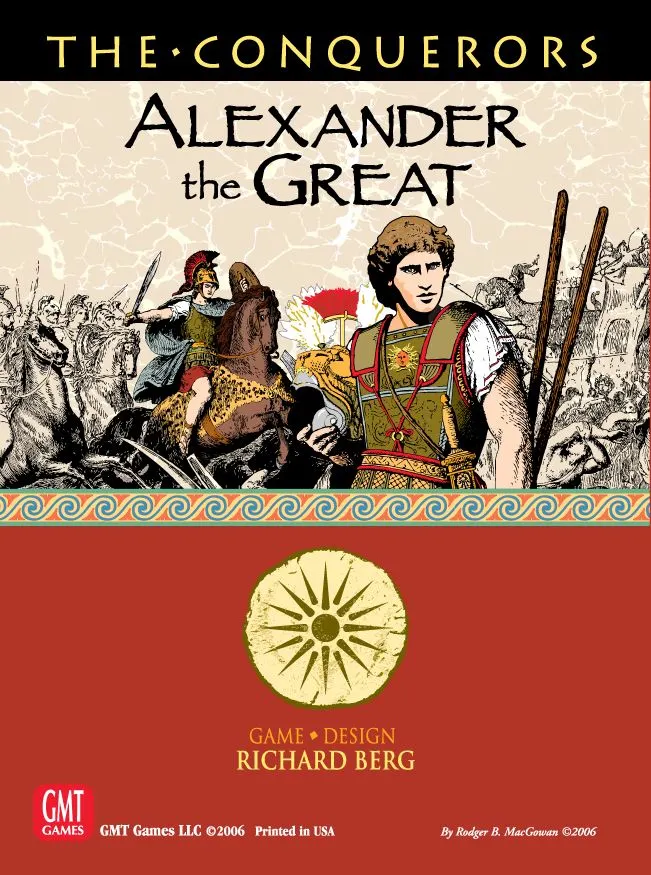
2006
Ayuda con las reglas de The Conquerors: Alexander the Great
Explicaciones claras de turnos, efectos de cartas y situaciones dudosas, con referencias a fuentes oficiales e historial de preguntas guardado.
Para 1 jugador
¿Qué quieres saber?
Las respuestas salen del reglamento oficial, con la página para comprobarlo.
The Conquerors: Alexander the Great es un juego de mesa publicado en 2006 para 1–2 jugadores, con partidas de 240 minutos y a partir de 12 años. Fue diseñado por Richard H. Berg y sus mecánicas principales son Variable Player Powers, Dice Rolling y Point to Point Movement.
En inglés
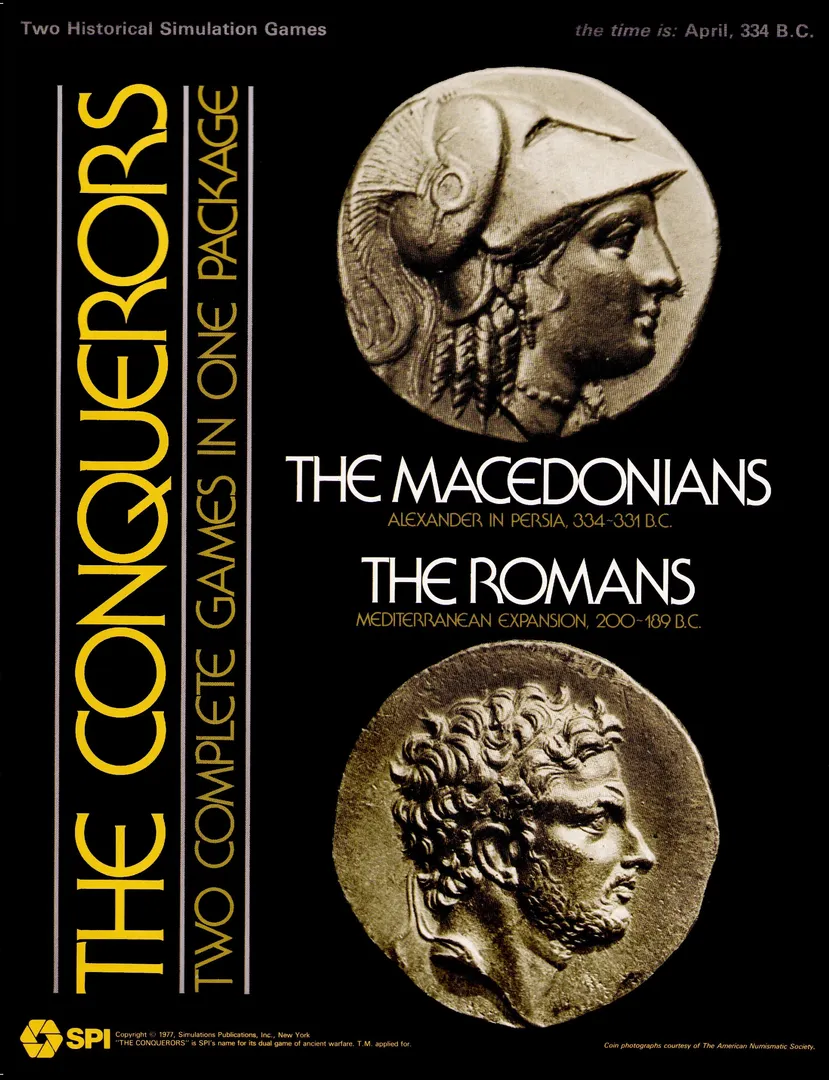
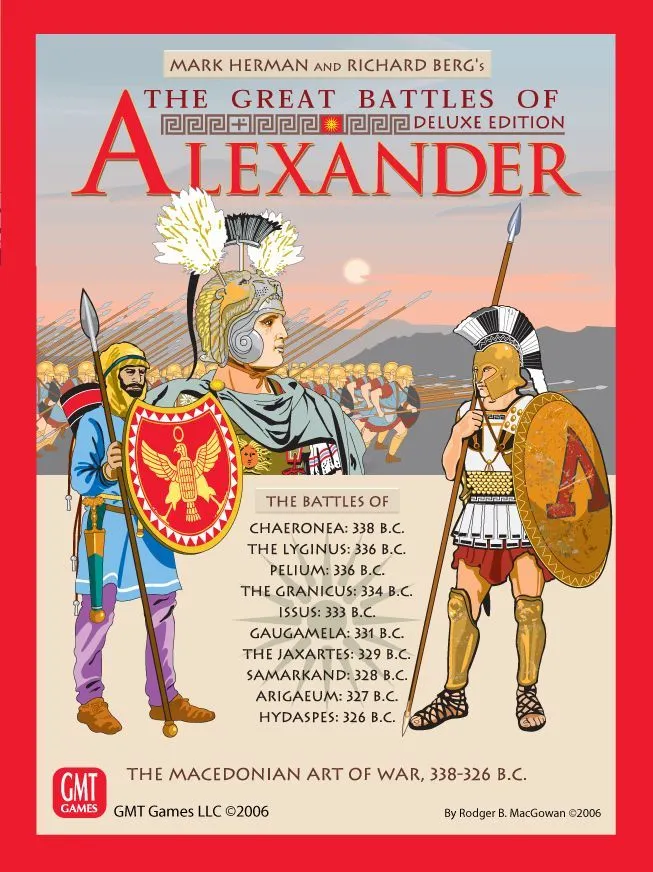
The Conquerors is a projected series of games that will focus on history's great conquerors, those figures whose vision, greed for power, and remarkable military abilities have changed the map of the world, sometimes fleetingly, often permanently. The first game in this new series is Alexander the Great, a game that covers the career of the fabled King of Macedon, from his ascension to the throne until his army has "Hellenized" half the known world. The Conquerors: Alexander the Great uses an interesting new system that gives the players a feel for the era and the problems of campaigning therein. For one, there are no turns. Play keeps going until the Macedonian Player wins or Alexander dies. And winning, for the Macedonian Player, is no mean feat. Yes, his armies are mighty, but Alexander is a game in which the player must not just win battles, but also overcome the logistics of campaigning … building armies, getting them to where they're needed, understanding battle fatigue and weariness, dealing with personalities, and adapting to the society you are trying to seize. The player's goals, as Alexander, are multiple and difficult. To win, he must maintain his hegemony of Greece, become Great King and establish his Deity. The latter two require him to achieve eight separate, often difficult objectives, including controlling key provinces, building Alexandria, gaining control of the Royal Family, and invoking proskynesis (homage by prostration). A clever Persian player has many ways to stop the Macedonian from earning these, and the money and manpower to help him. Given Alexander's "greatness," play testers found the game to be remarkably balanced. The Conquerors: Alexander the Great uses cards, but it is not a game "driven" by cards - this is not a Paths of Glory system game. Rather, it uses them to provide the players with the historical opportunities and outside events that shaped Alexander's campaigns. The cards cover such events as Alexander's drinking problems, the shadowy figure of Bagoas, the friendly presence of Black Cleitus, and possibilities of assassination, mass marriages, Spartan revolts … even a Honeymoon for the weary Macedonians! Combat uses a fun, two-tiered battle resolution system that accounts for many more factors than just numbers, and often leaves armies- even winning armies- in far worse shape than you may want. The Conquerors: Alexander the Great is a game rich in historical detail, a game that places major burdens on the players to achieve victory, and a game that's great fun! It can be played by two to four gamers in around 4 hours, and it can be played solitaire. TIME SCALE: 4 months per turn MAP SCALE: 150 miles per hex UNIT SCALE: Brigade, Division, Corps, and Army NUMBER OF PLAYERS: 1-2 COMPONENTS: 140 half-inch counters & 88 5/8-inch counters 55 Event cards One 22"x34" Mapsheet 24-page Rule Book 2 Player Aid Cards Three six-sided dice Designed by Richard Berg Developed by Bill Ramsay (from GMT webpage)
Según el catálogo, The Conquerors: Alexander the Great admite de 1 a 2 jugadores. Este intervalo corresponde al número de jugadores indicado por la editorial, así que el juego puede prepararse para cualquier grupo dentro de ese margen. La preparación, algunas reglas y la puntuación pueden variar según el número de jugadores; consulta la configuración exacta en el reglamento de tu edición.
La duración indicada para The Conquerors: Alexander the Great es de 240 minutos, la estimación de la editorial para una partida completa. El tiempo real depende del grupo, del número de jugadores y del conocimiento de las reglas: las primeras partidas suelen alargarse y los grupos con experiencia terminan antes. La preparación y la explicación de las reglas no están incluidas.
El catálogo indica The Conquerors: Alexander the Great a partir de 12 años. Es la recomendación de la editorial y refleja la lectura necesaria, la complejidad de las reglas y las piezas pequeñas, no solo el tema. Los más pequeños a menudo pueden jugar con ayuda de un adulto: comprueba la edad recomendada en tu edición y la experiencia de tu grupo.
The Conquerors: Alexander the Great tiene una puntuación de complejidad de 2,8 sobre 5 según los jugadores de BoardGameGeek, lo que lo convierte en un juego algo ligero. La puntuación refleja cuánto conocimiento de reglas, planificación y toma de decisiones exige una partida típica. Los juegos exigentes requieren una explicación inicial más larga, así que conviene usar una guía de preparación.
The Conquerors: Alexander the Great pertenece a estas categorías: Wargame y Ancient. Sus mecánicas principales son Variable Player Powers, Dice Rolling y Point to Point Movement. Las categorías describen el tema y la ambientación de un juego, mientras que las mecánicas describen lo que los jugadores hacen realmente en su turno. Cada mecánica lleva a una página del catálogo con juegos similares.
Los autores acreditados de The Conquerors: Alexander the Great son: Richard H. Berg. Estos créditos proceden de los datos publicados del juego y nombran a las personas responsables de su diseño, no a ilustradores ni editoriales. Las páginas de autor de MeepleRules reúnen otros títulos de los mismos autores, algo útil cuando un juego te gusta y buscas otros parecidos.
El catálogo clasifica The Conquerors: Alexander the Great como juego base. Se juega por sí solo con los componentes de la caja y no requiere ningún otro título. Las expansiones, si existen, añaden contenido o reglas nuevas y aparecen por separado en el catálogo con un enlace a este juego base.