- Puesto en BGG
- BGG #12.359
- Puntuación BGG
- 7,0
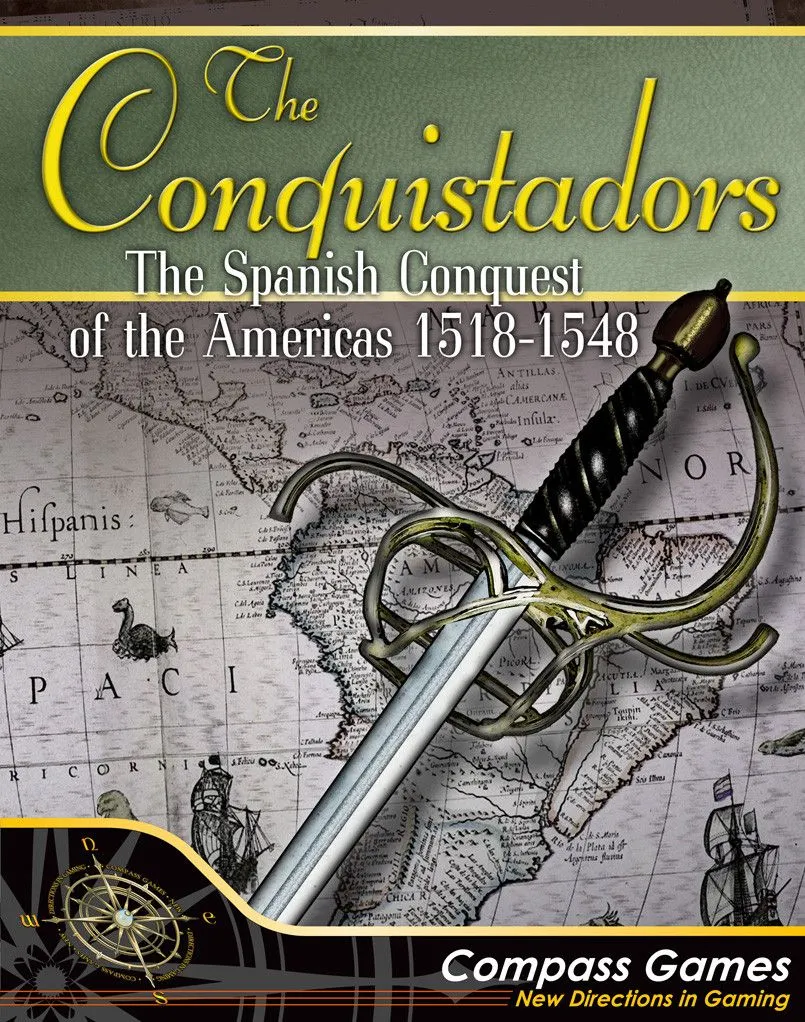
The Conquistadors: The Spanish Conquest of the Americas 1518-1548
2020
Ayuda con las reglas de The Conquistadors: The Spanish Conquest of the Americas 1518-1548
Explicaciones claras de turnos, efectos de cartas y situaciones dudosas, con referencias a fuentes oficiales e historial de preguntas guardado.
- 1–5 jugadores
- 180–360 min
- Complejidad 2,9/5

Para 1 jugador
Asistente de reglas de The Conquistadors: The Spanish Conquest of the Americas 1518-1548
¿Qué quieres saber?
Las respuestas salen del reglamento oficial, con la página para comprobarlo.
The Conquistadors: The Spanish Conquest of the Americas 1518-1548 es un juego de mesa publicado en 2020 para 1–5 jugadores y con partidas de 180 a 360 minutos. Fue diseñado por Jon Southard y sus mecánicas principales son Dice Rolling, Point to Point Movement y Simulation.
Sobre el juego
En inglés
In the half-century after Columbus, small bands of daring Spanish adventurers conquered Central and South America, destroying the huge armies of long-established native empires in the process. Some won great fortunes in gold, while many others only died an early death. These men were The Conquistadors. In this partly card-driven, partly procedural game —a brand-new design from Jon Southard — one to five players each control a group of conquistadors, trying to discover and loot the civilizations of the Americas and end up with the most gold and power. A game of The Conquistadors begins with the outline of Central and South America as known in 1520. Your first task will be to seek out and discover the great Indian cities and empires -- which may appear in their historical locations, or in quite different places. Once you discover where the cities and empires are, it is time to gather gold. You might battle and plunder the Indians, or your best plan may be to attempt diplomacy and enlist them as allies -- especially if you have an Indian interpreter in your expedition. Like Francisco Pizarro, you might try a Sudden Shock Attack to capture a native king and extort a fat ransom. Always you must be sure to keep the Governor happy, or he may issue a warrant for your arrest. Beware of native uprisings, painted warriors, and poisoned darts around the next corner, and watch out for defection in your own ranks. If you fall behind in the race for gold, you might try to descend the Amazon or discover the Fountain of Youth. And when you are really in a tight place, perhaps you can appeal to Mano de Dios (the Hand of God) to bail you out. The Conquistadors is playable by from 1 to 5 players, with an introductory Basic Game, a more involved Standard Game, and some optional rules. While the normal game system requires 2 or more players, solitaire play is enabled by a special solitaire module. Product Information: Complexity: Low to Medium 3/4/5 out of 10 (Basic/Standard/plus Optional Rules) Solitaire Suitability: High (solitaire scenario), Low (other scenarios) Time Scale: variable, one turn = 3 to 18 months Map Scale: abstract, point-to-point area map covers Mexico, Central America, Colombia, Ecuador, and Peru Unit Scale: Individual leaders, 3 to 25 Spanish troops, up to several thousand Indian troops Players: one or two Playing Time: three hours (Basic Game), four to six hours (Standard Game) Contents Two Maps – each approximately 28 x 20" Two Countersheets (5/8” size) Deck of 130 Strategy/Conquistador Cards Deck of 26 Asset Cards Rules booklet Four Player Aid Cards One Logsheet 8.5” x 11” Two 6-sided dice —description from the publisher
Diseñadores
Editoriales
- Compass Games
Preguntas y respuestas
Según el catálogo, The Conquistadors: The Spanish Conquest of the Americas 1518-1548 admite de 1 a 5 jugadores. Este intervalo corresponde al número de jugadores indicado por la editorial, así que el juego puede prepararse para cualquier grupo dentro de ese margen. La preparación, algunas reglas y la puntuación pueden variar según el número de jugadores; consulta la configuración exacta en el reglamento de tu edición.
La duración indicada para The Conquistadors: The Spanish Conquest of the Americas 1518-1548 es de 180 a 360 minutos, la estimación de la editorial para una partida completa. El tiempo real depende del grupo, del número de jugadores y del conocimiento de las reglas: las primeras partidas suelen alargarse y los grupos con experiencia terminan antes. La preparación y la explicación de las reglas no están incluidas.
The Conquistadors: The Spanish Conquest of the Americas 1518-1548 tiene una puntuación de complejidad de 2,9 sobre 5 según los jugadores de BoardGameGeek, lo que lo convierte en un juego algo ligero. La puntuación refleja cuánto conocimiento de reglas, planificación y toma de decisiones exige una partida típica. Los juegos exigentes requieren una explicación inicial más larga, así que conviene usar una guía de preparación.
The Conquistadors: The Spanish Conquest of the Americas 1518-1548 pertenece a estas categorías: Wargame, Exploration y Renaissance. Sus mecánicas principales son Dice Rolling, Point to Point Movement y Simulation. Las categorías describen el tema y la ambientación de un juego, mientras que las mecánicas describen lo que los jugadores hacen realmente en su turno. Cada mecánica lleva a una página del catálogo con juegos similares.
Los autores acreditados de The Conquistadors: The Spanish Conquest of the Americas 1518-1548 son: Jon Southard. Estos créditos proceden de los datos publicados del juego y nombran a las personas responsables de su diseño, no a ilustradores ni editoriales. Las páginas de autor de MeepleRules reúnen otros títulos de los mismos autores, algo útil cuando un juego te gusta y buscas otros parecidos.
El catálogo clasifica The Conquistadors: The Spanish Conquest of the Americas 1518-1548 como juego base. Se juega por sí solo con los componentes de la caja y no requiere ningún otro título. Las expansiones, si existen, añaden contenido o reglas nuevas y aparecen por separado en el catálogo con un enlace a este juego base.