

- Puesto en BGG
- BGG #31.475
- Puntuación BGG
- 4,4
The Game of Life
- 2–6 jugadores
- 60 min
- Complejidad 1,2/5
- 1960
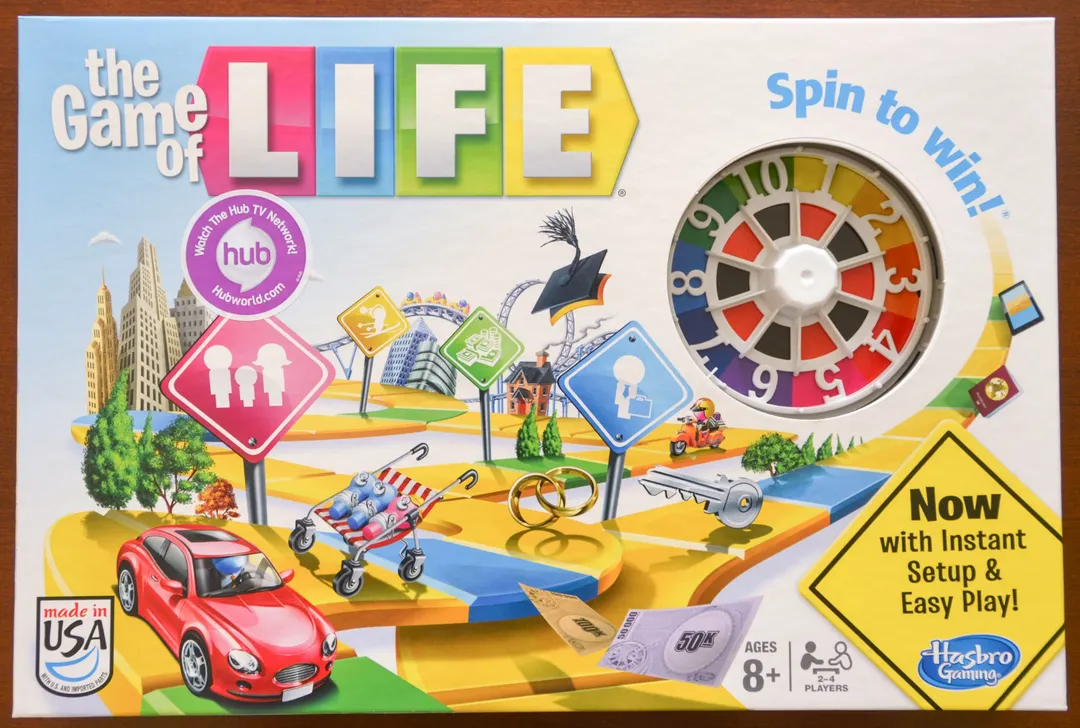
2013
Ayuda con las reglas de The Game of Life (2013- Editions)
Explicaciones claras de turnos, efectos de cartas y situaciones dudosas, con referencias a fuentes oficiales e historial de preguntas guardado.
¿Qué quieres saber?
Las respuestas salen del reglamento oficial, con la página para comprobarlo.
The Game of Life (2013- Editions) es un juego de mesa publicado en 2013 para 2–4 jugadores, con partidas de 60 minutos y a partir de 8 años. Sus mecánicas principales son Roll / Spin and Move y Simulation.








En inglés
This game attempts to mirror life events many people go through from going to college, raising a family, buying a home, working and retiring. The intent of the game is to have the most assets at the end of the game. Assets are earned primarily by passing Payday spots on the game board. Money is also earned (and sometimes lost) by drawing Action cards, which assign set amounts or multiples of the wheel spin. There is a very linear board that you move along by spinning a wheel. There are a handful of intersections where you can choose to go one direction or another but they ultimately have similar spaces and meet back up quickly. The first one is a decision to either attend college (payment due and a longer track), or not - with different career cards drawn as a result of that decision. There are a handful of choices regarding house speculation, but for the most part it is a game of luck. This game makes a number of updates to older games in the game family. The maximum number of players has been reduced from 6 to 4, and a number of new cards and concepts have been introduced, increasing the randomness of asset collection.
Según el catálogo, The Game of Life (2013- Editions) admite de 2 a 4 jugadores. Este intervalo corresponde al número de jugadores indicado por la editorial, así que el juego puede prepararse para cualquier grupo dentro de ese margen. La preparación, algunas reglas y la puntuación pueden variar según el número de jugadores; consulta la configuración exacta en el reglamento de tu edición.
La duración indicada para The Game of Life (2013- Editions) es de 60 minutos, la estimación de la editorial para una partida completa. El tiempo real depende del grupo, del número de jugadores y del conocimiento de las reglas: las primeras partidas suelen alargarse y los grupos con experiencia terminan antes. La preparación y la explicación de las reglas no están incluidas.
El catálogo indica The Game of Life (2013- Editions) a partir de 8 años. Es la recomendación de la editorial y refleja la lectura necesaria, la complejidad de las reglas y las piezas pequeñas, no solo el tema. Los más pequeños a menudo pueden jugar con ayuda de un adulto: comprueba la edad recomendada en tu edición y la experiencia de tu grupo.
The Game of Life (2013- Editions) tiene una puntuación de complejidad de 1,2 sobre 5 según los jugadores de BoardGameGeek, lo que lo convierte en un juego ligero. La puntuación refleja cuánto conocimiento de reglas, planificación y toma de decisiones exige una partida típica. Los juegos exigentes requieren una explicación inicial más larga, así que conviene usar una guía de preparación.
The Game of Life (2013- Editions) pertenece a estas categorías: Economic y Children's Game. Sus mecánicas principales son Roll / Spin and Move y Simulation. Las categorías describen el tema y la ambientación de un juego, mientras que las mecánicas describen lo que los jugadores hacen realmente en su turno. Cada mecánica lleva a una página del catálogo con juegos similares.
El catálogo clasifica The Game of Life (2013- Editions) como juego base. Se juega por sí solo con los componentes de la caja y no requiere ningún otro título. Las expansiones, si existen, añaden contenido o reglas nuevas y aparecen por separado en el catálogo con un enlace a este juego base.