
- Puesto en BGG
- BGG #8645
- Puntuación BGG
- 8,0
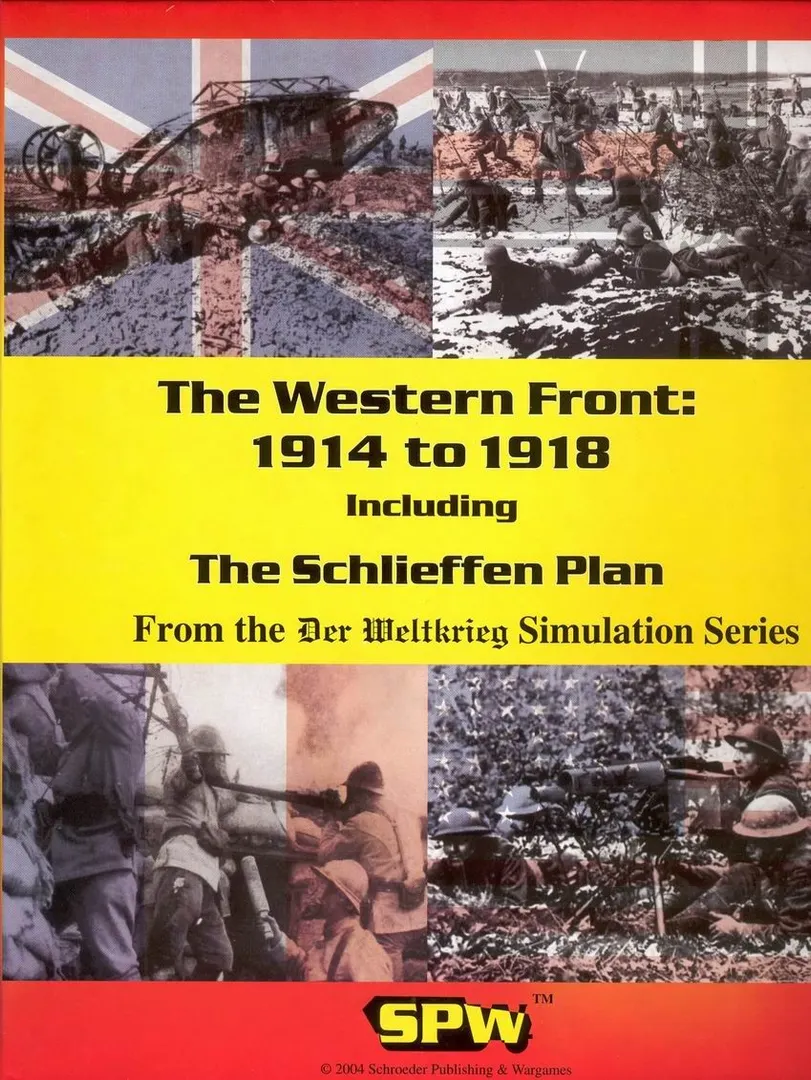
The Western Front: 1914 to 1918
- 2 jugadores
- 360 min
- Complejidad 3,4/5
- 2004
2003
Ayuda con las reglas de The Italian Front: 1915-1918
Explicaciones claras de turnos, efectos de cartas y situaciones dudosas, con referencias a fuentes oficiales e historial de preguntas guardado.
Para 2 jugadores
¿Qué quieres saber?
Las respuestas salen del reglamento oficial, con la página para comprobarlo.
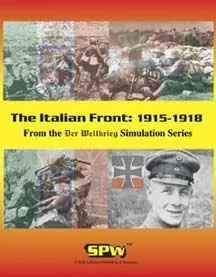
The Italian Front: 1915-1918 es un juego de mesa publicado en 2003 para 2 jugadores, con partidas de 360 minutos y a partir de 12 años. Fue diseñado por David Schroeder y sus mecánicas principales son Dice Rolling y Hexagon Grid.





En inglés
Five Separate Scenarios PLUS Campaign Game PLUS Links to Other Games of the Series. May 1915 - First Isonzo Italy decides to enter the war. Once a member of the Triple Alliance with Germany and Austria-Hungary, Italy now sides with the Entente. Italy's dream is of annexing Austro-Hungarian territory inhabited by ethnic Italians. Austria-Hungary views Italy not only as traitorous, but also as its traditional enemy. The stage is set for a bloodbath. The Italian army attempts to cross a narrow path into Austria-Hungary, across the Isonzo River towards Trieste. There the Austro-Hungarian army is dug in and waiting for them. May 1916 - The Strafexpedition The Chief of Staff of the Austro Hungarian army, Conrad von Hotzendorff, feels the time is right to punish Italy. He ignores the German chief Falkenhayn who foresees problems on the Eastern Front. Conrad masses guns and men in the Tirol for a strike to cut off the Italian armies to the east along the Isonzo. The plan looks good on paper, but the attacks will take place across rugged country. The Italians in the southern Tirol have neglected their rear area defenses. Italian reinforcements rush to the area. It is a dicey affair, but the Italian lines hold fast. The peril to the Italian forces along the Isonzo is checked. May 1917 - Tenth Isonzo Again and again and again, valiant Italian infantry has been fed into the maelstrom of the Isonzo. Each battle differs from the last only by their increasing intensity. The 9th Isonzo battle brought the capture of Gorizia. Now the Italians work to enlarge their holdings on the east of the bloody Isonzo. In the end, each side is once again exhausted. The Italians have become weary of the war. Yet, the Austrians feel that one more attack along the Isonzo may be the one that breaks their army first. October 1917 - Caporreto With Russia just about finished, the German army turns to help its beleaguered ally. Crack German divisions are sent to the Italian front to remove the mortal threat to Austria-Hungary. The Austrians reinforce the front with specially trained assault units. The Italians along the headwaters of the Isonzo are overwhelmed. German and Austrian units pour through the mountain gaps and into the Italian rear. Italian units melt away in the rush to get out of the trap. The gains of the Isonzo battles are permanently lost. Enterprising Austrians cross the Tagliamento River. Further Italian retreats ensue. The rout of the Italians ends along the banks of the Piave, the last natural barrier before Venice and the open country of the Po Valley. But Italy is not defeated, and her citizens rally anew to the cause. June 1918 - Albrecht & Radetzky The Germans are on the attack in France. Conrad wants in on the glory. Although the soldiers of the once proud Habsburg armies are weak and emaciated, they will have to go on the offensive one more time. As so often before, the Austrians split their strength between Conrad's armies in the Tirol and the forces along the Piave. Conrad's attacks from the north are ineffective. Once again the Marshal has made unrealistic plans his forces cannot execute. In the rugged mountain terrain only a single division manages to make any gains. Initial attacks across the Piave are successful, but quickly bog down. The Austrians have crossed the river, but cannot push far enough forward on the west bank to keep their pontoon bridges out of range of Italian artillery. Unable to advance, and unable to maintain viable supply lines across the river, they cross back, only to await the end. CONTENTS: 560 Die-Cut Counters One 34in x 22in Map Scenario Rulebook, Charts, and Tables Scale is 20km / hex 4 days per turn Unit Sizes: Division / Brigade (from the publisher's website and user's description)
Según el catálogo, The Italian Front: 1915-1918 admite 2 jugadores. Es el número de jugadores indicado por la editorial, así que el juego está diseñado exactamente para esa cantidad de participantes. Las variantes para otros tamaños de grupo, si existen, se describen en el reglamento de tu edición; consúltalo antes de preparar otra configuración.
La duración indicada para The Italian Front: 1915-1918 es de 360 minutos, la estimación de la editorial para una partida completa. El tiempo real depende del grupo, del número de jugadores y del conocimiento de las reglas: las primeras partidas suelen alargarse y los grupos con experiencia terminan antes. La preparación y la explicación de las reglas no están incluidas.
El catálogo indica The Italian Front: 1915-1918 a partir de 12 años. Es la recomendación de la editorial y refleja la lectura necesaria, la complejidad de las reglas y las piezas pequeñas, no solo el tema. Los más pequeños a menudo pueden jugar con ayuda de un adulto: comprueba la edad recomendada en tu edición y la experiencia de tu grupo.
The Italian Front: 1915-1918 tiene una puntuación de complejidad de 2,9 sobre 5 según los jugadores de BoardGameGeek, lo que lo convierte en un juego algo ligero. La puntuación refleja cuánto conocimiento de reglas, planificación y toma de decisiones exige una partida típica. Los juegos exigentes requieren una explicación inicial más larga, así que conviene usar una guía de preparación.
The Italian Front: 1915-1918 pertenece a estas categorías: Wargame y World War I. Sus mecánicas principales son Dice Rolling y Hexagon Grid. Las categorías describen el tema y la ambientación de un juego, mientras que las mecánicas describen lo que los jugadores hacen realmente en su turno. Cada mecánica lleva a una página del catálogo con juegos similares.
Los autores acreditados de The Italian Front: 1915-1918 son: David Schroeder. Estos créditos proceden de los datos publicados del juego y nombran a las personas responsables de su diseño, no a ilustradores ni editoriales. Las páginas de autor de MeepleRules reúnen otros títulos de los mismos autores, algo útil cuando un juego te gusta y buscas otros parecidos.
El catálogo clasifica The Italian Front: 1915-1918 como juego base. Se juega por sí solo con los componentes de la caja y no requiere ningún otro título. Las expansiones, si existen, añaden contenido o reglas nuevas y aparecen por separado en el catálogo con un enlace a este juego base.