

- Puesto en BGG
- BGG #226
- Puntuación BGG
- 7,5
Memoir '44
- 2–4 jugadores
- 30–45 min
- Complejidad 2,3/5
- 2004
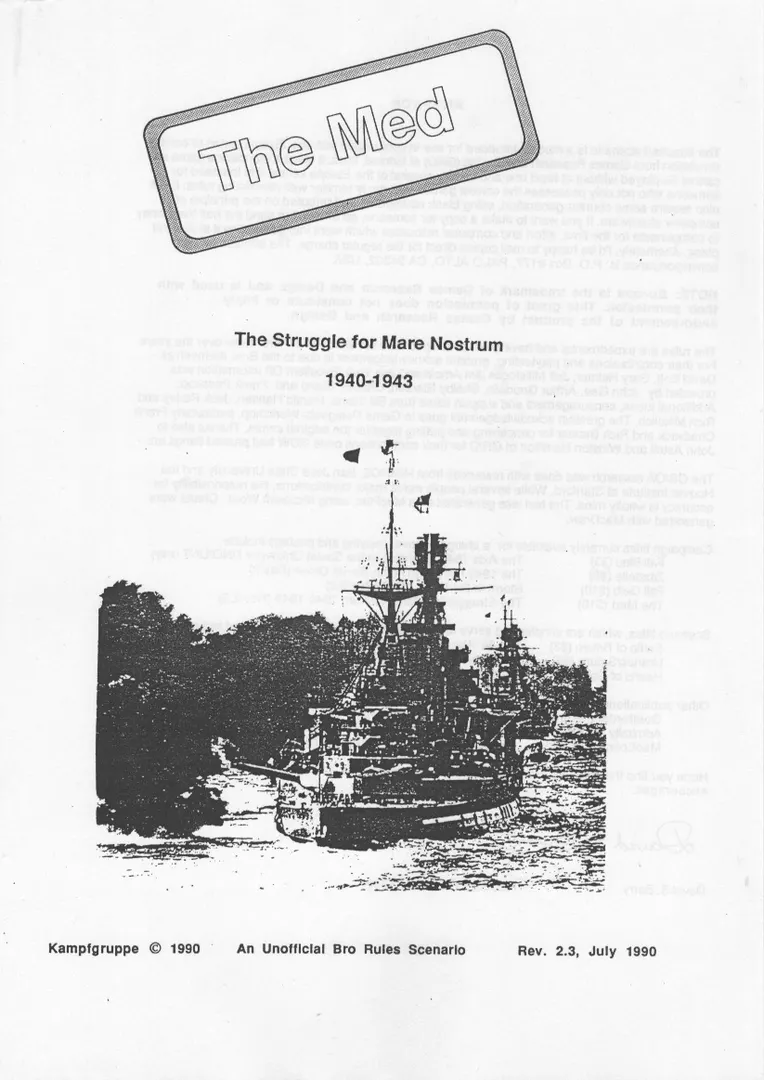
1990
Ayuda con las reglas de The Med
Explicaciones claras de turnos, efectos de cartas y situaciones dudosas, con referencias a fuentes oficiales e historial de preguntas guardado.
¿Qué quieres saber?
Las respuestas salen del reglamento oficial, con la página para comprobarlo.
The Med es una expansión de juego de mesa publicada en 1990 para 2–4 jugadores. Fue diseñado por David S. Berry y sus mecánicas principales son Hexagon Grid.
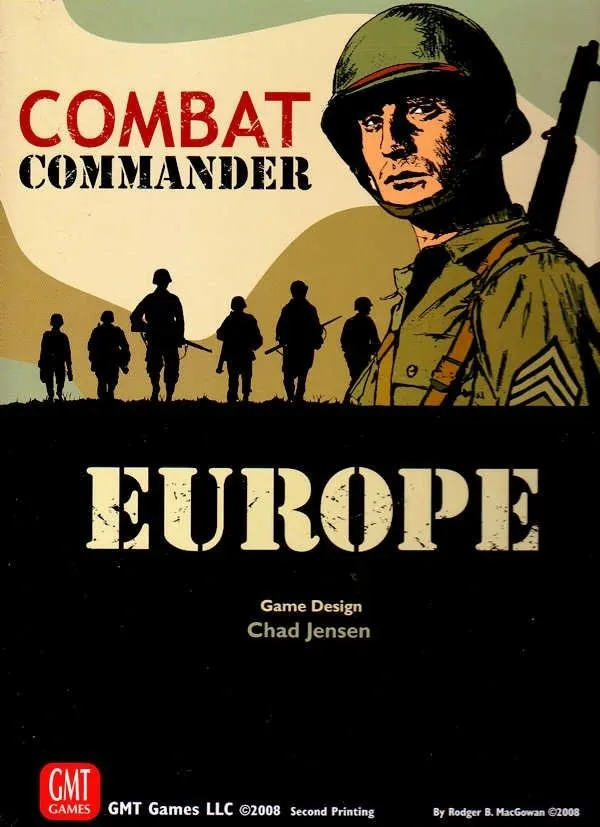





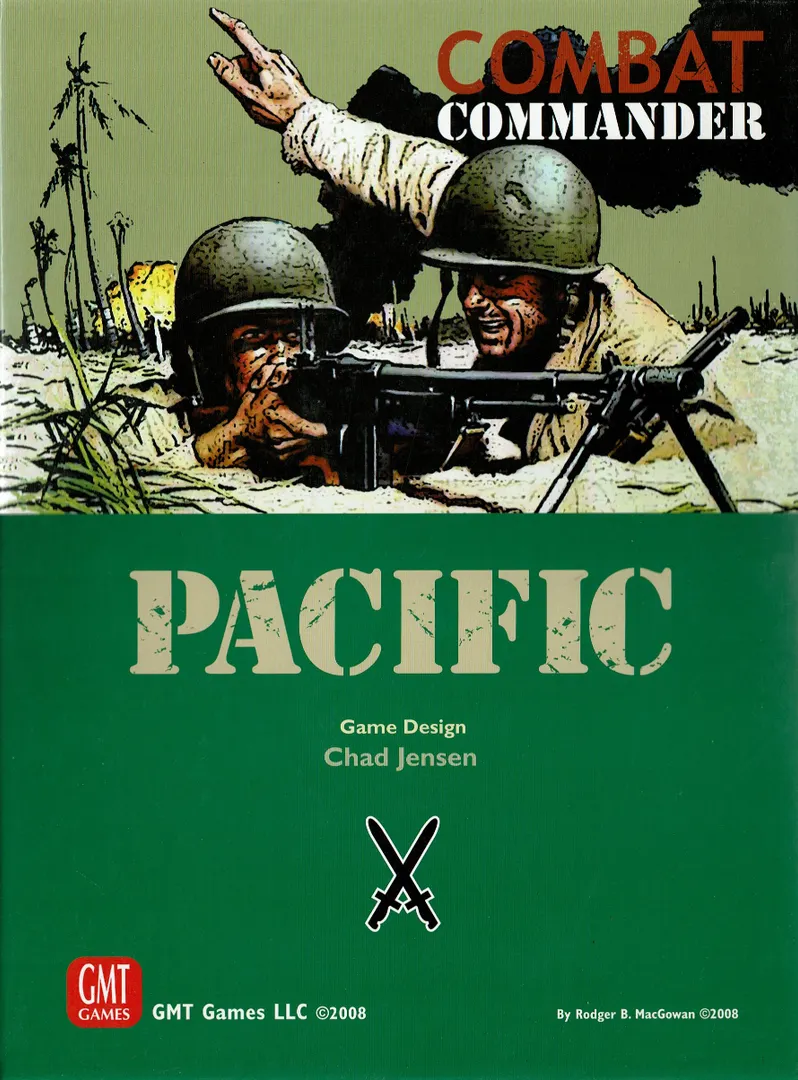
En inglés
The Med is a simulation of the campaign in the Eastern Mediterranean during the years between 1940 and 1943. It is a complex simulation of the same order as FITE/SE. But with experience, an extensive Europa library and this package, you can simulate the strategic alternatives open to the Italian Commando Supremo from the entry of Italy into the war through the three years to the point at which the Allies were poised to invade. As might be expected, initiative rests largely with the Axis. The British/Allied side remains on the strategic defensive until late in the game. While it can be played two-player, a better game ensues with multiple players on each side with different players for ground/air and naval commands. Operational commands, such as the Balkans, Levant, Iraq and East Africa, provide opportunities for temporary commanders to participate within the larger campaign. [...] Most components used in The Med are available in the published GDW aka GR/D games A. Counters Available. Marlta Merkur - German Army, Luftwaffe, Yugoslavs, Greeks, Italian 2nd 9th 11th armies Western Desert - British Army, RAF, Italians in Libya, DAK, Vichy in Levant, Commonwealth forces The Near East - Egyptians, Iraquis, Iranians, Turks Fire in the East - Rules and Combat tables, modified Their Finest Hour - Some British naval counters, naval gunnery chart Torch - Americans, Vichy in N.Africa, Italian armor S8T, issue #128 - Italian East Africa, British African units B. Maps Required. The maps of the region which are essential for play are: 14, 15A - Marita Merkur [Yugoslavia & Greece] 18, 19 - Western Desert [Lybia & Egypt] 24, 25 - Torch [Morocco, Algeria & Tunisia] 20, 21, 22 - The Near East [Palestine, Iraq, Iran & Turkey] 26, 27 - Unavailable-use sketch in this pack [Italy, which is on Second Front maps, published after this module] The following maps may be ignored if both USSR and Turkey are excluded from play, which was the historic case: 3B, 4A - Fire in the East [Southern USSR] 9A - Scorched Earth [Southern USSR] (from the introduction) Game length: Jul I 1940 to Jun I 1943 (each month has 2 turns) Contents: Rules (24 pages) Allied, Axis and Neutral Order of Battle (27 pages) Tables (2 pages) Strategic Display (1 British, 1 Italian - 2 pages) Ship Status Charts (Britain: 6 pages - others: 1 page - Italy: 3 pages) 6 Port Charts (6 pages) 2 Task Composition chart (2 identical pages) Italy sketch map (1 page) Air Units Counters (2 pages)
Según el catálogo, The Med admite de 2 a 4 jugadores. Este intervalo corresponde al número de jugadores indicado por la editorial, así que el juego puede prepararse para cualquier grupo dentro de ese margen. La preparación, algunas reglas y la puntuación pueden variar según el número de jugadores; consulta la configuración exacta en el reglamento de tu edición.
The Med pertenece a estas categorías: World War II. Sus mecánicas principales son Hexagon Grid. Las categorías describen el tema y la ambientación de un juego, mientras que las mecánicas describen lo que los jugadores hacen realmente en su turno. Cada mecánica lleva a una página del catálogo con juegos similares.
Los autores acreditados de The Med son: David S. Berry. Estos créditos proceden de los datos publicados del juego y nombran a las personas responsables de su diseño, no a ilustradores ni editoriales. Las páginas de autor de MeepleRules reúnen otros títulos de los mismos autores, algo útil cuando un juego te gusta y buscas otros parecidos.
El catálogo clasifica The Med como expansión. Las expansiones añaden contenido, reglas o escenarios a un juego base existente y normalmente no se pueden jugar solas. Comprueba en la caja o en la descripción de la editorial qué juego base se necesita y asegúrate de que tu edición de ese juego sea compatible con esta expansión.