
- Puesto en BGG
- BGG #18.092
- Puntuación BGG
- 8,0
World Cup!
- 2–16 jugadores
- 30–120 min
- 2023
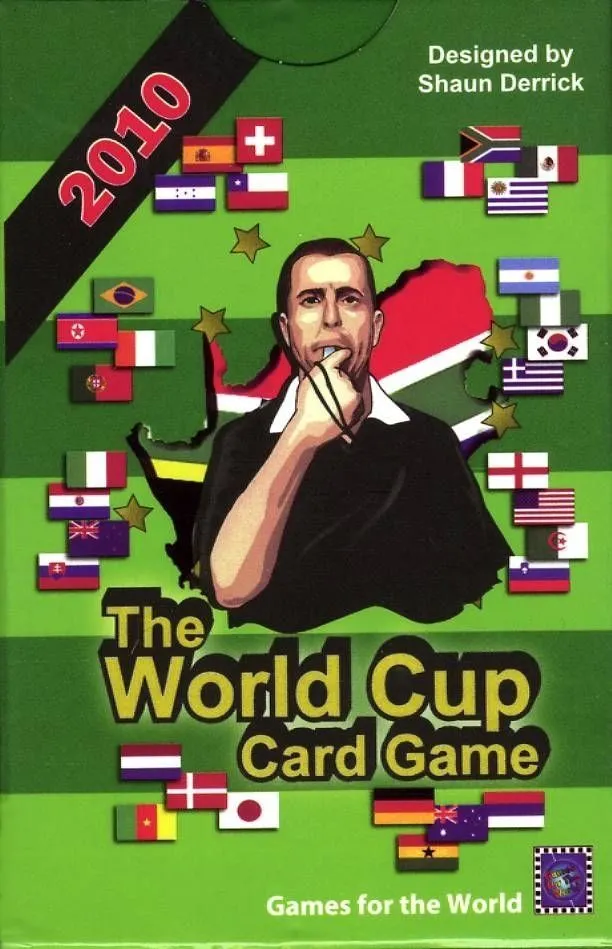
2010
Ayuda con las reglas de The World Cup Card Game 2010
Explicaciones claras de turnos, efectos de cartas y situaciones dudosas, con referencias a fuentes oficiales e historial de preguntas guardado.
¿Qué quieres saber?
Las respuestas salen del reglamento oficial, con la página para comprobarlo.
The World Cup Card Game 2010 es un juego de mesa publicado en 2010 para 2–8 jugadores, con partidas de 75 minutos y a partir de 10 años. Fue diseñado por Shaun Derrick y sus mecánicas principales son Hand Management.
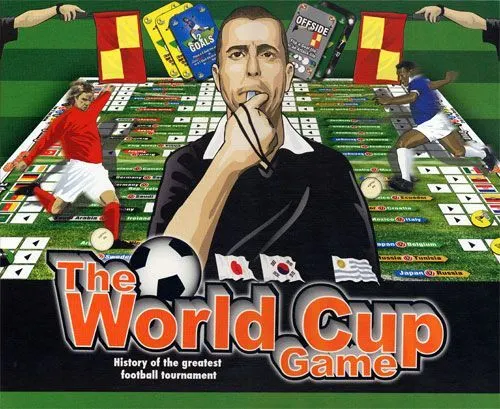






En inglés
The greatest single sports show on earth takes place in South Africa this year (2010). The World Cup Card Game allows players to play through the whole tournament in around 75mins. The game consists of 65 cards. 32 of these represent all the national teams taking part. Another 32 cards are Action cards which are used to create the scorelines for each match. The final card is a summary list of what the Action cards can be used for. All the teams are randomly divided between the players. These are kept face-down on the table in front of the player until required. Each group is played match by match. The players controlling the four teams in Group 1: South Africa, Mexico, Uruguay and France now reveal those Team cards. Each team card is coloured according to the national football team strip, it also shows the national flag and a note stating their best performance ever achieved in any World Cup tournament. There is also a grey rectangle with the number of cards that team receives in the group stage - this is always 7 or 8. There is also a 2 Goal and 3 Goal symbol, sometimes covered by a cross. Any crossed symbol means that this particular team cannot use that type of card to it's full potential e.g, Argentina have the 3 Goal symbol crossed but the 2 Goal symbol uncrossed, therefore Argentina can only play a 3 Goal card as a 2 Goal card. The number of cards and the status of the 3 and 2 goal symbols distinguishes the better teams from the lesser teams. Brazil, for example, have 8 cards and no crossed symbols which gives them the maximum options; New Zealand have 7 cards and both symbols are crossed which gives them the fewest options. Despite the small difference between the various teams, the better teams generally have a better chance. However, the differences are not as great as in The World Cup Board Game. Play continues with the first group games being played in the order on the tournament format in the rules. The first game is South Africa v. Mexico, so each player controlling those teams play from 1 to 4 cards out of that teams' hand. The number of cards should be kept secret until both players have chosen, then they are both revealed. Goals are scored for that team in that match, Defences, Fouls and Offsides can reduce goals whereas Penalties and multiple Attacks add goals. Any spare Attacks and penalties require a card draw from the unused deck to see if they can be turned into goals. Each match is resolved in the same way. All scores from all games are recorded - best to use the pre-formatted scoresheet on the www.gamesfortheworld.co.uk/Downloads web page. The KO stages are played differently, more akin to the Board game. The Round of 16 is split into 2 sessions with 3 cards dealt to each player involved, irrespective of the number of teams. Cards can be played on any active team until the deck is exhausted and all cards played. From the Quarter-Finals onwards all games are played in each round simultaneously. Draws are resolved by card draws to determine if goals have been scored. Easy to play and a great sequel to the Board game.
Según el catálogo, The World Cup Card Game 2010 admite de 2 a 8 jugadores. Este intervalo corresponde al número de jugadores indicado por la editorial, así que el juego puede prepararse para cualquier grupo dentro de ese margen. La preparación, algunas reglas y la puntuación pueden variar según el número de jugadores; consulta la configuración exacta en el reglamento de tu edición.
La duración indicada para The World Cup Card Game 2010 es de 75 minutos, la estimación de la editorial para una partida completa. El tiempo real depende del grupo, del número de jugadores y del conocimiento de las reglas: las primeras partidas suelen alargarse y los grupos con experiencia terminan antes. La preparación y la explicación de las reglas no están incluidas.
El catálogo indica The World Cup Card Game 2010 a partir de 10 años. Es la recomendación de la editorial y refleja la lectura necesaria, la complejidad de las reglas y las piezas pequeñas, no solo el tema. Los más pequeños a menudo pueden jugar con ayuda de un adulto: comprueba la edad recomendada en tu edición y la experiencia de tu grupo.
The World Cup Card Game 2010 tiene una puntuación de complejidad de 1,6 sobre 5 según los jugadores de BoardGameGeek, lo que lo convierte en un juego ligero. La puntuación refleja cuánto conocimiento de reglas, planificación y toma de decisiones exige una partida típica. Los juegos exigentes requieren una explicación inicial más larga, así que conviene usar una guía de preparación.
The World Cup Card Game 2010 pertenece a estas categorías: Card Game y Sports. Sus mecánicas principales son Hand Management. Las categorías describen el tema y la ambientación de un juego, mientras que las mecánicas describen lo que los jugadores hacen realmente en su turno. Cada mecánica lleva a una página del catálogo con juegos similares.
Los autores acreditados de The World Cup Card Game 2010 son: Shaun Derrick. Estos créditos proceden de los datos publicados del juego y nombran a las personas responsables de su diseño, no a ilustradores ni editoriales. Las páginas de autor de MeepleRules reúnen otros títulos de los mismos autores, algo útil cuando un juego te gusta y buscas otros parecidos.
El catálogo clasifica The World Cup Card Game 2010 como juego base. Se juega por sí solo con los componentes de la caja y no requiere ningún otro título. Las expansiones, si existen, añaden contenido o reglas nuevas y aparecen por separado en el catálogo con un enlace a este juego base.