
- Puesto en BGG
- BGG #23.502
- Puntuación BGG
- 6,0
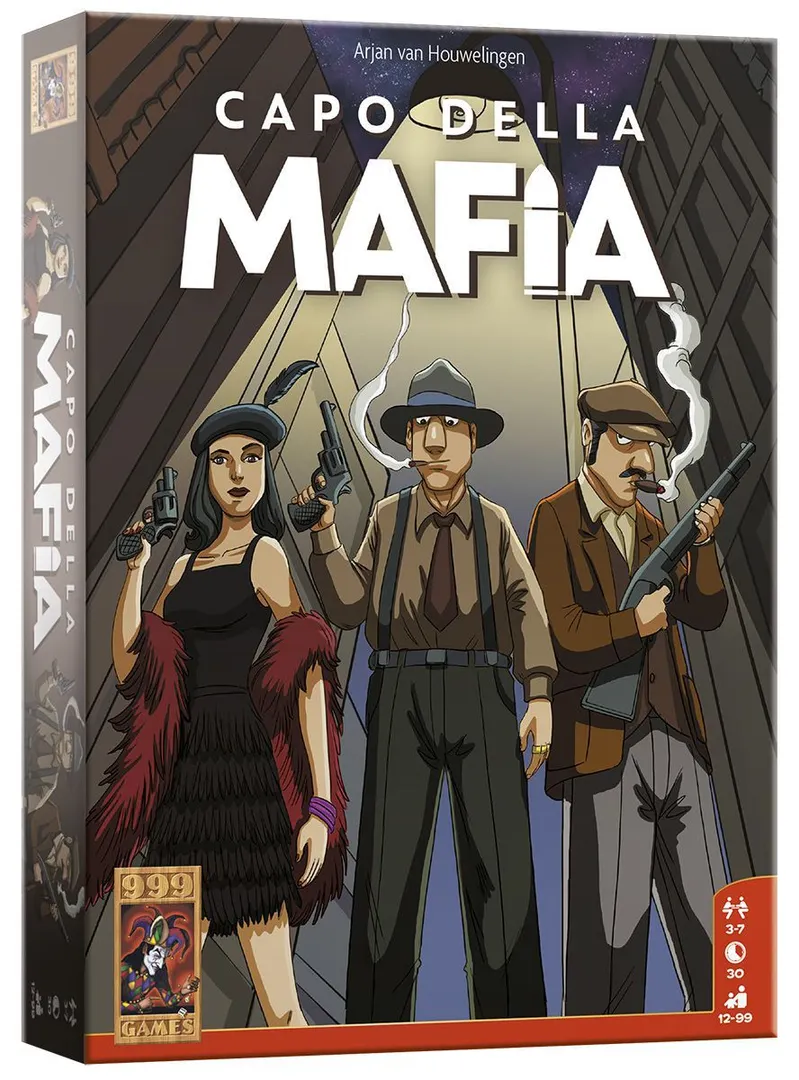
Capo della Mafia
- 3–7 jugadores
- 30 min
- Complejidad 1,3/5
- 2017
2017
Ayuda con las reglas de Tricky Dungeon
Explicaciones claras de turnos, efectos de cartas y situaciones dudosas, con referencias a fuentes oficiales e historial de preguntas guardado.
¿Qué quieres saber?
Las respuestas salen del reglamento oficial, con la página para comprobarlo.
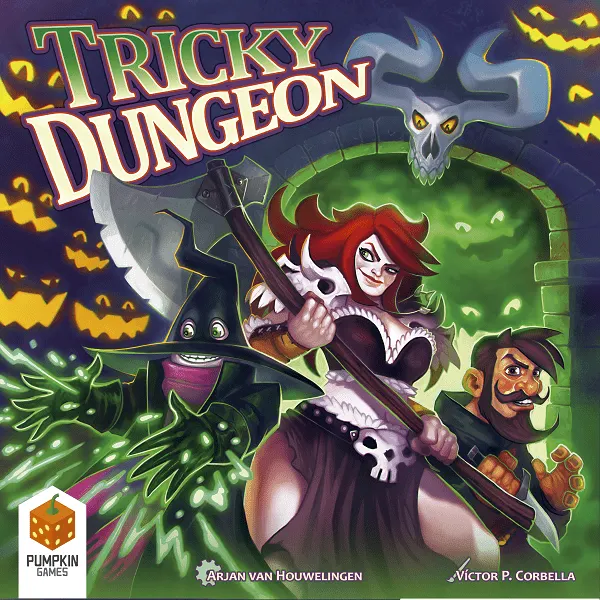
Tricky Dungeon es un juego de mesa publicado en 2017 para 2–4 jugadores, con partidas de 20 a 40 minutos y a partir de 12 años. Fue diseñado por Arjan van Houwelingen y sus mecánicas principales son Hand Management y Trick-taking.





En inglés
The trick-taking game Tricky Dungeon is played with 15 different hero cards and a 32 card deck that consists of 8 cards in 4 suits. The hero cards are offered in 3 different languages: English, German and Dutch. The playing cards are language independant and are valued 0 to 7. The cards with value 3 and 4 in each suit are magical spells. Each suit also has one card marked as a potion, the value being different in each suit. These special cards offer special gameplay effects, depending on which hero is chosen in a round. The other playing cards show typical dungeon inhabitants. These become relevant with a few heroes that are in the game. Players compete over multiple rounds to accumulate the most gold and the player who ends up with the most gold wins the game. There are 3 sets of 5 unique heroes and each game a set of 5 heroes is chosen to play with. Every round one of the players acts as the active player and has to choose one of 5 available heroes. Each hero changes the game and describes how gold is earned. All the other players have to cooperate and try to stop the active player from reaching this goal. The active player chooses the hero to play with after the playing cards are dealt. In a 4 player game each player receives 7 cards. The remaining 4 cards are set aside. After the active player has chosen the hero for the round, that player may exchange up to 4 cards from hand with the remaining cards. In a 2 and 3 player game each player is dealt 9 cards and 5 cards are set aside and available for exchanging. Each hero determines the goal for the active player how gold can be earned. This can be a scaling amount of gold. For example if a player chooses the Barbarian gold is earned for every collected trick and potion card above a certain threshold. Some heroes offer a fixed amount of gold. For example, if a player chooses the Assassin, 4 gold is earned if the active player wins the final trick of the round. When the active player did not manage to earn any gold, all other players are rewarded for their good cooperation by earning 1 gold each. Some heroes change the game in other ways, for example playing cards without revealing them or making use of the set aside cards during a round. The playing and winning of the tricks uses mostly standard trick-taking rules. The first played card of a trick determines the suit that is asked. Other players must follow suit, if they can. In general the player who played highest card of the suit that is requested, wins the trick. Some heroes add trump cards that round, this can be a suit, one of the special cards (magical spells, potions) or even a specific number. If one or more trump cards is played in a trick, the highest trump wins the trick. Each suit is ranked (1 to 4), if multiple trump cards of the same value are played (e.g. multiple 4's with a hero in play that makes them trump), the higher ranked suit wins the trick. The three sets of five heroes each offer a range of options for players. Starting players are recommended to play with set A first. Sets B and C offering more tricky heroes to play with. Besides these three unique set of hero options, the game also suggests a few variants to increase variability. Instead of playing 2 rounds per player the 'Adventurer's Guild' variant forces players to play once with each of the five heroes that game as an active player. Another variant, 'Random Dungeon', shuffles all the 15 heroes together and the active player is offered 1 hero at random to choose to play with. Up to two times this hero can be refused an a new hero is revealed.
Según el catálogo, Tricky Dungeon admite de 2 a 4 jugadores. Este intervalo corresponde al número de jugadores indicado por la editorial, así que el juego puede prepararse para cualquier grupo dentro de ese margen. La preparación, algunas reglas y la puntuación pueden variar según el número de jugadores; consulta la configuración exacta en el reglamento de tu edición.
La duración indicada para Tricky Dungeon es de 20 a 40 minutos, la estimación de la editorial para una partida completa. El tiempo real depende del grupo, del número de jugadores y del conocimiento de las reglas: las primeras partidas suelen alargarse y los grupos con experiencia terminan antes. La preparación y la explicación de las reglas no están incluidas.
El catálogo indica Tricky Dungeon a partir de 12 años. Es la recomendación de la editorial y refleja la lectura necesaria, la complejidad de las reglas y las piezas pequeñas, no solo el tema. Los más pequeños a menudo pueden jugar con ayuda de un adulto: comprueba la edad recomendada en tu edición y la experiencia de tu grupo.
Tricky Dungeon tiene una puntuación de complejidad de 2,0 sobre 5 según los jugadores de BoardGameGeek, lo que lo convierte en un juego algo ligero. La puntuación refleja cuánto conocimiento de reglas, planificación y toma de decisiones exige una partida típica. Los juegos exigentes requieren una explicación inicial más larga, así que conviene usar una guía de preparación.
Tricky Dungeon pertenece a estas categorías: Fantasy y Bluffing. Sus mecánicas principales son Hand Management y Trick-taking. Las categorías describen el tema y la ambientación de un juego, mientras que las mecánicas describen lo que los jugadores hacen realmente en su turno. Cada mecánica lleva a una página del catálogo con juegos similares.
Los autores acreditados de Tricky Dungeon son: Arjan van Houwelingen. Estos créditos proceden de los datos publicados del juego y nombran a las personas responsables de su diseño, no a ilustradores ni editoriales. Las páginas de autor de MeepleRules reúnen otros títulos de los mismos autores, algo útil cuando un juego te gusta y buscas otros parecidos.
El catálogo clasifica Tricky Dungeon como juego base. Se juega por sí solo con los componentes de la caja y no requiere ningún otro título. Las expansiones, si existen, añaden contenido o reglas nuevas y aparecen por separado en el catálogo con un enlace a este juego base.