- Puesto en BGG
- BGG #6218
- Puntuación BGG
- 6,5
Ultimate Werewolf
- 5–30 jugadores
- 30–90 min
- Complejidad 1,2/5
- 2014
2007
Ayuda con las reglas de Ultimate Werewolf: Whitebox Edition
Explicaciones claras de turnos, efectos de cartas y situaciones dudosas, con referencias a fuentes oficiales e historial de preguntas guardado.
¿Qué quieres saber?
Las respuestas salen del reglamento oficial, con la página para comprobarlo.
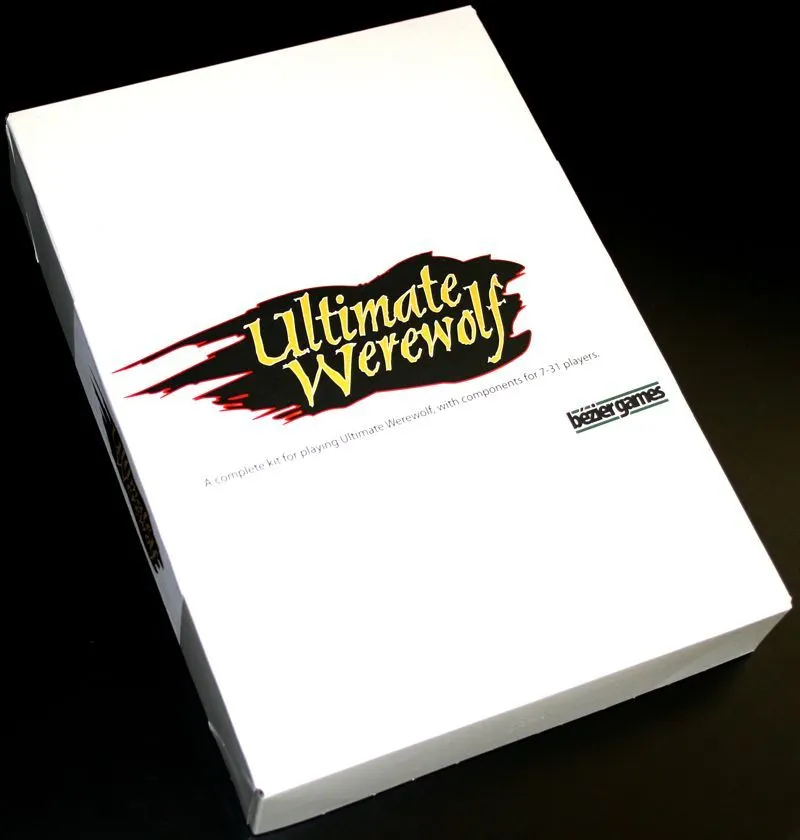
Ultimate Werewolf: Whitebox Edition es un juego de mesa publicado en 2007 para 7–31 jugadores, con partidas de 60 minutos y a partir de 14 años. Fue diseñado por Ted Alspach y sus mecánicas principales son Variable Player Powers, Role Playing y Team-Based Game.





En inglés
This edition is out of print as of September 2008 and has been replaced by Ultimate Werewolf: Ultimate Edition Ultimate Werewolf is a group game/activity where each of the players take on secret roles in a village that's being terrorized by werewolves. Some of the players are werewolves, many are plain, simple villagers, but many players have special abilities, such as being able to tell who is a werewolf and who isn't, and the Magician, who can save or kill any other player instantly. Each night the werewolves eat a villager. Each day, the village convenes and attempts to lynch one of their own, trying to find the werewolves that are secretly living among them. The Ultimate Werewolf: Whitebox Edition package from Bezier Games makes this game easier to play than ever before, and supports up to 31 players! Ultimate Werewolf: Whitebox Edition includes a number of components to make your games faster, more intriguing, and more fun than ever before: 31 Sleeved Player Cards: These lavishly illustrated full-color cards contain the name of the role and a short description of that role's abilities. There's no confusion as to what each card is and what that role does. Each player card comes in a plastic sleeve with a sliding insert that covers the card face. There's no chance of accidentally flipped, dropped, or otherwise revealed cards. Getting Started with Ultimate Werewolf Guide: This handy guide provides information and advice about everything related to setting up and moderating an Ultimate Werewolf game, from how to set up the chairs for the players to how to keep the game moving along. Player Reference Cards: 30 full-size reference cards with a complete role listing and explanation on one side, and a detailed walk-through of the gameplay on the other. Moderator Reference Cards: Reference cards for the Moderator with a detailed walk-through (including what to say at each step of the game) on one side, and role identity charts to fill out during the first night - never get confused over who is the hunter or any other role! Role Suggestion Card: A handy reference card that suggests the right mix of werewolves, villagers, and special roles for players in any number from 7-31. Name Card Tents: Included are 30 name card tents so all players can address each other by name; great for large groups, visitors, and team-building events. The Amulet of Protection: One player secretly has an Amulet of Protection that will prevent him from dying one time. At night he may pass the Amulet to another player. Any role may have the Amulet, which is a smaller card that is inserted between the role card and the sliding insert. Custom Cards: If you're an experienced player who likes to play with a certain role not included in the base set, you can select an additional role from a list, or even have custom cards made and enclosed with your order. Unique custom roles found only in Ultimate Werewolf: Whitebox Edition: The Village Idiot, Wolf Cub, Aura Seer and Spellcaster. Re-implements: Werewolf Re-implemented by: Ultimate Werewolf: Ultimate Edition
Según el catálogo, Ultimate Werewolf: Whitebox Edition admite de 7 a 31 jugadores. Este intervalo corresponde al número de jugadores indicado por la editorial, así que el juego puede prepararse para cualquier grupo dentro de ese margen. La preparación, algunas reglas y la puntuación pueden variar según el número de jugadores; consulta la configuración exacta en el reglamento de tu edición.
La duración indicada para Ultimate Werewolf: Whitebox Edition es de 60 minutos, la estimación de la editorial para una partida completa. El tiempo real depende del grupo, del número de jugadores y del conocimiento de las reglas: las primeras partidas suelen alargarse y los grupos con experiencia terminan antes. La preparación y la explicación de las reglas no están incluidas.
El catálogo indica Ultimate Werewolf: Whitebox Edition a partir de 14 años. Es la recomendación de la editorial y refleja la lectura necesaria, la complejidad de las reglas y las piezas pequeñas, no solo el tema. Los más pequeños a menudo pueden jugar con ayuda de un adulto: comprueba la edad recomendada en tu edición y la experiencia de tu grupo.
Ultimate Werewolf: Whitebox Edition tiene una puntuación de complejidad de 1,3 sobre 5 según los jugadores de BoardGameGeek, lo que lo convierte en un juego ligero. La puntuación refleja cuánto conocimiento de reglas, planificación y toma de decisiones exige una partida típica. Los juegos exigentes requieren una explicación inicial más larga, así que conviene usar una guía de preparación.
Ultimate Werewolf: Whitebox Edition pertenece a estas categorías: Deduction, Murder / Mystery y Horror. Sus mecánicas principales son Variable Player Powers, Role Playing y Team-Based Game. Las categorías describen el tema y la ambientación de un juego, mientras que las mecánicas describen lo que los jugadores hacen realmente en su turno. Cada mecánica lleva a una página del catálogo con juegos similares.
Los autores acreditados de Ultimate Werewolf: Whitebox Edition son: Ted Alspach. Estos créditos proceden de los datos publicados del juego y nombran a las personas responsables de su diseño, no a ilustradores ni editoriales. Las páginas de autor de MeepleRules reúnen otros títulos de los mismos autores, algo útil cuando un juego te gusta y buscas otros parecidos.
El catálogo clasifica Ultimate Werewolf: Whitebox Edition como juego base. Se juega por sí solo con los componentes de la caja y no requiere ningún otro título. Las expansiones, si existen, añaden contenido o reglas nuevas y aparecen por separado en el catálogo con un enlace a este juego base.