
- Puesto en BGG
- BGG #4448
- Puntuación BGG
- 6,3
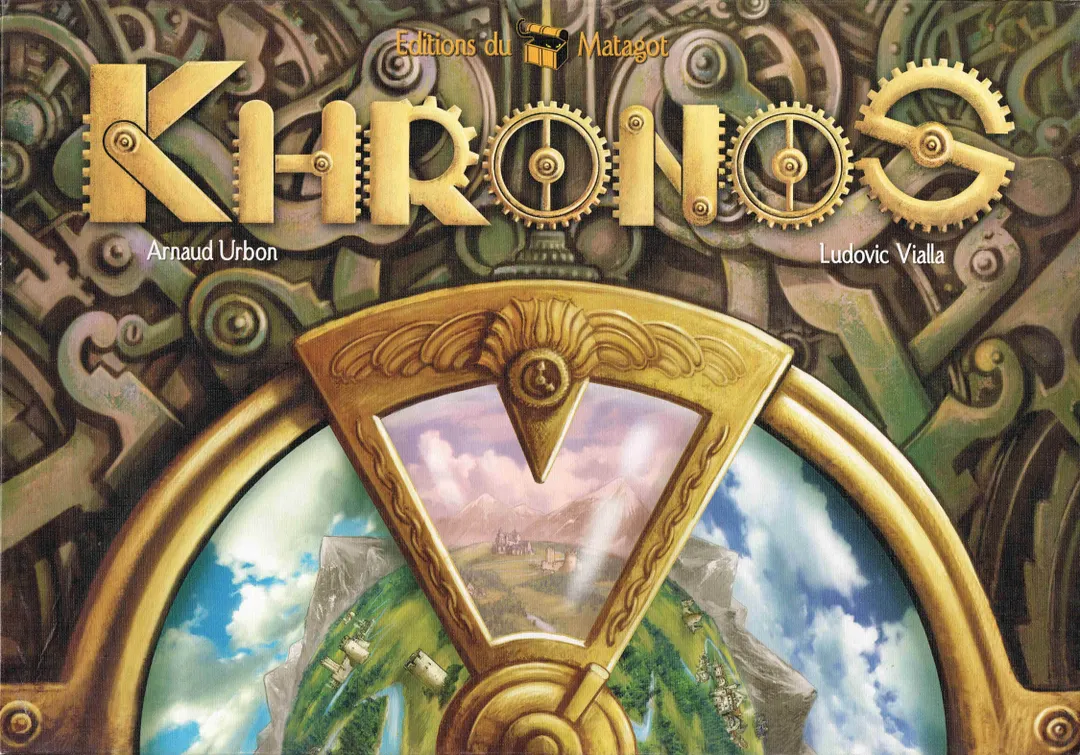
Khronos
- 2–5 jugadores
- 90 min
- Complejidad 3,6/5
- 2006
2007
Ayuda con las reglas de Utopia
Explicaciones claras de turnos, efectos de cartas y situaciones dudosas, con referencias a fuentes oficiales e historial de preguntas guardado.
Para 2 jugadores
¿Qué quieres saber?
Las respuestas salen del reglamento oficial, con la página para comprobarlo.
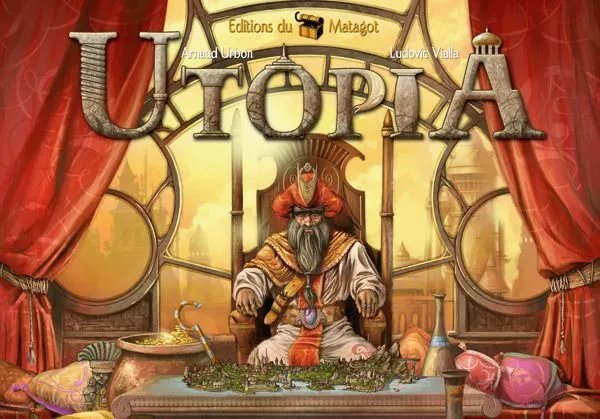
Utopia es un juego de mesa publicado en 2007 para 2–5 jugadores, con partidas de 60 minutos y a partir de 12 años. Fue diseñado por Ludovic Vialla y Arnaud Urbon y sus mecánicas principales son Area Movement y Area Majority / Influence.


En inglés
The king of Utopia has invited princes of the greatest civilizations of antiquity to come and live within the walls of his city, welcoming in doing so, the architectural wealth of their far-away cities. As the King’s Minister, your Sovereign has given you the mission to welcome and accompany these princes and princesses who will present themselves at the gates of the city. Every development added to the city made by your guests increases your prestige. Online play Jeux sur un Plateau (turn-based) Components: 40 Monument Figures: 8 for each of the 5 civilizations (Mayan, Persian, Egyptian, Greek and Chinese) 4 Wonder Figures 5 Minister Figures: 1 of each color (used for Score Track) 200 Prince Tokens: 40 of each color 40 Bases: 8 of each color 10 Privilege tokens: 2 of each color 40 Guest tokens: 2 per civilization for each of the four islands on the board 50 Action Cards: 10 for each civilization 5 Rule Summary Cards: 1 per player 1 Bag Basic Game play: Turn order (after the first player) is derived from who has the highest score on the perimtere score track yet has not had a turn. Each game turn is broken down into three phases: Phase 1: Welcoming the Princes Phase 2: Development of the City Phase 3: Calculation of Prestige Points Phase 1: Welcoming the Princes In the first phase, Guest tokens are placed on the board near ship icons but corresponding to the symbol on each token. These guest tokens are then replaced with Prince tokens that is their own color, or of the same civilization as the chosen Guest or in any District of the island indicated by the Guest or any combination of these. This is repeated three times until all Guest tokens have been removed from the board. While this is happening, players may Build a Wonder or Take Control of a District. At any point during their turn, if a player has one prince of each of the 5 civilizations on one island (regardless of which Districts they are in), he may immediately construct a Wonder and receives 6 Prestige Points. There may only be one Wonder per island and a player does not have to construct Wonders. At any point during their turn, if a player possesses 3 princes of the same civilization in the same District, and that District is not already controlled by another player, he may decide to take control of the District by placing a Monument on that District. There can only be one Monument per District, and this space, once acquired, cannot be retaken. For taking control of a District the player gains Prestige Points during Phase 3: Calculation of Prestige Points. Also, if the District belongs to an island where a Wonder has been constructed, the owner of the Wonder immediately scores the number of Prestige Points indicated on the District. Phase 2: Development of the City Each player receives 5 Action cards and discards based on their score in the score track. The person in the lead discards two cards, the last player doesn't discard any and all other players discard one. Four types of actions are possible and occur multiple times in a player's turn: 1) Move one or two princes: If a player decides to move two princes with a single action card, these two princes must be within the same District and make the same movement. LAND MOVEMENT: By discarding an action card, a player may move one or two princes of that civilization to an adjacent District (Districts are separated by alleys or bridges). SEA MOVEMENT: By discarding an action card, a player may move one or two princes of that civilization from one maritime District (showing a ship) to another maritime District. These two Districts must be in the same maritime sector or in two adjacent maritime sectors. (The division of the maritime sectors is indicated by the dotted lines originating from the 3 lighthouses of the city). 2) Add a prince: By discarding an Action Card, a player may place a prince in a District occupied by a Monument of that civilization. 3) Remove a Prince: If the player possesses a prince in a District occupied by a Monument of that civilization, regardless of the player who controls the District, that player may, with an Action Card of that civilization, remove the Prince from the board. For this action the player immediately gains 2 Prestige Points. Th e player’s Minister figure is moved up two places on the Score Track. or 4) Influence the King (altering the Prestige Scale): If the player possesses a prince in a District occupied by a Monument of that civilization, regardless of the player who controls the District, that player may, with an Action Card of that civilization, remove the Prince from the board. For this action the player immediately gains 2 Prestige Points. The player’s Minister figure is moved up two places on the Score Track. The value of each civilization, indicated on the Prestige Scale, determines the point value of the districts controlled by each player at the end of the turn. By discarding an Action Card, a player may increase the value of a civilization by 1. The Value figure of the civilization changes places with the figure directly above it. With two Action cards, a player may reduce the value of a civilization to 1. All the other figures are moved up accordingly. At the end of their turn a player can only have a maximum of 5 Action Cards. Phase 3: Calculation of Prestige Points Once all the players have carried out their actions, the points for the round are calculated. Each player, in turn order, gains points for each District that they control. The value of each civilization is indicated on the Prestige Scale. The players’ Minister figures are moved up the Score Track. If one or more players have reached at least 50 Prestige Points at the end of this phase, the game ends. The player with the most points wins.
Según el catálogo, Utopia admite de 2 a 5 jugadores. Este intervalo corresponde al número de jugadores indicado por la editorial, así que el juego puede prepararse para cualquier grupo dentro de ese margen. La preparación, algunas reglas y la puntuación pueden variar según el número de jugadores; consulta la configuración exacta en el reglamento de tu edición.
La duración indicada para Utopia es de 60 minutos, la estimación de la editorial para una partida completa. El tiempo real depende del grupo, del número de jugadores y del conocimiento de las reglas: las primeras partidas suelen alargarse y los grupos con experiencia terminan antes. La preparación y la explicación de las reglas no están incluidas.
El catálogo indica Utopia a partir de 12 años. Es la recomendación de la editorial y refleja la lectura necesaria, la complejidad de las reglas y las piezas pequeñas, no solo el tema. Los más pequeños a menudo pueden jugar con ayuda de un adulto: comprueba la edad recomendada en tu edición y la experiencia de tu grupo.
Utopia tiene una puntuación de complejidad de 2,7 sobre 5 según los jugadores de BoardGameGeek, lo que lo convierte en un juego algo ligero. La puntuación refleja cuánto conocimiento de reglas, planificación y toma de decisiones exige una partida típica. Los juegos exigentes requieren una explicación inicial más larga, así que conviene usar una guía de preparación.
Utopia pertenece a estas categorías: City Building. Sus mecánicas principales son Area Movement y Area Majority / Influence. Las categorías describen el tema y la ambientación de un juego, mientras que las mecánicas describen lo que los jugadores hacen realmente en su turno. Cada mecánica lleva a una página del catálogo con juegos similares.
Los autores acreditados de Utopia son: Ludovic Vialla y Arnaud Urbon. Estos créditos proceden de los datos publicados del juego y nombran a las personas responsables de su diseño, no a ilustradores ni editoriales. Las páginas de autor de MeepleRules reúnen otros títulos de los mismos autores, algo útil cuando un juego te gusta y buscas otros parecidos.
El catálogo clasifica Utopia como juego base. Se juega por sí solo con los componentes de la caja y no requiere ningún otro título. Las expansiones, si existen, añaden contenido o reglas nuevas y aparecen por separado en el catálogo con un enlace a este juego base.