

- Puesto en BGG
- BGG #3134
- Puntuación BGG
- 8,0
Exceed Fighting System
- 2 jugadores
- 5–30 min
- Complejidad 2,7/5
- 2016
Ayuda con las reglas de Village Pillage: Robbin' Hood
Explicaciones claras de turnos, efectos de cartas y situaciones dudosas, con referencias a fuentes oficiales e historial de preguntas guardado.
¿Qué quieres saber?
Las respuestas salen del reglamento oficial, con la página para comprobarlo.
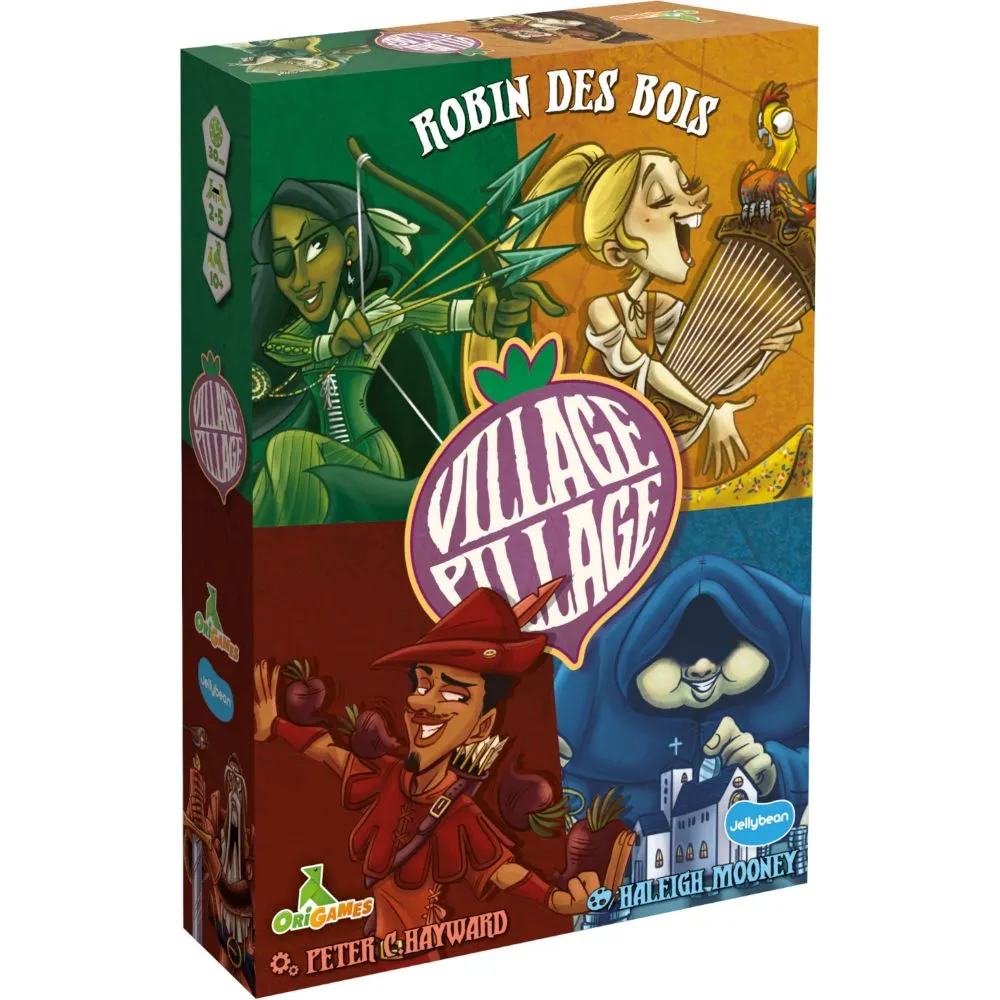
Village Pillage: Robbin' Hood es una expansión de Village Pillage publicada en 2023 para 2–5 jugadores, con partidas de 20 a 30 minutos y a partir de 10 años. Fue diseñado por Peter C. Hayward y sus mecánicas principales son Hand Management, Take That y Simultaneous Action Selection.






En inglés
Your village is bursting with turnips! Enough for every man, woman, and wall to enjoy all the root vegetables they can eat. But wealth brings a class divide – grasping nobles, thieving raiders, and freeholding farmers, stuck in the middle. Worst of all, wealth has also come to those horrible OTHER villages! There’s only one man who can stop them: he robs from the rich and steals from the poor – it’s Robbin’ Hood, with his merry band of scoundrels, rapscallions, and turnip-thieves! Hire outlaws, steal from your neighbors, and do everything in your power to avoid paying the corrupt Sheriff her weight in turnip-tax. Robbin’ Hood is a brand new expansion for Village Pillage, featuring a brand new rich/poor mechanic and more turnip-stealing than ever before! More than a dozen new cards, designed to shake up your games and bamboozle your neighbors. A neighbor is rich if they have more turnips than you, and poor if they have fewer. Cards marked with an arrow trigger after other cards of their type; time your Merry Men carefully, to steal as many juicy turnips as you can!
Según el catálogo, Village Pillage: Robbin' Hood admite de 2 a 5 jugadores. Este intervalo corresponde al número de jugadores indicado por la editorial, así que el juego puede prepararse para cualquier grupo dentro de ese margen. La preparación, algunas reglas y la puntuación pueden variar según el número de jugadores; consulta la configuración exacta en el reglamento de tu edición.
La duración indicada para Village Pillage: Robbin' Hood es de 20 a 30 minutos, la estimación de la editorial para una partida completa. El tiempo real depende del grupo, del número de jugadores y del conocimiento de las reglas: las primeras partidas suelen alargarse y los grupos con experiencia terminan antes. La preparación y la explicación de las reglas no están incluidas.
El catálogo indica Village Pillage: Robbin' Hood a partir de 10 años. Es la recomendación de la editorial y refleja la lectura necesaria, la complejidad de las reglas y las piezas pequeñas, no solo el tema. Los más pequeños a menudo pueden jugar con ayuda de un adulto: comprueba la edad recomendada en tu edición y la experiencia de tu grupo.
Village Pillage: Robbin' Hood pertenece a estas categorías: Card Game, Fantasy y Humor. Sus mecánicas principales son Hand Management, Take That y Simultaneous Action Selection. Las categorías describen el tema y la ambientación de un juego, mientras que las mecánicas describen lo que los jugadores hacen realmente en su turno. Cada mecánica lleva a una página del catálogo con juegos similares.
Los autores acreditados de Village Pillage: Robbin' Hood son: Peter C. Hayward. Estos créditos proceden de los datos publicados del juego y nombran a las personas responsables de su diseño, no a ilustradores ni editoriales. Las páginas de autor de MeepleRules reúnen otros títulos de los mismos autores, algo útil cuando un juego te gusta y buscas otros parecidos.
El catálogo clasifica Village Pillage: Robbin' Hood como expansión de Village Pillage. Las expansiones añaden contenido, reglas o escenarios al juego base y normalmente no se pueden jugar solas, así que necesitas Village Pillage para usarla. Comprueba que tu edición de Village Pillage sea compatible, porque algunas expansiones se revisaron entre ediciones.