

- Rang BGG
- BGG #26 323
- Note BGG
- 5,6
Big Deal
- 2–6 joueurs
- 120 min
- Complexité 3,0/5
- 2001
2014
Aide aux règles de Athlas: Duel for Divinity
Des explications claires des tours, effets de cartes et situations litigieuses, avec des références aux sources officielles et un historique des questions sauvegardé.
Pour 2 joueurs
Que voulez-vous savoir ?
Les réponses viennent du livret officiel, avec la page à vérifier.
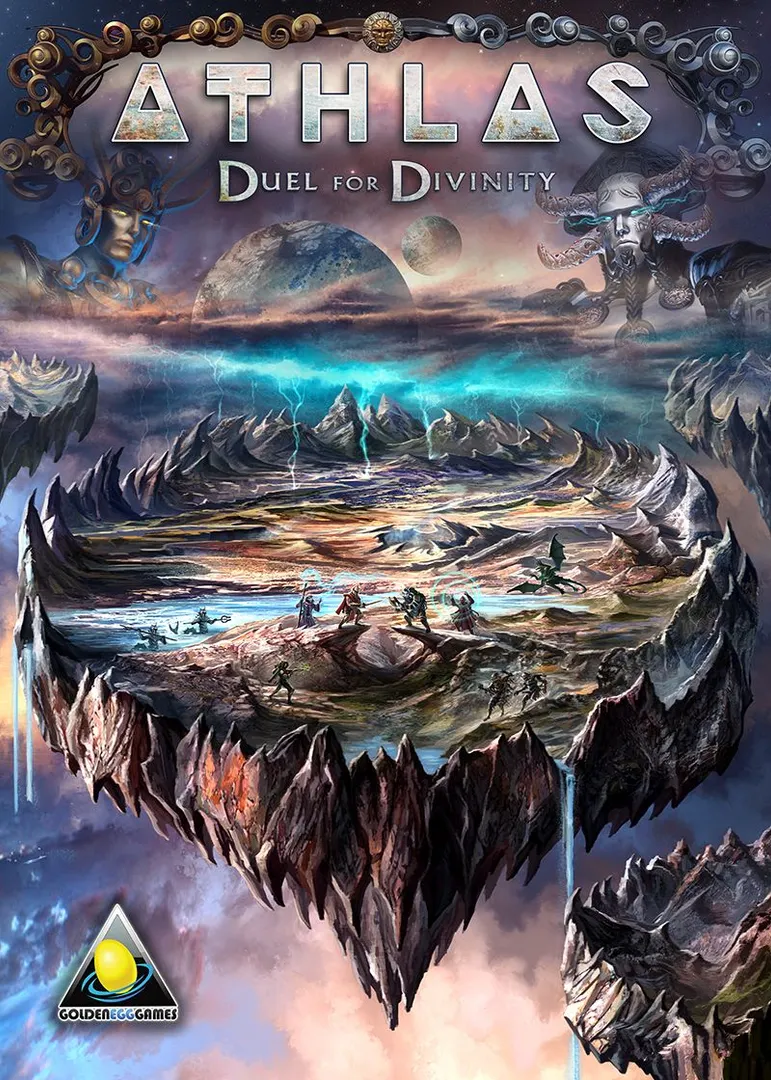
Athlas: Duel for Divinity est un jeu de société sorti en 2014 pour 2 joueurs, avec des parties de 45 à 60 minutes et à partir de 12 ans. Il a été conçu par Tzvika Harpaz et ses principales mécaniques sont Modular Board et Deck, Bag, and Pool Building.

En anglais
In Athlas: Duel for Divinity, each player takes the role of a young Athilian, a godlike being, outcast to the seven outer worlds to explore and uncover the secrets of creation laid by his ancestors. While traveling the outer worlds, Athilians practice their abilities to manipulate time and space until they become powerful enough to be challenged by the Athilian council to open the portal back to Athlas, thus passing the final test to adulthood. As an aspiring god you can design and create your own unique units by enhancing basic Genus cards with powerful abilities, artifacts and spells. You also get to choose divine interventions that might ultimately affect the outcome of the duel. Then you will summon your creations onto the battlefield and attempt to assemble two of three ancient relics in order to open the portal and win the game. The game's limitless design system enables players to form any strategy they wish against their opponent's creations.
Selon le catalogue, Athlas: Duel for Divinity se joue à 2 personnes. C’est le nombre de joueurs indiqué par l’éditeur : le jeu est donc conçu pour exactement ce nombre de participants. Les variantes pour d’autres tailles de groupe, s’il en existe, sont décrites dans la règle de votre édition ; consultez-la avant d’installer une autre configuration.
La durée indiquée pour Athlas: Duel for Divinity est de 45 à 60 minutes, selon l’estimation de l’éditeur pour une partie complète. La durée réelle dépend du groupe, de l’effectif et de la connaissance des règles : les premières parties sont plus longues, les groupes expérimentés terminent plus vite. Mise en place et explication des règles ne sont pas comprises.
Le catalogue indique Athlas: Duel for Divinity à partir de 12 ans. C’est la recommandation de l’éditeur ; elle tient compte de la lecture nécessaire, de la complexité des règles et des petits composants, pas seulement du thème. Les plus jeunes peuvent souvent participer avec l’aide d’un adulte : vérifiez l’âge indiqué sur votre édition et tenez compte de l’expérience de votre groupe.
Athlas: Duel for Divinity obtient une note de complexité de 3,8 sur 5 auprès des joueurs de BoardGameGeek, ce qui en fait un jeu exigeant. Cette note reflète la quantité de règles, de planification et de décisions qu’exige une partie typique. Prévoyez une explication plus longue pour les jeux exigeants et utilisez un guide de préparation avant la soirée.
Athlas: Duel for Divinity appartient à ces catégories : Fantasy et Miniatures. Ses principales mécaniques sont Modular Board et Deck, Bag, and Pool Building. Les catégories décrivent le thème et l’univers d’un jeu, tandis que les mécaniques décrivent ce que les joueurs font réellement pendant leur tour. Chaque mécanique mène à une page du catalogue avec des jeux similaires.
Les auteurs crédités pour Athlas: Duel for Divinity sont : Tzvika Harpaz. Ces crédits proviennent des données publiées du jeu et désignent les personnes responsables de sa conception, et non les illustrateurs ou les éditeurs. Les pages d’auteurs sur MeepleRules regroupent les autres titres des mêmes auteurs, ce qui est utile lorsqu’un jeu vous plaît et que vous en cherchez de similaires.
Le catalogue présente Athlas: Duel for Divinity comme un jeu de base. Il se joue seul avec le matériel contenu dans la boîte et ne nécessite aucun autre titre. Les extensions, s’il en existe, y ajoutent du contenu ou des règles et sont répertoriées séparément dans le catalogue, avec un lien vers ce jeu de base.