
- Note BGG
- 7,7
Breaking the Chains: Supplements
- 1–2 joueurs
- 2014
2014
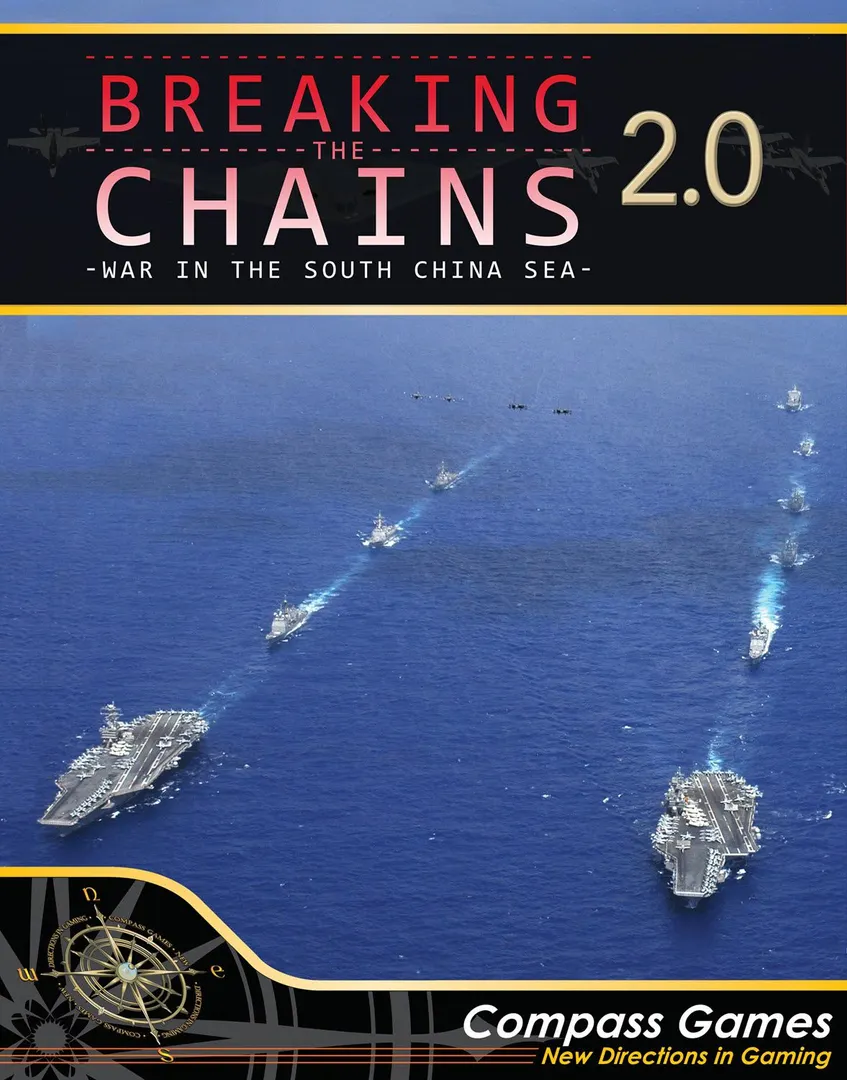
Aide aux règles de Breaking the Chains: War in the South China Sea
Des explications claires des tours, effets de cartes et situations litigieuses, avec des références aux sources officielles et un historique des questions sauvegardé.
Pour 1 joueur
Que voulez-vous savoir ?
Les réponses viennent du livret officiel, avec la page à vérifier.
Breaking the Chains: War in the South China Sea est un jeu de société sorti en 2014 pour 1 à 10 joueurs et avec des parties de 120 à 1200 minutes. Il a été conçu par John Gorkowski et ses principales mécaniques sont Cooperative Game, Hexagon Grid et Simulation.


En anglais
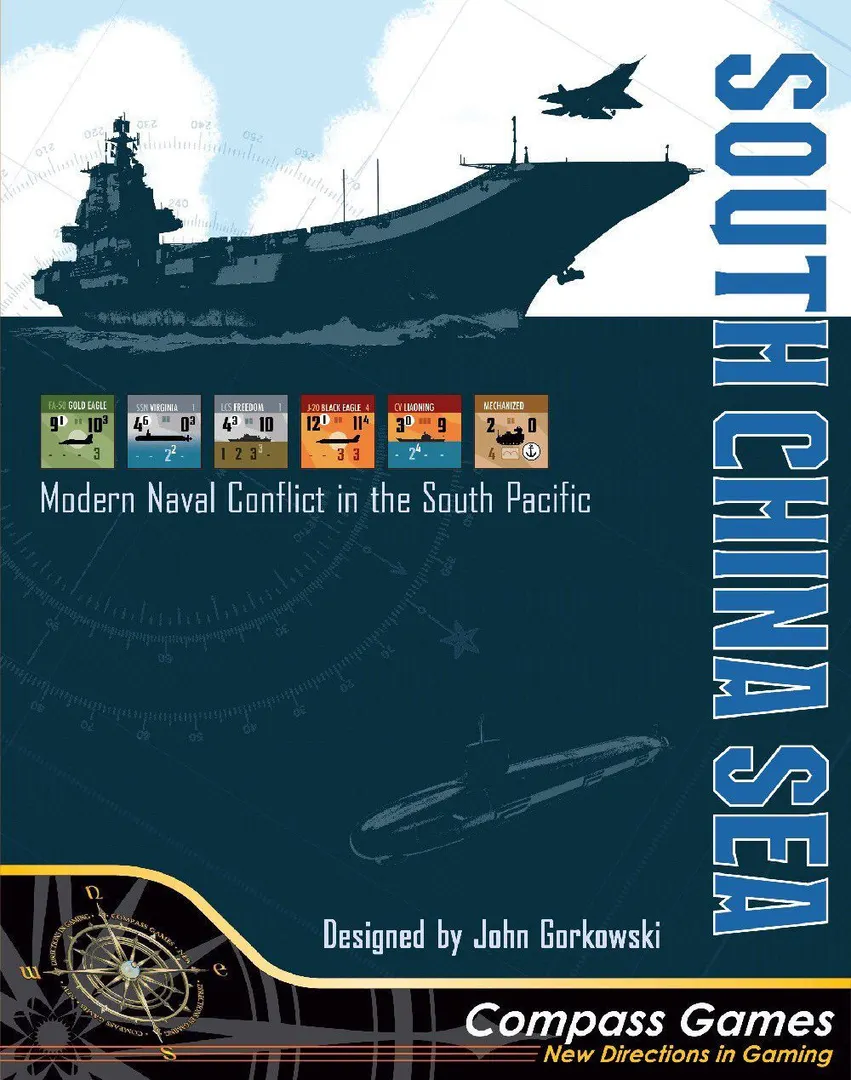
publisher's description Breaking the Chains (BtC) simulates a hypothetical future military conflict over the South China and East China Seas around the year 2021. Conflicting claims of sovereignty have roiled those "near seas" since the Cold War. After decades of patient diplomacy, Beijing's new navy could offer military options for finally asserting sovereignty over prizes within the First Island Chain - that string of islands which runs from the Ryukus south through Taiwan, the Philippines and then curls back to the mainland via Malaysia. BtC presumes that China comes to blows with a Southeast Asian country in a conflict that could expand to possibly include: Australia, India, Japan, the United States as well as a variety of Southeast Asian nations. However, beyond China and one South East Asian nation, the exact composition of opposing coalitions is not predetermined but rather a function of the decisions players make as the game unfolds. Two or more people play BtC with two reference cards, dice, and about 350 counters on a 22" X 34" map where each hex spans about 70 nautical miles (80 land miles) and each turn represents one day of real time. Players alternate maneuvering air, ground and naval units for up to 14 nations to resolve battles with a universal "strike" mechanism that applies across all types of combat; missile defense capabilities are central to survival. Air units represent from 30-90 aircraft each, most ground units are regiments, and naval units are small groups of surface ships/submarines or individual aircraft carriers. Specialized chit play simulates black ops, cyber warfare and various political developments. BtC is solitaire friendly. The naval operations which dominate play are based on a roll-to-evade model rather than search-to-find model. That means, owing to a battle space awash in electromagnetic emissions, enemy positions - except for motionless submarines - are assumed to be known unless a last-minute dice roll determines a potential target has evaded detection. So there is no “hidden movement” to stifle solitaire play; and the “hidden placement” of submarines can be forgone. Finally, the special chits that govern black ops can be played at random to further enable solo game play.
Selon le catalogue, Breaking the Chains: War in the South China Sea se joue de 1 à 10 personnes. Cette fourchette correspond au nombre de joueurs indiqué par l’éditeur : le jeu s’installe donc pour toute taille de groupe dans cette limite. La mise en place, certaines règles et le décompte peuvent varier selon l’effectif ; vérifiez la configuration exacte dans la règle de votre édition.
La durée indiquée pour Breaking the Chains: War in the South China Sea est de 120 à 1200 minutes, selon l’estimation de l’éditeur pour une partie complète. La durée réelle dépend du groupe, de l’effectif et de la connaissance des règles : les premières parties sont plus longues, les groupes expérimentés terminent plus vite. Mise en place et explication des règles ne sont pas comprises.
Breaking the Chains: War in the South China Sea obtient une note de complexité de 3,1 sur 5 auprès des joueurs de BoardGameGeek, ce qui en fait un jeu de complexité moyenne. Cette note reflète la quantité de règles, de planification et de décisions qu’exige une partie typique. Prévoyez une explication plus longue pour les jeux exigeants et utilisez un guide de préparation avant la soirée.
Breaking the Chains: War in the South China Sea appartient à ces catégories : Wargame, Nautical et Political. Ses principales mécaniques sont Cooperative Game, Hexagon Grid et Simulation. Les catégories décrivent le thème et l’univers d’un jeu, tandis que les mécaniques décrivent ce que les joueurs font réellement pendant leur tour. Chaque mécanique mène à une page du catalogue avec des jeux similaires.
Les auteurs crédités pour Breaking the Chains: War in the South China Sea sont : John Gorkowski. Ces crédits proviennent des données publiées du jeu et désignent les personnes responsables de sa conception, et non les illustrateurs ou les éditeurs. Les pages d’auteurs sur MeepleRules regroupent les autres titres des mêmes auteurs, ce qui est utile lorsqu’un jeu vous plaît et que vous en cherchez de similaires.
Le catalogue présente Breaking the Chains: War in the South China Sea comme un jeu de base. Il se joue seul avec le matériel contenu dans la boîte et ne nécessite aucun autre titre. Les extensions, s’il en existe, y ajoutent du contenu ou des règles et sont répertoriées séparément dans le catalogue, avec un lien vers ce jeu de base.