
- Rang BGG
- BGG #7 511
- Note BGG
- 6,3
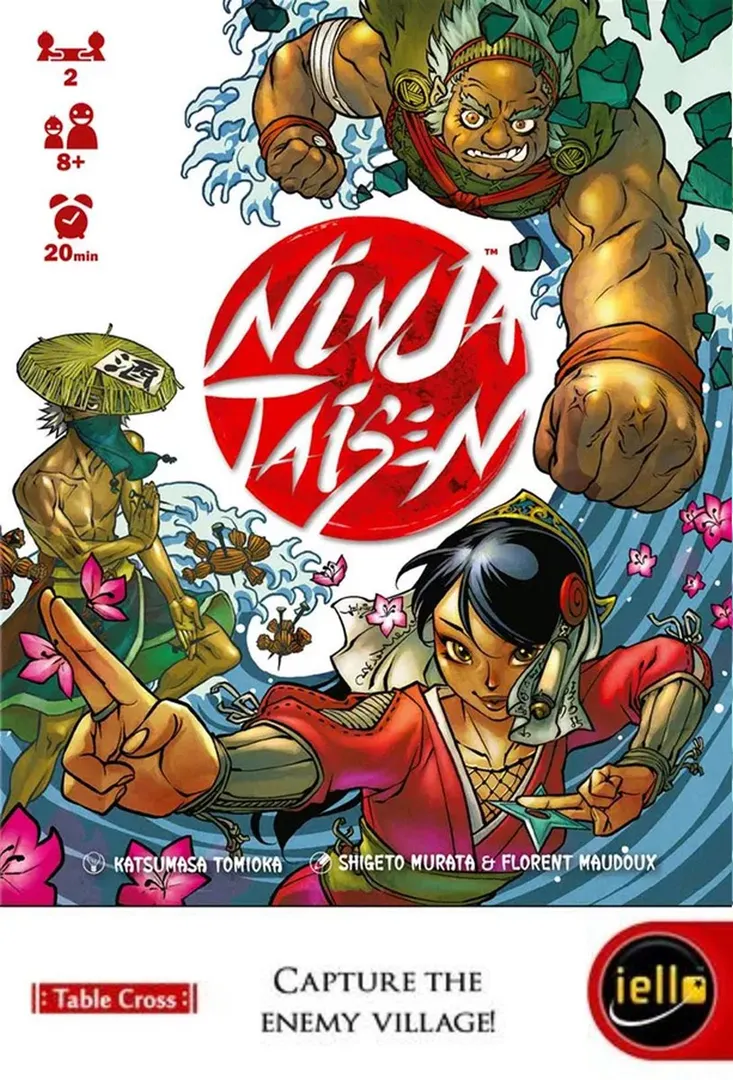
Ninja Taisen
- 2 joueurs
- 20 min
- Complexité 1,5/5
- 2014
2015
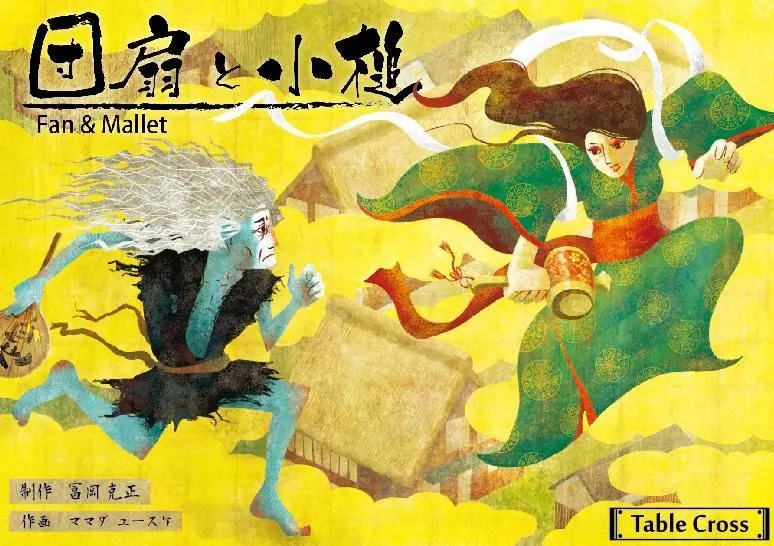
Aide aux règles de Fan & Mallet (団扇と小槌)
Des explications claires des tours, effets de cartes et situations litigieuses, avec des références aux sources officielles et un historique des questions sauvegardé.
Pour 2 joueurs
Que voulez-vous savoir ?
Les réponses viennent du livret officiel, avec la page à vérifier.
Fan & Mallet (団扇と小槌) est un jeu de société sorti en 2015 pour 2 joueurs, avec des parties de 30 minutes et à partir de 10 ans. Il a été conçu par Katsumasa Tomioka.




En anglais
Fan & Mallet (団扇と小槌) is a two player game in which one player takes on the role of the god of riches and the other assumes the role of the god of poverty in a friendly competition for control over a small village. On their turn, each player places one of their god’s followers on one of the buildings in the village. Each god has the same two types of followers: Tsukumogami (Spirit Objects), household items possessing a soul that animates them and Zashiki-warashi (Kid Ghosts), playful child-like spirits. Each follower has a strength value and once a building has five followers placed on it, the total strengths of each god’s followers placed there are then compared. Spirit Objects have a number that represents their strength, while Kid Ghosts have strengths that can vary through powerful special abilities which are triggered by the arrangement of other spirits at the same building. If the strength of your faction is greater, you place one of your god’s possession markers on the building. Using clever placement of your followers to better capitalize on each Zashiki-warashi’s special ability is key to victory in Fan and Mallet. The first player to place all seven of their possession markers wins the game.
Selon le catalogue, Fan & Mallet (団扇と小槌) se joue à 2 personnes. C’est le nombre de joueurs indiqué par l’éditeur : le jeu est donc conçu pour exactement ce nombre de participants. Les variantes pour d’autres tailles de groupe, s’il en existe, sont décrites dans la règle de votre édition ; consultez-la avant d’installer une autre configuration.
La durée indiquée pour Fan & Mallet (団扇と小槌) est de 30 minutes, selon l’estimation de l’éditeur pour une partie complète. La durée réelle dépend du groupe, de l’effectif et de la connaissance des règles : les premières parties sont plus longues, les groupes expérimentés terminent plus vite. Mise en place et explication des règles ne sont pas comprises.
Le catalogue indique Fan & Mallet (団扇と小槌) à partir de 10 ans. C’est la recommandation de l’éditeur ; elle tient compte de la lecture nécessaire, de la complexité des règles et des petits composants, pas seulement du thème. Les plus jeunes peuvent souvent participer avec l’aide d’un adulte : vérifiez l’âge indiqué sur votre édition et tenez compte de l’expérience de votre groupe.
Fan & Mallet (団扇と小槌) obtient une note de complexité de 2,5 sur 5 auprès des joueurs de BoardGameGeek, ce qui en fait un jeu plutôt léger. Cette note reflète la quantité de règles, de planification et de décisions qu’exige une partie typique. Prévoyez une explication plus longue pour les jeux exigeants et utilisez un guide de préparation avant la soirée.
Fan & Mallet (団扇と小槌) appartient à ces catégories : Card Game. Les catégories décrivent le thème, l’univers et le style d’un jeu plutôt que ses règles. Filtrez le catalogue par la même catégorie pour trouver des jeux similaires si vous avez aimé Fan & Mallet (団扇と小槌) et cherchez quelque chose de comparable pour votre prochaine soirée.
Les auteurs crédités pour Fan & Mallet (団扇と小槌) sont : Katsumasa Tomioka. Ces crédits proviennent des données publiées du jeu et désignent les personnes responsables de sa conception, et non les illustrateurs ou les éditeurs. Les pages d’auteurs sur MeepleRules regroupent les autres titres des mêmes auteurs, ce qui est utile lorsqu’un jeu vous plaît et que vous en cherchez de similaires.
Le catalogue présente Fan & Mallet (団扇と小槌) comme un jeu de base. Il se joue seul avec le matériel contenu dans la boîte et ne nécessite aucun autre titre. Les extensions, s’il en existe, y ajoutent du contenu ou des règles et sont répertoriées séparément dans le catalogue, avec un lien vers ce jeu de base.