
- Rang BGG
- BGG #4 879
- Note BGG
- 6,9
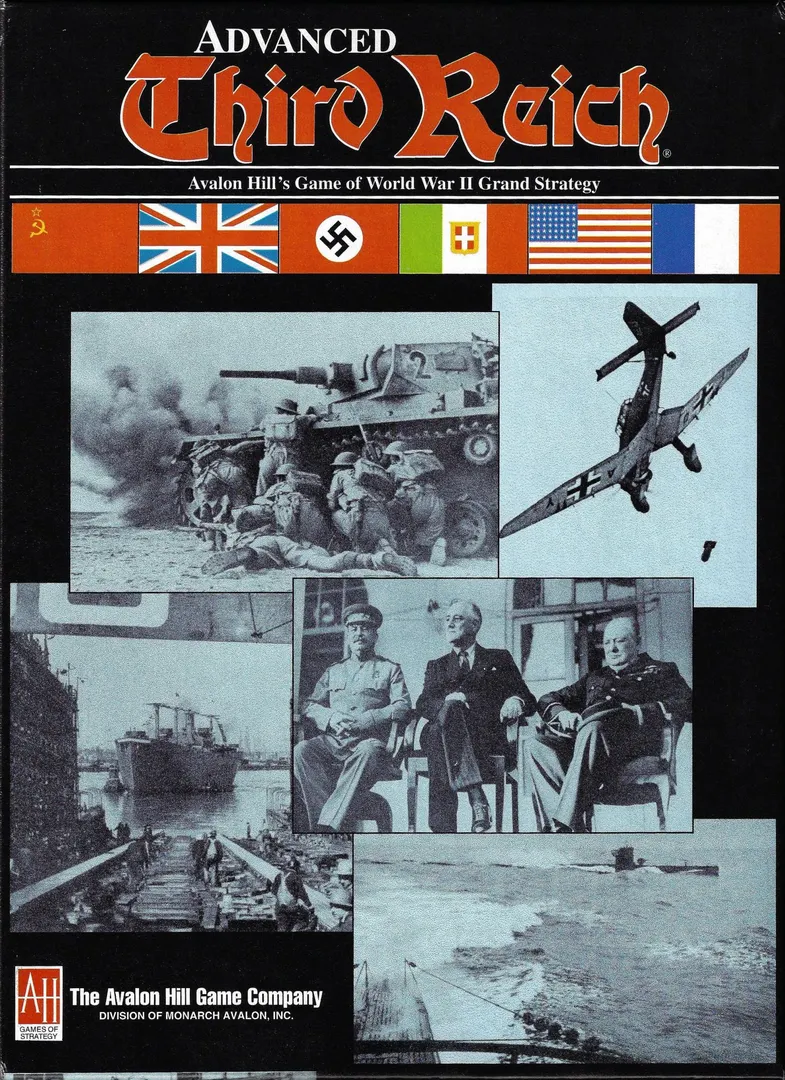
Advanced Third Reich
- 1–6 joueurs
- 180–1200 min
- Complexité 4,5/5
- 1992
2015
Aide aux règles de Gathering Storm
Des explications claires des tours, effets de cartes et situations litigieuses, avec des références aux sources officielles et un historique des questions sauvegardé.
Que voulez-vous savoir ?
Les réponses viennent du livret officiel, avec la page à vérifier.
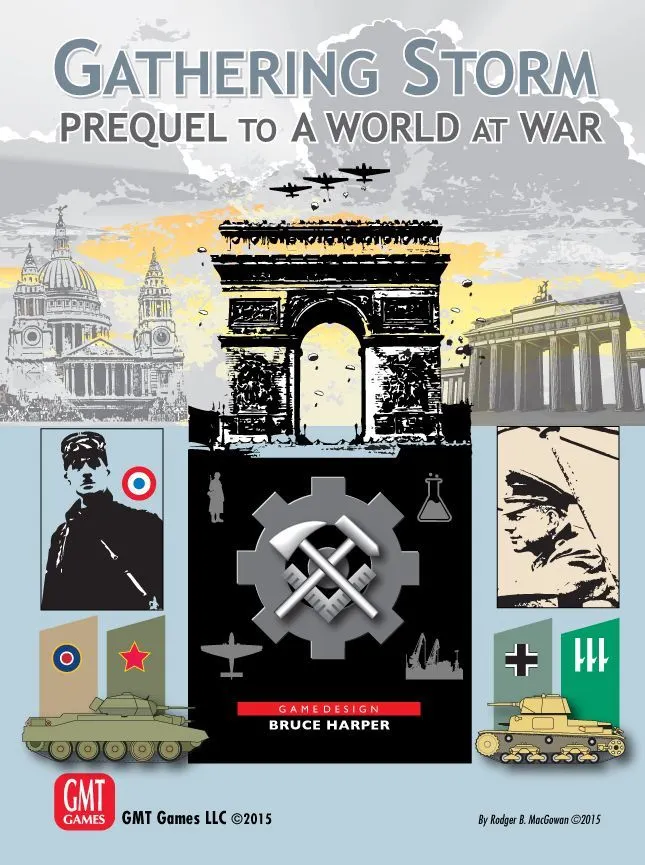
Gathering Storm est un jeu de société sorti en 2015 pour 2 à 5 joueurs, avec des parties de 360 à 480 minutes et à partir de 12 ans. Il a été conçu par Bruce Harper et ses principales mécaniques sont Area Majority / Influence, Simultaneous Action Selection et Action Points.



En anglais
Gathering Storm does for GMT's A World at War what Days of Decision did for ADG's World in Flames. It allows players to simulate the diplomatic, economic, and political maneuverings that preceded the Second World War, either as a stand alone game or as an expansion for A World at War. (Unlike Days of Decision, Gathering Storm covers only the European events leading to war.) <From the publisher's website:> Gathering Storm, both a game in its own right and a prequel to GMT’s A World at War, covers the period from 1935 to the outbreak of World War II, whenever that might be. Like A World at War, Gathering Storm simulates the military, economic, political, diplomatic, research and production preparations for the Second World War, allowing the players to explore what might have happened if: - Admiral Doenitz had convinced his superiors of the importance of submarine warfare in the impending war with Britain. - Germany had pursued the Z Plan earlier and more consistently. - The development of the “Ural bomber” had been pursued. - Poland had become a German satellite, rather than resisting German aggression. - War had broken out over the Sudetenland, or even the remilitarization of the Rhineland. - Mussolini had given a lower priority to naval armaments, to the benefit of the Italian armor and air forces. - France had extended the Maginot Line. - de Gaulle’s arguments to expand and strengthen France’s armor units had been accepted. - Britain had rearmed sooner. - Russia had deferred the Great Purges. Or accelerated them. - The Spanish civil war had been won by the Loyalists. - A civil war had broken out in Yugoslavia. Or Greece. - Atomic fission had been discovered earlier. - The Second World War had begun with a Franco-Italian conflict. Or a French pre-emptive attack on Germany. Or a Russo-German war, with Italy and the Western Allies neutral. - War comes early. Or later, in 1940 or even 1941. - YOU had been in command. Gathering Storm can be played as a separate game in a single session, with its own victory conditions, but A World at War players will want to press on and see how the war they have created plays out. While using different mechanics, Gathering Storm's structure is consistent with A World at War and allows for a seamless transition to whatever alternate war the players planned – or stumbled into. Some 30 years in development, with three years of design and playtesting, Gathering Storm, includes the following: - Six random events each turn, providing unlimited replay value. - Economics based on tiles and activity counters, eliminating any paperwork. - Flexible mobilization rules, allowing players to emphasis civilian or military production – each at the expense of the other. - Unit construction which allows players to activate reserve units for immediate benefits, at a cost of limiting future options. - Variable research, which can focus on air, naval, military or intelligence projects, as well as short or long term gains. - A fast-moving diplomatic system, with each player allocating diplomatic counters each turn. Diplomatic targets are public, but the points allocated to them are not. - Shipbuilding that allows varied fleets, including the possibility of 5-factor super battleships. - Ahistorical A World at War counters, including armor units of different strengths and additional ships. - A dynamic crisis system, in which the Allies can appease or oppose the Axis, with neither side necessarily being certain whether war might break out. - No dice. Gathering Storm is a must-buy for any committed A World at War player, an excellent – and possibly dangerously time consuming – introduction to the A World at War universe for those unfamiliar with that game, and a enjoyable and instructive fast-paced game all on its own.
Selon le catalogue, Gathering Storm se joue de 2 à 5 personnes. Cette fourchette correspond au nombre de joueurs indiqué par l’éditeur : le jeu s’installe donc pour toute taille de groupe dans cette limite. La mise en place, certaines règles et le décompte peuvent varier selon l’effectif ; vérifiez la configuration exacte dans la règle de votre édition.
La durée indiquée pour Gathering Storm est de 360 à 480 minutes, selon l’estimation de l’éditeur pour une partie complète. La durée réelle dépend du groupe, de l’effectif et de la connaissance des règles : les premières parties sont plus longues, les groupes expérimentés terminent plus vite. Mise en place et explication des règles ne sont pas comprises.
Le catalogue indique Gathering Storm à partir de 12 ans. C’est la recommandation de l’éditeur ; elle tient compte de la lecture nécessaire, de la complexité des règles et des petits composants, pas seulement du thème. Les plus jeunes peuvent souvent participer avec l’aide d’un adulte : vérifiez l’âge indiqué sur votre édition et tenez compte de l’expérience de votre groupe.
Gathering Storm obtient une note de complexité de 4,1 sur 5 auprès des joueurs de BoardGameGeek, ce qui en fait un jeu exigeant. Cette note reflète la quantité de règles, de planification et de décisions qu’exige une partie typique. Prévoyez une explication plus longue pour les jeux exigeants et utilisez un guide de préparation avant la soirée.
Gathering Storm appartient à ces catégories : Wargame et World War II. Ses principales mécaniques sont Area Majority / Influence, Simultaneous Action Selection et Action Points. Les catégories décrivent le thème et l’univers d’un jeu, tandis que les mécaniques décrivent ce que les joueurs font réellement pendant leur tour. Chaque mécanique mène à une page du catalogue avec des jeux similaires.
Les auteurs crédités pour Gathering Storm sont : Bruce Harper. Ces crédits proviennent des données publiées du jeu et désignent les personnes responsables de sa conception, et non les illustrateurs ou les éditeurs. Les pages d’auteurs sur MeepleRules regroupent les autres titres des mêmes auteurs, ce qui est utile lorsqu’un jeu vous plaît et que vous en cherchez de similaires.
Le catalogue présente Gathering Storm comme un jeu de base. Il se joue seul avec le matériel contenu dans la boîte et ne nécessite aucun autre titre. Les extensions, s’il en existe, y ajoutent du contenu ou des règles et sont répertoriées séparément dans le catalogue, avec un lien vers ce jeu de base.