

- Rang BGG
- BGG #8 795
- Note BGG
- 5,9
Spank the Monkey
- 2–6 joueurs
- 30 min
- Complexité 1,4/5
- 2003
2010
Aide aux règles de Genesis
Des explications claires des tours, effets de cartes et situations litigieuses, avec des références aux sources officielles et un historique des questions sauvegardé.
Pour 2 joueurs
Que voulez-vous savoir ?
Les réponses viennent du livret officiel, avec la page à vérifier.
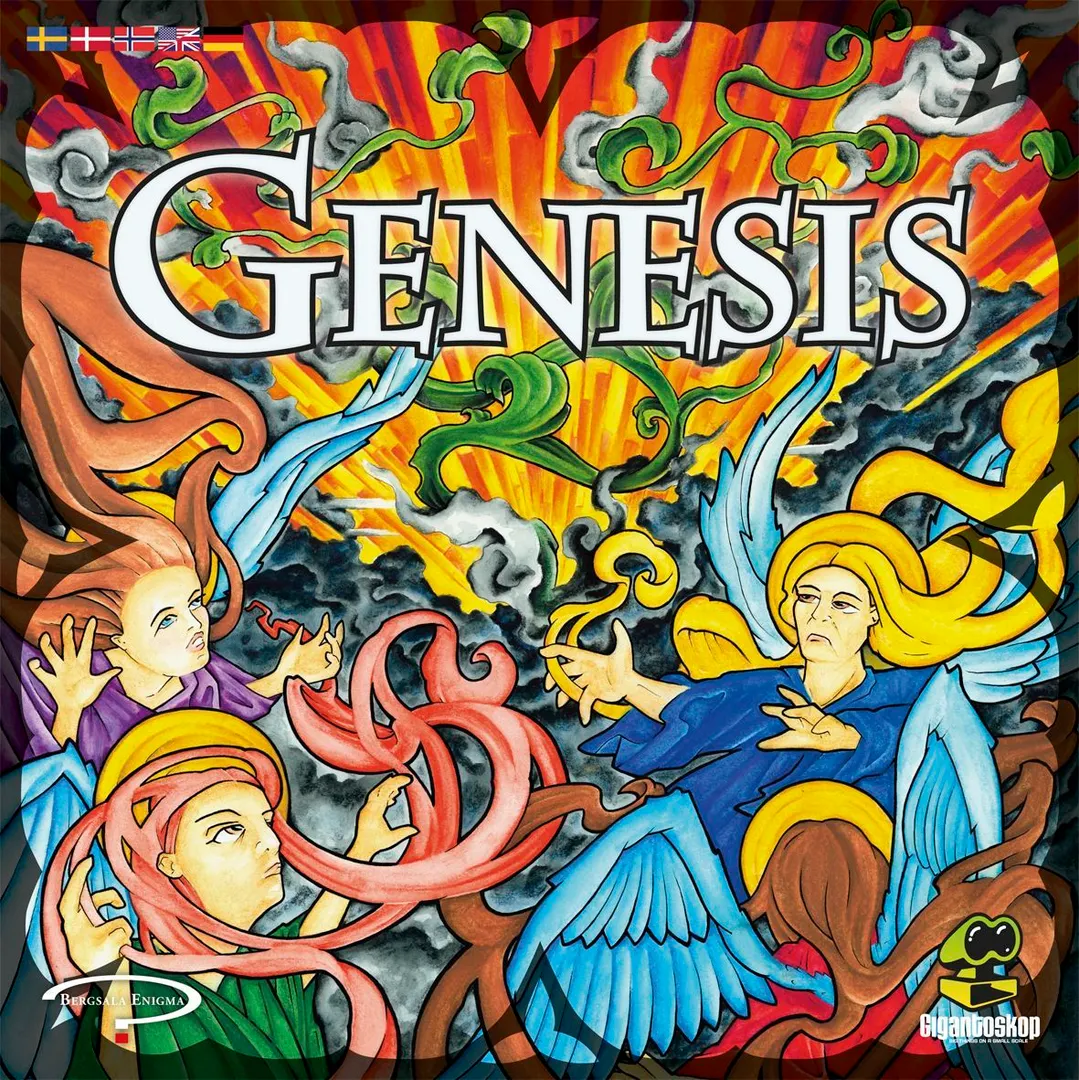
Genesis est un jeu de société sorti en 2010 pour 2 à 6 joueurs, avec des parties de 60 minutes et à partir de 10 ans. Il a été conçu par Peter Hansson et ses principales mécaniques sont Set Collection.



En anglais
In the Beginning In the beginning God created the heaven and the earth. It took him six days to complete his work, assisted by a host of heavenly angels doing his divine bidding. On the seventh day God rested and examined the result. Seeing that it was good, he praised the angel who had contributed the most. Genesis - In the Beginning gives you the chance to become that angel. By gathering the essence of creation - chaos, matter and life - and turning it into seas and mountains, birds and beasts, you hope to win Gods approval - and the game! But the way to victory is wrought with hard decisions. You must gather essence when it's most advantageous, move at the right time and do your days’ work where they count the most. And beware of the dark angel who's trying to outshine you all. Now - let there be light! Contents 1 game board 1 God 1 dark angel 6 player angels 42 day work markers 1 starting player marker 72 essence cubes 1 rules booklet Gameplay Before the creation, the players’ angels are gathered in the void with God. When God starts the creation with the words "let there be light", the angels start their monumental task. There’s a lot do to and only seven days to get it done in, so every action counts. Throughout the game, God moves over each of the seven days on the game board, stopping morning, midday and evening, allowing the players 21 rounds to act. During their turn, players can choose to collect the essence of creation (chaos, matter and life), to do a day work on the current day using the different kinds of essence they have collected, or to follow in God’s path to another day. When players move from day to day, they’re positioned along the essence track. The essence track determines both the order of play and the type of essence a player can gather. The first player to move to a certain day gets the first position, the second player the second position, and so on. As different positions yield different kinds of essence, the players must plan their movement to get the right kind and the right amount of essence. If they’re not happy with their position, they can spend essence to swap positions with a neighboring angel, thereby also thwarting other players’ plans. When God creates a new day with new tasks for the angels, players can move to that day. The first player to do a day work on a certain day is awarded the highest points, the second player the second highest, and so on. As the week progresses, the points earned for doing a day work increase, which affects players’ long-term strategy. As the seventh day is a day of rest, God looks favorably on angels that retire from their hard work. The first player to retire their angel on the seventh day earns the highest points, the second player the second highest, and so on. When God reaches the evening of the seventh day, the game is over. All points will be tallied and the player with the highest score is declared the winner. To make things even more challenging, a dark angel is mixed in with the players’ angels, doing his best to snatch as many points as possible. The dark angel follows a pre-determined pattern of actions that the players can predict and delay but never stop. If the players aren’t careful, or if they’re too caught up in their own plans, the dark angel will surely outshine them, making all of them lose the game. The mechanics of the game are quite simple: the sooner you do a day work on a day, the higher the points you score, making it a good idea to keep close in God’s wake. Unfortunately, simply following God throughout the creation might not give you the exact essence you need to do your day work. Eventually you must stop to collect essence, preferably in the right position, making you lose momentum. In the end it’s always about choices: when and what to collect, when to move and when to do a day work. The winner, God willing, is the player who makes the right choices at the right time, a task easier said than done.
Selon le catalogue, Genesis se joue de 2 à 6 personnes. Cette fourchette correspond au nombre de joueurs indiqué par l’éditeur : le jeu s’installe donc pour toute taille de groupe dans cette limite. La mise en place, certaines règles et le décompte peuvent varier selon l’effectif ; vérifiez la configuration exacte dans la règle de votre édition.
La durée indiquée pour Genesis est de 60 minutes, selon l’estimation de l’éditeur pour une partie complète. La durée réelle dépend du groupe, de l’effectif et de la connaissance des règles : les premières parties sont plus longues, les groupes expérimentés terminent plus vite. Mise en place et explication des règles ne sont pas comprises.
Le catalogue indique Genesis à partir de 10 ans. C’est la recommandation de l’éditeur ; elle tient compte de la lecture nécessaire, de la complexité des règles et des petits composants, pas seulement du thème. Les plus jeunes peuvent souvent participer avec l’aide d’un adulte : vérifiez l’âge indiqué sur votre édition et tenez compte de l’expérience de votre groupe.
Genesis obtient une note de complexité de 2,4 sur 5 auprès des joueurs de BoardGameGeek, ce qui en fait un jeu plutôt léger. Cette note reflète la quantité de règles, de planification et de décisions qu’exige une partie typique. Prévoyez une explication plus longue pour les jeux exigeants et utilisez un guide de préparation avant la soirée.
Genesis appartient à ces catégories : Abstract Strategy, Religious et Mythology. Ses principales mécaniques sont Set Collection. Les catégories décrivent le thème et l’univers d’un jeu, tandis que les mécaniques décrivent ce que les joueurs font réellement pendant leur tour. Chaque mécanique mène à une page du catalogue avec des jeux similaires.
Les auteurs crédités pour Genesis sont : Peter Hansson. Ces crédits proviennent des données publiées du jeu et désignent les personnes responsables de sa conception, et non les illustrateurs ou les éditeurs. Les pages d’auteurs sur MeepleRules regroupent les autres titres des mêmes auteurs, ce qui est utile lorsqu’un jeu vous plaît et que vous en cherchez de similaires.
Le catalogue présente Genesis comme un jeu de base. Il se joue seul avec le matériel contenu dans la boîte et ne nécessite aucun autre titre. Les extensions, s’il en existe, y ajoutent du contenu ou des règles et sont répertoriées séparément dans le catalogue, avec un lien vers ce jeu de base.