
- Rang BGG
- BGG #23 667
- Note BGG
- 6,0
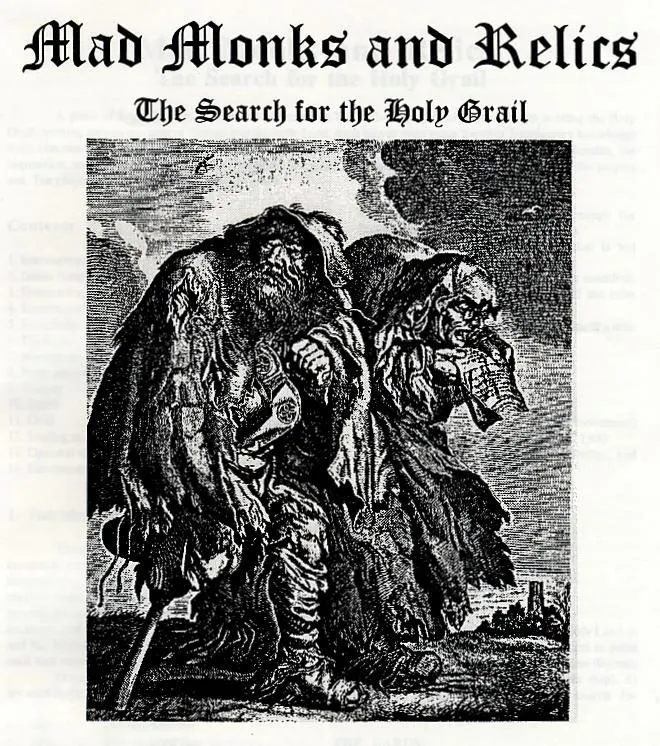
Mad Monks and Relics: The Search for the Holy Grail
- 3–5 joueurs
- 180 min
- Complexité 2,3/5
- 1995
1995
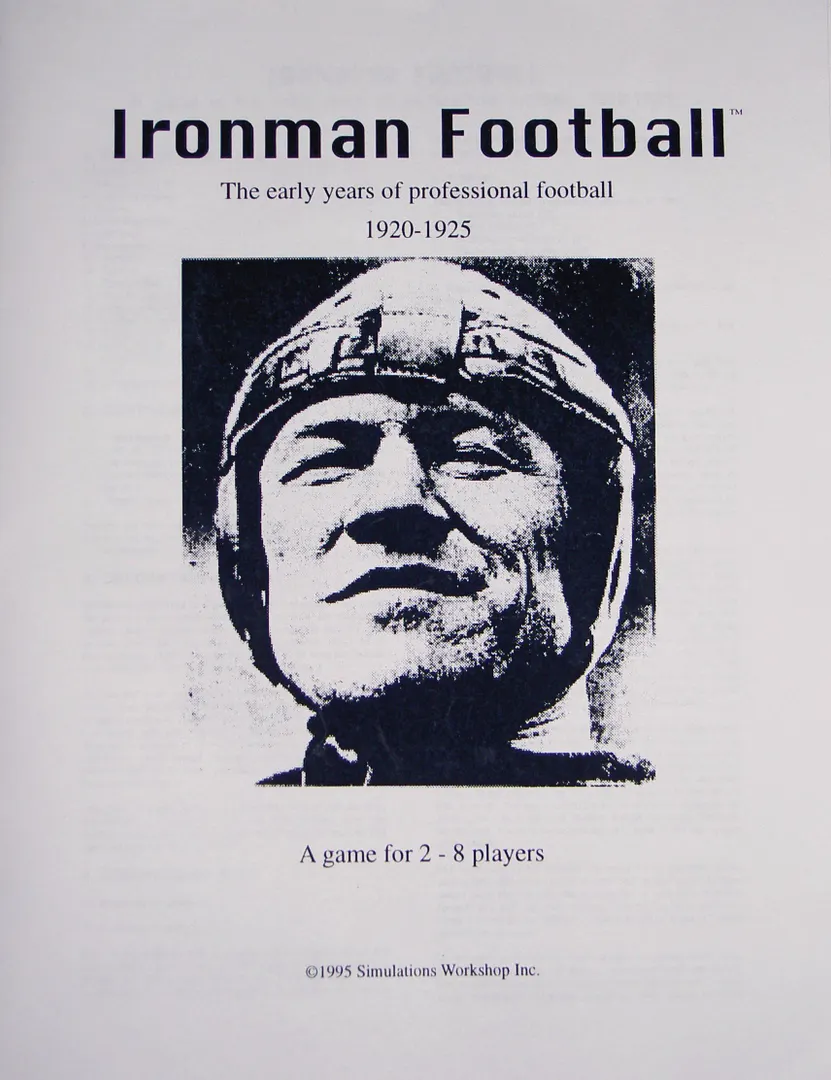
Aide aux règles de Ironman Football
Des explications claires des tours, effets de cartes et situations litigieuses, avec des références aux sources officielles et un historique des questions sauvegardé.
Pour 2 joueurs
Que voulez-vous savoir ?
Les réponses viennent du livret officiel, avec la page à vérifier.
Ironman Football est un jeu de société sorti en 1995 pour 2 à 8 joueurs, avec des parties de 180 minutes et à partir de 10 ans. Il a été conçu par Randy Moorehead et ses principales mécaniques sont Events.



En anglais
Ironman Football is a team management game based on gridiron football in the early 1920's. That was a time when there were no TV million$, no real passing game as they played with a squashed medicine ball, shoulder padding was a sturdy arrant jumper, helmets were strictly optional and you were expected to play on both offense and defense. The game features such notable institutions as the Pottsville Maroons, the Dayton Triangles and the Frankford Yellowjackets, and mega stars like Red Grange, George Halas, Jim Thorpe and Paul Robeson. The game works on the old system of pulling a team together, playing a series of games, whacking down some event cards and trying to obtain the best record to win the league. At the start of the game you are handed some event cards, a league franchise, a team name and, unless you are very unlucky, a handful of star players. You also get some money. Your core players, the poor faceless grunts in the trenches, are abstracted into a simple team rating and a total salary bill (excellent idea) but the star players, the backs and ends, are each given their own individual card. As team manager, it is your job to balance the huge benefits of having these talented individuals on your staff with the interestingly high salaries they demand for performance. The three key areas of offense, defense and special teams can all be enhanced by the star cards. In addition to the player-controlled teams, who will usually play each other twice, the game also supplies a range of 'autopilot' opponents. There are league teams who are often as good, or even better, than the players' lineups and also sandlot teams. Event cards add a lot to almost any the game. They can be played either before your weekly scheduled game or during the game itself. Their effects are wide ranging; from new gadget plays that can give you an extra dice on offense, to sponsorship deals that enable you to sell out to local government for big money. There are college players, fan loyalty, rain insurance, scams, scandals, intrigue and even subtle stuff like players' agents, loyalty and defections. Once you have played the game, you work out the gate receipts, which are divided between the home team and the visitors based on a pre-agreed percentage split. There are variables such as number of star players on show, rain, home opener, whether you are playing a winning team, etc. As it is more profitable to be at home (no travel expenses) and to play the winning teams with the most star players, each team has an inherent draw factor - remember this is pre-TV - and can negotiate and earn high income accordingly. Want to play the top rated Canton Bulldogs (8-0-2, three star players) at home? You are going to have to offer their boss a healthy enticement to come to Oolong and perform against your 0-5 Indians, just to earn some money to pay off your overdraft. At the end of the game, having pocketed your share of the take, you must pay all the players their salaries and if you can't meet the payroll, you will start to lose staff. They may stay on out of the goodness of their hearts, but you also need to apply to the league for a stay of financial execution and avoid bankruptcy. All this links into the league structure. If you have any sort of claim against your opponent you may appeal and have your rival reprimanded or fined, and always at the back of your mind is simply surviving game to game. You must maintain a winning record, you need to find new players to satisfy the butcher's bill of game injuries and, if you survive all that and play nine games well, you'll get a shot at the league title. Interestingly, the game can be won by other means than just having the best record. The team with the most money also gets a point, and a winning season will accrue another. It is unlikely that with a title win you'll lose, but there will be teams close on your tail.
Selon le catalogue, Ironman Football se joue de 2 à 8 personnes. Cette fourchette correspond au nombre de joueurs indiqué par l’éditeur : le jeu s’installe donc pour toute taille de groupe dans cette limite. La mise en place, certaines règles et le décompte peuvent varier selon l’effectif ; vérifiez la configuration exacte dans la règle de votre édition.
La durée indiquée pour Ironman Football est de 180 minutes, selon l’estimation de l’éditeur pour une partie complète. La durée réelle dépend du groupe, de l’effectif et de la connaissance des règles : les premières parties sont plus longues, les groupes expérimentés terminent plus vite. Mise en place et explication des règles ne sont pas comprises.
Le catalogue indique Ironman Football à partir de 10 ans. C’est la recommandation de l’éditeur ; elle tient compte de la lecture nécessaire, de la complexité des règles et des petits composants, pas seulement du thème. Les plus jeunes peuvent souvent participer avec l’aide d’un adulte : vérifiez l’âge indiqué sur votre édition et tenez compte de l’expérience de votre groupe.
Ironman Football obtient une note de complexité de 2,3 sur 5 auprès des joueurs de BoardGameGeek, ce qui en fait un jeu plutôt léger. Cette note reflète la quantité de règles, de planification et de décisions qu’exige une partie typique. Prévoyez une explication plus longue pour les jeux exigeants et utilisez un guide de préparation avant la soirée.
Ironman Football appartient à ces catégories : Sports. Ses principales mécaniques sont Events. Les catégories décrivent le thème et l’univers d’un jeu, tandis que les mécaniques décrivent ce que les joueurs font réellement pendant leur tour. Chaque mécanique mène à une page du catalogue avec des jeux similaires.
Les auteurs crédités pour Ironman Football sont : Randy Moorehead. Ces crédits proviennent des données publiées du jeu et désignent les personnes responsables de sa conception, et non les illustrateurs ou les éditeurs. Les pages d’auteurs sur MeepleRules regroupent les autres titres des mêmes auteurs, ce qui est utile lorsqu’un jeu vous plaît et que vous en cherchez de similaires.
Le catalogue présente Ironman Football comme un jeu de base. Il se joue seul avec le matériel contenu dans la boîte et ne nécessite aucun autre titre. Les extensions, s’il en existe, y ajoutent du contenu ou des règles et sont répertoriées séparément dans le catalogue, avec un lien vers ce jeu de base.