
- Rang BGG
- BGG #2 362
- Note BGG
- 6,4
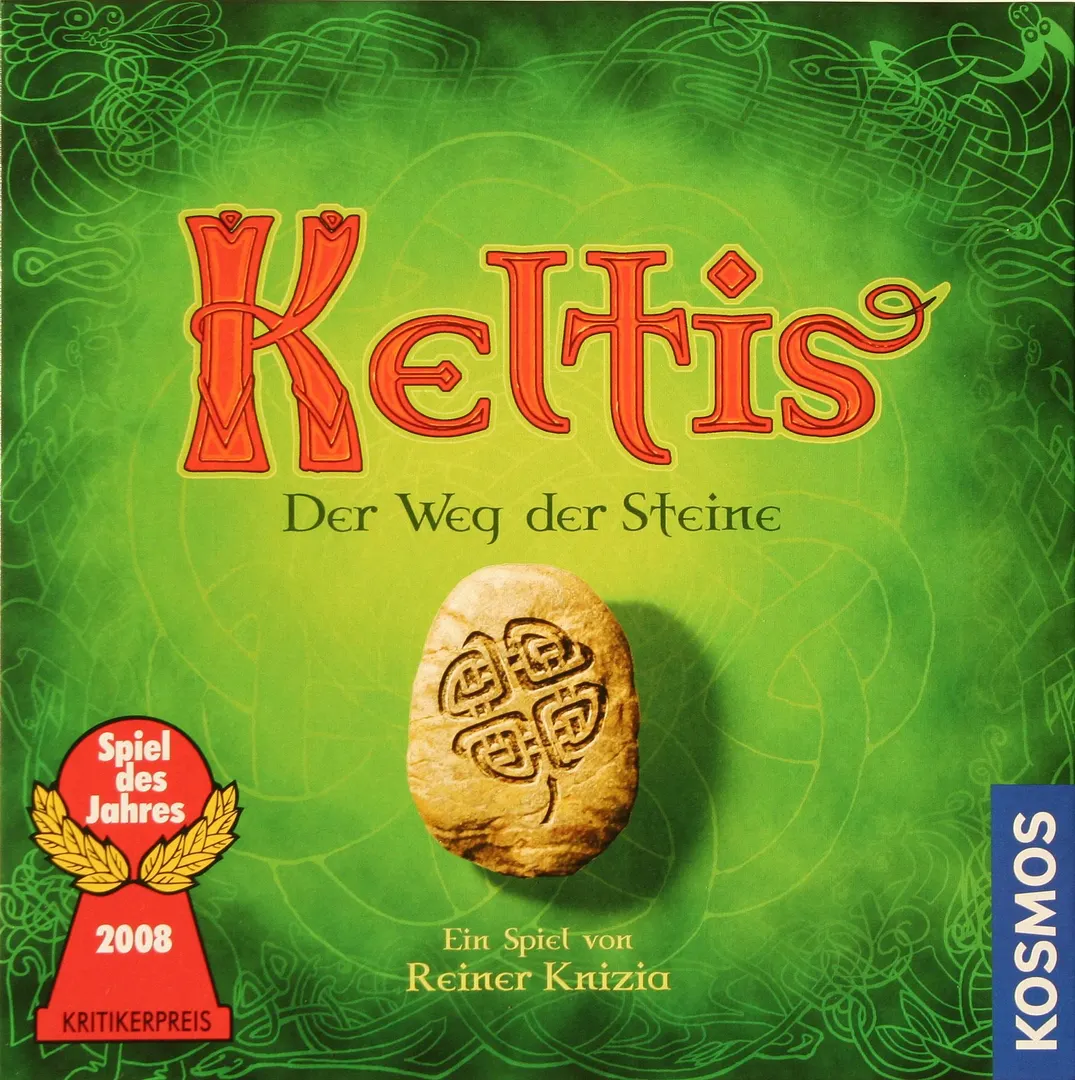
Keltis
- 2–4 joueurs
- 30 min
- Complexité 1,6/5
- 2008
2008
Aide aux règles de Lost Cities: The Board Game
Des explications claires des tours, effets de cartes et situations litigieuses, avec des références aux sources officielles et un historique des questions sauvegardé.
Pour 2 joueurs
Que voulez-vous savoir ?
Les réponses viennent du livret officiel, avec la page à vérifier.
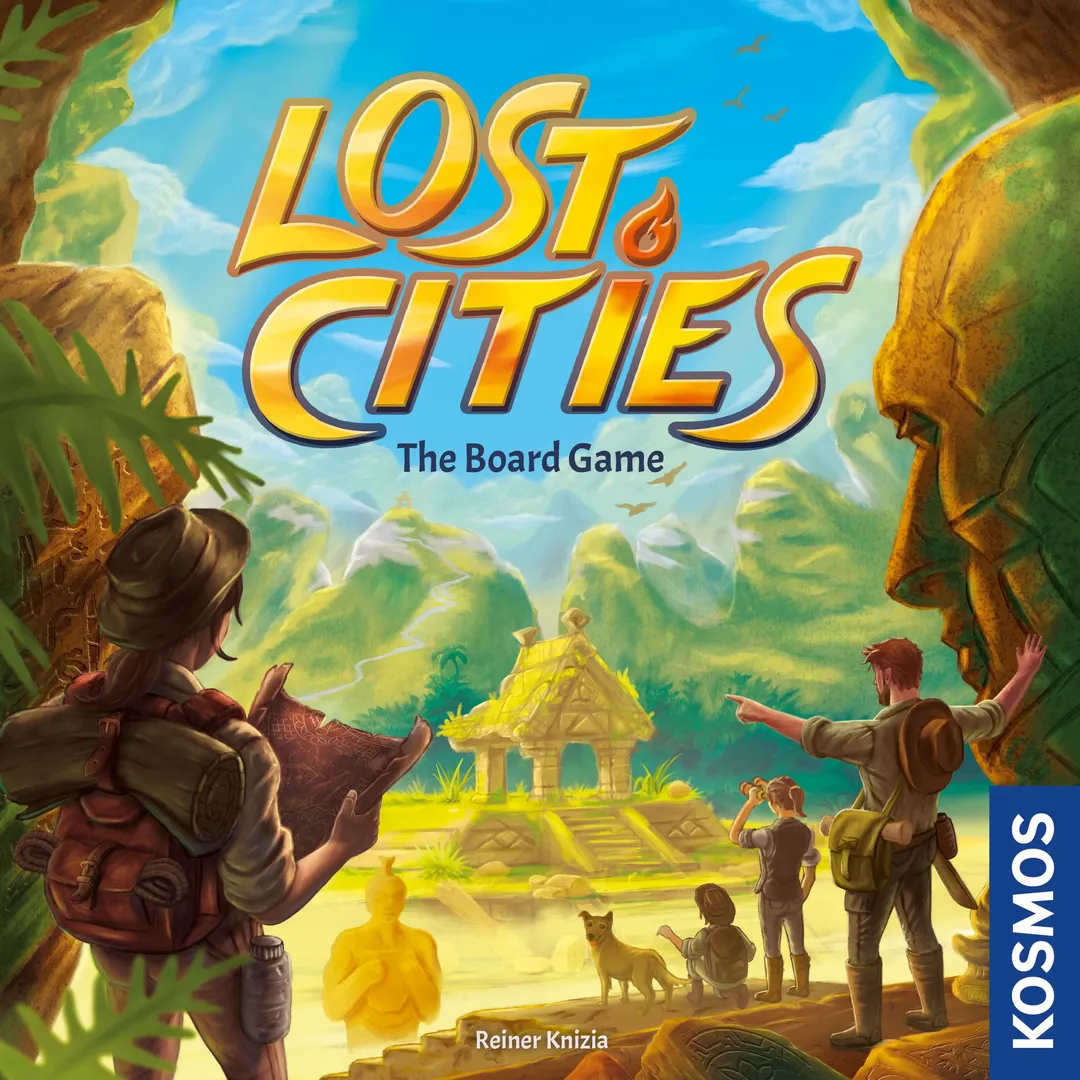
Lost Cities: The Board Game est un jeu de société sorti en 2008 pour 2 à 4 joueurs, avec des parties de 30 à 60 minutes et à partir de 8 ans. Il a été conçu par Reiner Knizia et ses principales mécaniques sont Hand Management, Set Collection et Track Movement.


En anglais
Redevelopment of Lost Cities, first published with altered rules as Keltis, and then published by Rio Grande as Lost Cities: The Board Game with Knizia's original rules and theme. Reiner Knizia: "The original version that we developed is exactly what Jay [Tummelson, owner of Rio Grande Games] has now published [LCBG]" Primary differences between Lost Cities: The Board Game and Keltis: 1. In LCBG you play 3 rounds, scoring at the end of all 3 for the monuments you collect. (Normal scoring occurs each round.) In Keltis, you only play 1 round, and score everything each round. This is not just a rule difference, as the scoring is different for the monuments/stones based on the number collected. 2. In Keltis, you may play your cards in either order, descending, high to low, or ascending, low to high. In LCBG, you must play in ascending order. Note: the rules for LCBG have the Keltis rules as variants, and have the board elements necessary for #1 above. Keltis does not have the rules nor board elements to play LCBG. Kosmos (Keltis publisher) changed the card play to ascending and descending order to lower the luck level and add balance to the game. Kosmos changed the theme to fit in with other Kosmos abstract game series. There are more differences, which are non-substantive. Lost Cities: The Board Game has a different-looking board, tiles and figures (meeples) to connect with its predecessor. Card-play in descending order is an optional variant in this edition. The numbers have been multiplied by 5 to strengthen the relation to the card game, and instead of a scoring track you collect your points as golden coins. From the Keltis entry: Players play cards to move their playing pieces along stone paths. There are cards with 5 different colors/symbols, each corresponding to one path; in addition, each card shows a number (0-10, twice each). In each color, each player can play his cards either ascending or descending. Like Lost Cities, it's better to concentrate on a few paths, since the last spaces grants high points, but ending early gives negative ones. The player in turn plays one card (out of a hand of 8), or discards one. He moves the corresponding playing piece on the path. Many of the spaces have a token that grants some bonus - either direct points (counted on the scoring track), an extra move on a path, or wish stones that are needed at game end to avoid negative points. The game ends when a total of 5 playing pieces have reached the 7th space (or more) on their paths. Now, scoring happens: Pieces which only moved 1-3 steps give negative points (-4, -3, -2). Pieces with 4+ steps grant points (1, 2, 3, 6, 7, 10). One piece of each player is higher and scores double. Fewer than two wish stones grants negative points (-3 / -4) 5+ wish stones yield a bonus of 10 points. All this is added to the points scored during the game
Selon le catalogue, Lost Cities: The Board Game se joue de 2 à 4 personnes. Cette fourchette correspond au nombre de joueurs indiqué par l’éditeur : le jeu s’installe donc pour toute taille de groupe dans cette limite. La mise en place, certaines règles et le décompte peuvent varier selon l’effectif ; vérifiez la configuration exacte dans la règle de votre édition.
La durée indiquée pour Lost Cities: The Board Game est de 30 à 60 minutes, selon l’estimation de l’éditeur pour une partie complète. La durée réelle dépend du groupe, de l’effectif et de la connaissance des règles : les premières parties sont plus longues, les groupes expérimentés terminent plus vite. Mise en place et explication des règles ne sont pas comprises.
Le catalogue indique Lost Cities: The Board Game à partir de 8 ans. C’est la recommandation de l’éditeur ; elle tient compte de la lecture nécessaire, de la complexité des règles et des petits composants, pas seulement du thème. Les plus jeunes peuvent souvent participer avec l’aide d’un adulte : vérifiez l’âge indiqué sur votre édition et tenez compte de l’expérience de votre groupe.
Lost Cities: The Board Game obtient une note de complexité de 1,7 sur 5 auprès des joueurs de BoardGameGeek, ce qui en fait un jeu léger. Cette note reflète la quantité de règles, de planification et de décisions qu’exige une partie typique. Prévoyez une explication plus longue pour les jeux exigeants et utilisez un guide de préparation avant la soirée.
Lost Cities: The Board Game appartient à ces catégories : Exploration et Adventure. Ses principales mécaniques sont Hand Management, Set Collection et Track Movement. Les catégories décrivent le thème et l’univers d’un jeu, tandis que les mécaniques décrivent ce que les joueurs font réellement pendant leur tour. Chaque mécanique mène à une page du catalogue avec des jeux similaires.
Les auteurs crédités pour Lost Cities: The Board Game sont : Reiner Knizia. Ces crédits proviennent des données publiées du jeu et désignent les personnes responsables de sa conception, et non les illustrateurs ou les éditeurs. Les pages d’auteurs sur MeepleRules regroupent les autres titres des mêmes auteurs, ce qui est utile lorsqu’un jeu vous plaît et que vous en cherchez de similaires.
Le catalogue présente Lost Cities: The Board Game comme un jeu de base. Il se joue seul avec le matériel contenu dans la boîte et ne nécessite aucun autre titre. Les extensions, s’il en existe, y ajoutent du contenu ou des règles et sont répertoriées séparément dans le catalogue, avec un lien vers ce jeu de base.