- Note BGG
- 7,3
Man O' War: Plague Fleet
- 2 joueurs
- 180 min
- Complexité 3,0/5
- 1993
1993
Aide aux règles de Man O' War
Des explications claires des tours, effets de cartes et situations litigieuses, avec des références aux sources officielles et un historique des questions sauvegardé.
Pour 2 joueurs
Que voulez-vous savoir ?
Les réponses viennent du livret officiel, avec la page à vérifier.
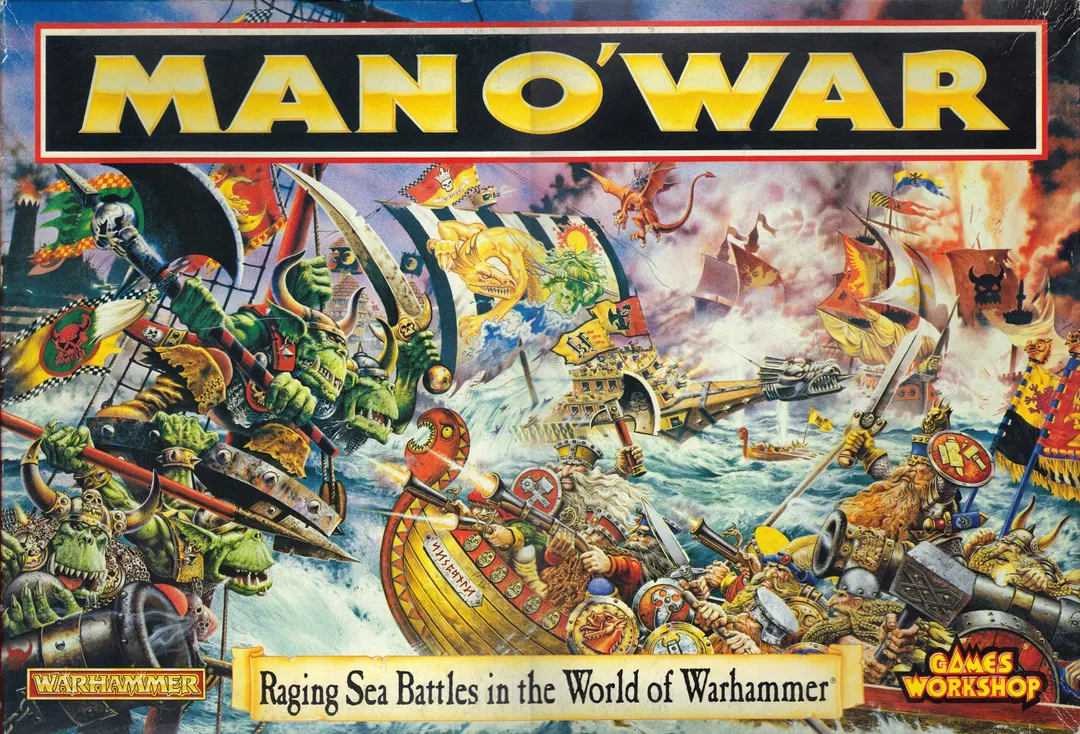
Man O' War est un jeu de société sorti en 1993 pour 2 à 4 joueurs, avec des parties de 180 minutes et à partir de 12 ans. Il a été conçu par Andy Jones, Nigel Stillman et Bill King et ses principales mécaniques sont Variable Player Powers, Dice Rolling et Variable Phase Order.
En anglais
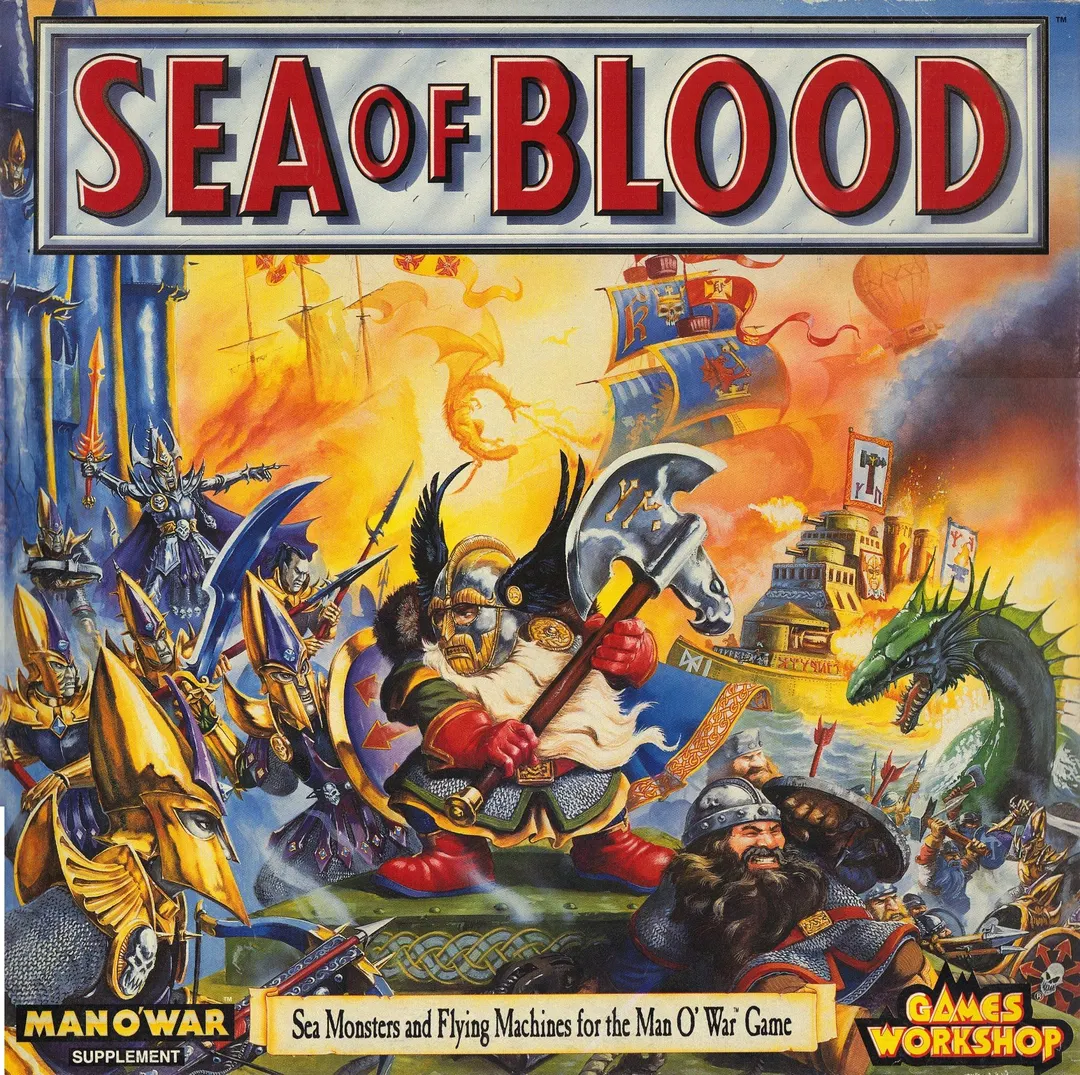
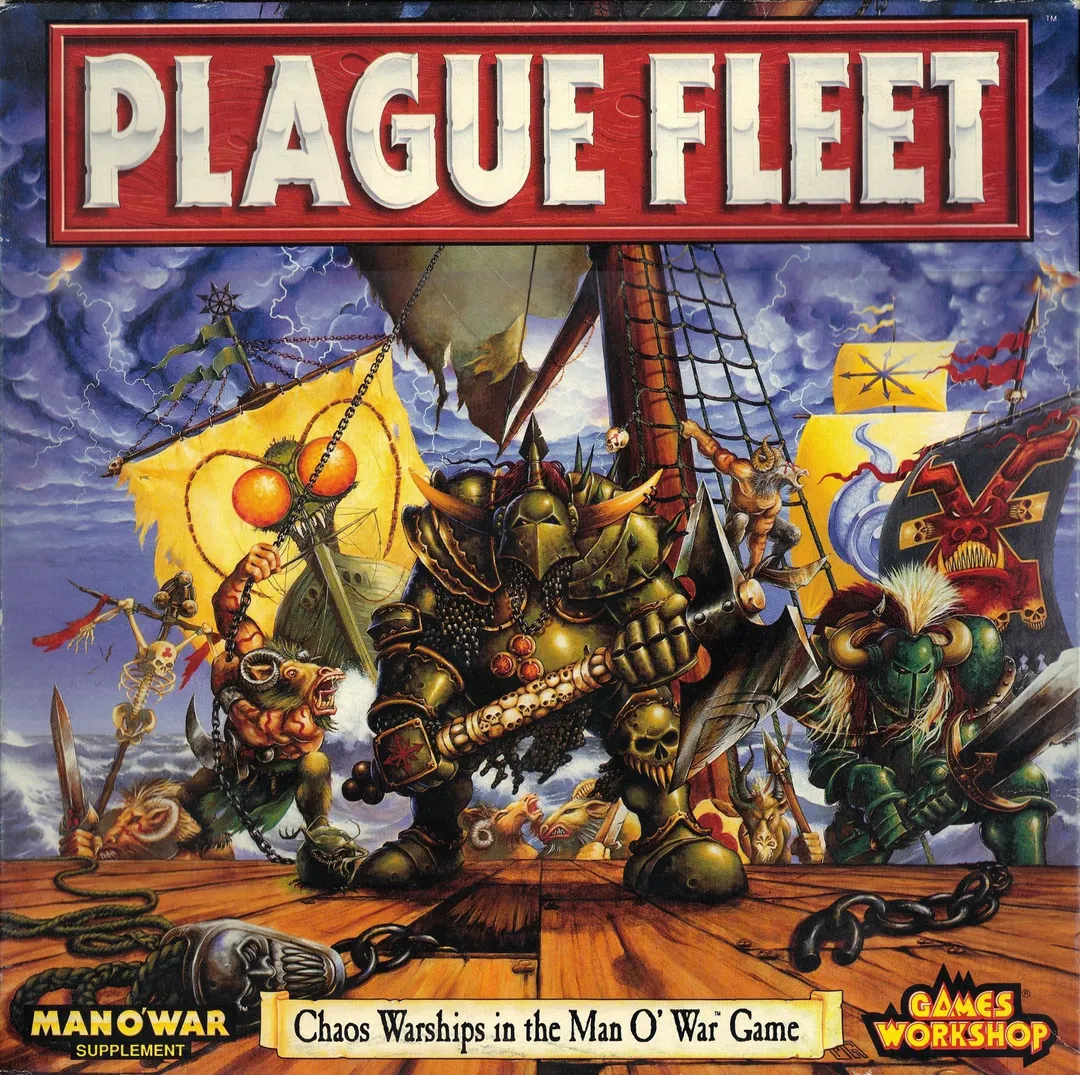
Man O' War is the game of Raging Sea Battles in the Warhammer World. As an admiral of an ocean-going war fleet you must command your ships - which can be either squadrons of Ships of the Line or heavily armored Men O' War and Independents, in the battle for supremacy of the high seas. Players choose fleets from the multitude of races of the Warhammer world. Every ship is represented by a template showing individual areas, each with a description of the items (masts, cannons etc.) in those areas - as well as the damage that they can take before being destroyed. Each location has a value that must be rolled to hit that area when attacked, along with another value that can be rolled by the defending player to possibly prevent any damage that might occur. Ships are classified one of three ways. They are either Ship of the Line (SOL) - which are designed to move as a group of three (each moving and fighting to completion before continuing on with the next ship in the squadron), a Man O' War (MOW)- which are single ships that are much larger, more powerful and crewed by larger numbers than a single SOL classed ship, or finally as an Independent (IND) - which are used individually like a Man O' War but are more in line in strength and abilities to that of a Ship of the Line. At the beginning of each turn, players determine Initiative by each rolling a die which determines who will go 1st in each phase - if the numbers are different, or how the wind direction changes if they both roll the same number. If the wind changes, the initiative roll and resolution is repeated until one player wins the die roll. Players then conduct the Magic Phase with each Admiral having his Wizard make one spell attempt if desired based on the Initiative order previously determined. If a spell is successful, the other player can try and dispel that spell just cast - but only if they have a corresponding type of magic to make the attempt. Next comes the Battle phase - which is also based on the previously determined initiative roll. Players alternate between phases of Movement/Combat, each choosing a single MOW, IND or SOL Squadron and then conducting movement (if desired) and/or making attacks, before passing the turn sequence back to their opponent. This process continues until all ships have been activated on both sides. Once that has occurred, the turn is over and a series of quick turn ending/record keeping events occurs before moving to the next turn. Game play continues for a predetermined time or until one side is destroyed, surrenders or flees the battlefield. The Main Boxed set contained 2 sets of 3 Wargalleys for the Empire and another 2 sets of 3 Wargalleys that were considered Pirates. THe main rules also included Fleet Lists and specific rules for each of the 6 Warhammer Races included in the game: The Imperial (Empire), Bretonnian, Dwarf, High Elf, Dark Elf and Orc. Each Race had had unique features, weapons and abilities that made every battle a new challenge for both players. Rules for a Campaign as well as additional pieces like playing pieces like Shoreforts were also included in the main ruleset. There were two separate expansions to the main game. The first was Plaguefleet which added rules and templates for the Chaos fleets of Khorne, Slaanesh, Tzeentch and Nurgle (collectively known as a Plaguefleet), the Skaven and finally the Chaos Dwarfs. This expansion effectively doubled the number of available fleets for the game. This expansion also included color templates for the original 6 races as well (Imperial, Bretonnian, Dwarf, High Elf, Dark Elf and Orc). The 2nd expansion Sea of Blood mainly introduced new rules for Airpower, Sea Monsters & Beasts and Allies as well as new ships for the Dwarfs and Imperial fleets. The inclusion of the Norse fleet wrapped up the content for this expansion. Finally, complete rules for an Undead fleet - as well as some expansion rules for a few of the other races, were included in several of the issues of Game Workshop's Citadel Journal magazine. A wide variety of miniatures were produced to represent the many ships detailed in the main game and expansion sets but no miniatures were ever officially made for the Undead fleet. Assembling and painting the miniatures gave the game a feeling of being "collectible" as well as being a hobby in itself. Many players have created customized ships and new ships (and even complete fleets) including rules, ships templates and completed miniatures. The largest collection of these creations is housed at Groups IO and there is a very active Facebook Page as well. Man O War is still considered by many GW fan's as one of Games Workshop's best games. The wide variety of different ships, rules for each race and relatively small investment to get up and running contributed greatly to Man O War's popularity. Even today, fans scramble to find copies of the games and with the rise in accessibility to 3D printing, getting a fleet (or two) for this out of print game has never been easier.
Selon le catalogue, Man O' War se joue de 2 à 4 personnes. Cette fourchette correspond au nombre de joueurs indiqué par l’éditeur : le jeu s’installe donc pour toute taille de groupe dans cette limite. La mise en place, certaines règles et le décompte peuvent varier selon l’effectif ; vérifiez la configuration exacte dans la règle de votre édition.
La durée indiquée pour Man O' War est de 180 minutes, selon l’estimation de l’éditeur pour une partie complète. La durée réelle dépend du groupe, de l’effectif et de la connaissance des règles : les premières parties sont plus longues, les groupes expérimentés terminent plus vite. Mise en place et explication des règles ne sont pas comprises.
Le catalogue indique Man O' War à partir de 12 ans. C’est la recommandation de l’éditeur ; elle tient compte de la lecture nécessaire, de la complexité des règles et des petits composants, pas seulement du thème. Les plus jeunes peuvent souvent participer avec l’aide d’un adulte : vérifiez l’âge indiqué sur votre édition et tenez compte de l’expérience de votre groupe.
Man O' War obtient une note de complexité de 2,6 sur 5 auprès des joueurs de BoardGameGeek, ce qui en fait un jeu plutôt léger. Cette note reflète la quantité de règles, de planification et de décisions qu’exige une partie typique. Prévoyez une explication plus longue pour les jeux exigeants et utilisez un guide de préparation avant la soirée.
Man O' War appartient à ces catégories : Fantasy, Wargame et Miniatures. Ses principales mécaniques sont Variable Player Powers, Dice Rolling et Variable Phase Order. Les catégories décrivent le thème et l’univers d’un jeu, tandis que les mécaniques décrivent ce que les joueurs font réellement pendant leur tour. Chaque mécanique mène à une page du catalogue avec des jeux similaires.
Les auteurs crédités pour Man O' War sont : Andy Jones, Nigel Stillman et Bill King. Ces crédits proviennent des données publiées du jeu et désignent les personnes responsables de sa conception, et non les illustrateurs ou les éditeurs. Les pages d’auteurs sur MeepleRules regroupent les autres titres des mêmes auteurs, ce qui est utile lorsqu’un jeu vous plaît et que vous en cherchez de similaires.
Le catalogue présente Man O' War comme un jeu de base. Il se joue seul avec le matériel contenu dans la boîte et ne nécessite aucun autre titre. Les extensions, s’il en existe, y ajoutent du contenu ou des règles et sont répertoriées séparément dans le catalogue, avec un lien vers ce jeu de base.