- Rang BGG
- BGG #52
- Note BGG
- 8,0
Harmonies
1–4 joueurs30–45 min2024
Complexité 2,0/5
- Poser une question sur les règles

Aide aux règles de Nim
Des explications claires des tours, effets de cartes et situations litigieuses, avec un historique des questions sauvegardé.
Pour 2 joueurs
Que voulez-vous savoir ?
Les réponses viennent du livret officiel, avec la page à vérifier.
Nim est un jeu de société pour 2 joueurs.
1–4 joueurs30–45 min2024
2–4 joueurs30–45 min2017
2–4 joueurs60–120 min1997
2 joueurs15–30 min2014
2–4 joueurs30 min2018
1–4 joueurs45 min2017
2 joueurs30–180 min-2200

2–4 joueurs30–45 min2019

2 joueurs30–60 min2003

1–4 joueurs30–45 min2020
2–4 joueurs30–60 min1998

2–4 joueurs20 min2016
En anglais
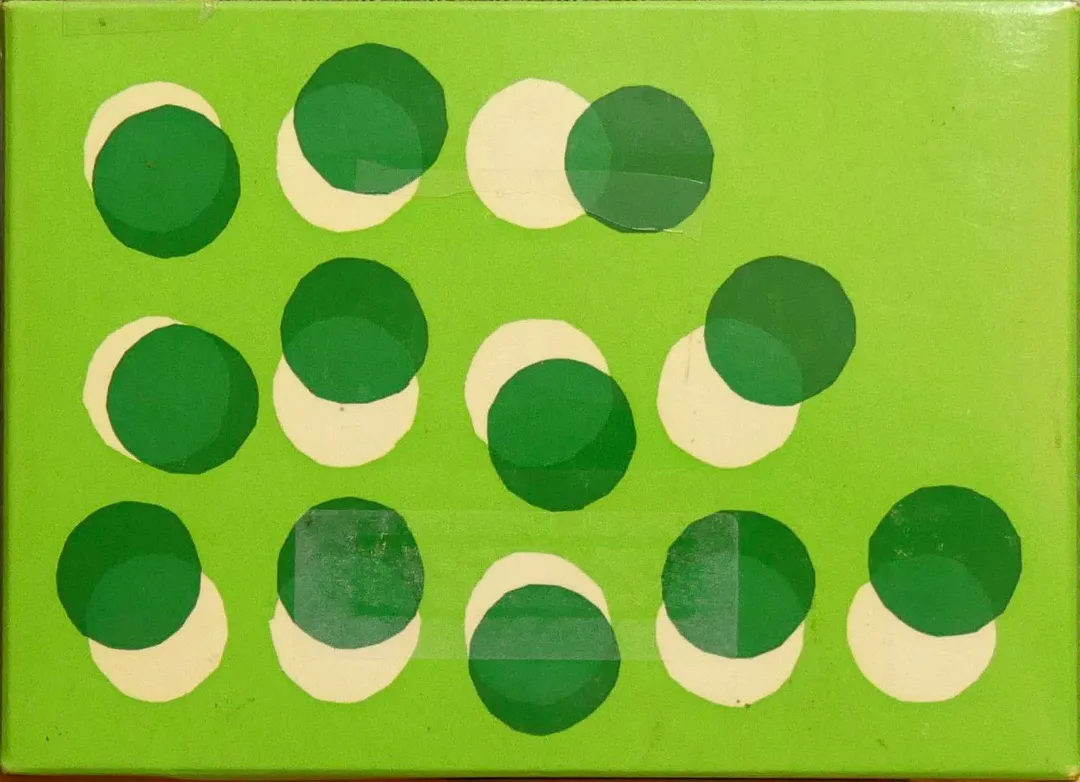
Generally, the game of Nim is a two-player game of perfect information in which there are some number of rows or "heaps" of objects, and a legal move consists of removing any number of objects from a single heap. (For a non-trivial game, we should start with at least three heaps.) In "standard play", the player who cannot make a move on his turn (because no objects remain) is the loser. A very general and far-reaching theory of such games is developed in Berlekamp, Conway, and Guy's Winning Ways for Your Mathematical Plays. In the commercial version pictured, the players take turns removing 1, 2, 3, or 4 pegs together in a row. It would appear from the picture that "rows" can run in any direction, which means that the "heaps" intersect. This is not what most people know as Nim. Also, according to the original description, in this version the loser is the player who has to remove the last peg. This is so-called "misere play", rather than the standard winning condition. Many combinatorial games allow misère play as a variation. Nim is solved, which means that from any initial configuration, one can readily determine whether the next player or the previous player has a winning strategy, and identify a good next move in the former case. For Nim, this can be determined surprisingly readily no matter the size of the heaps, but you're not going to get the secret from me. As most who would be interested in Nim know the solution, there isn't much of a game here. But Nim plays a central role in the theory of combinatorial games, as any two-player finite impartial game is in some sense Nim in disguise: any position in such a game corresponds to a unique Nim-heap, and one can play the disguised game perfectly by making the moves that correspond to winning moves in Nim. Sprouts is one example. This however does not mean that Sprouts itself is solved, as the "disguise" is only partially revealed.
Selon le catalogue, Nim se joue à 2 personnes. C’est le nombre de joueurs indiqué par l’éditeur : le jeu est donc conçu pour exactement ce nombre de participants. Les variantes pour d’autres tailles de groupe, s’il en existe, sont décrites dans la règle de votre édition ; consultez-la avant d’installer une autre configuration.
Nim obtient une note de complexité de 1,5 sur 5 auprès des joueurs de BoardGameGeek, ce qui en fait un jeu léger. Cette note reflète la quantité de règles, de planification et de décisions qu’exige une partie typique. Prévoyez une explication plus longue pour les jeux exigeants et utilisez un guide de préparation avant la soirée.
Nim appartient à ces catégories : Abstract Strategy. Les catégories décrivent le thème, l’univers et le style d’un jeu plutôt que ses règles. Filtrez le catalogue par la même catégorie pour trouver des jeux similaires si vous avez aimé Nim et cherchez quelque chose de comparable pour votre prochaine soirée.
Le catalogue présente Nim comme un jeu de base. Il se joue seul avec le matériel contenu dans la boîte et ne nécessite aucun autre titre. Les extensions, s’il en existe, y ajoutent du contenu ou des règles et sont répertoriées séparément dans le catalogue, avec un lien vers ce jeu de base.
