
- Rang BGG
- BGG #6 189
- Note BGG
- 6,0
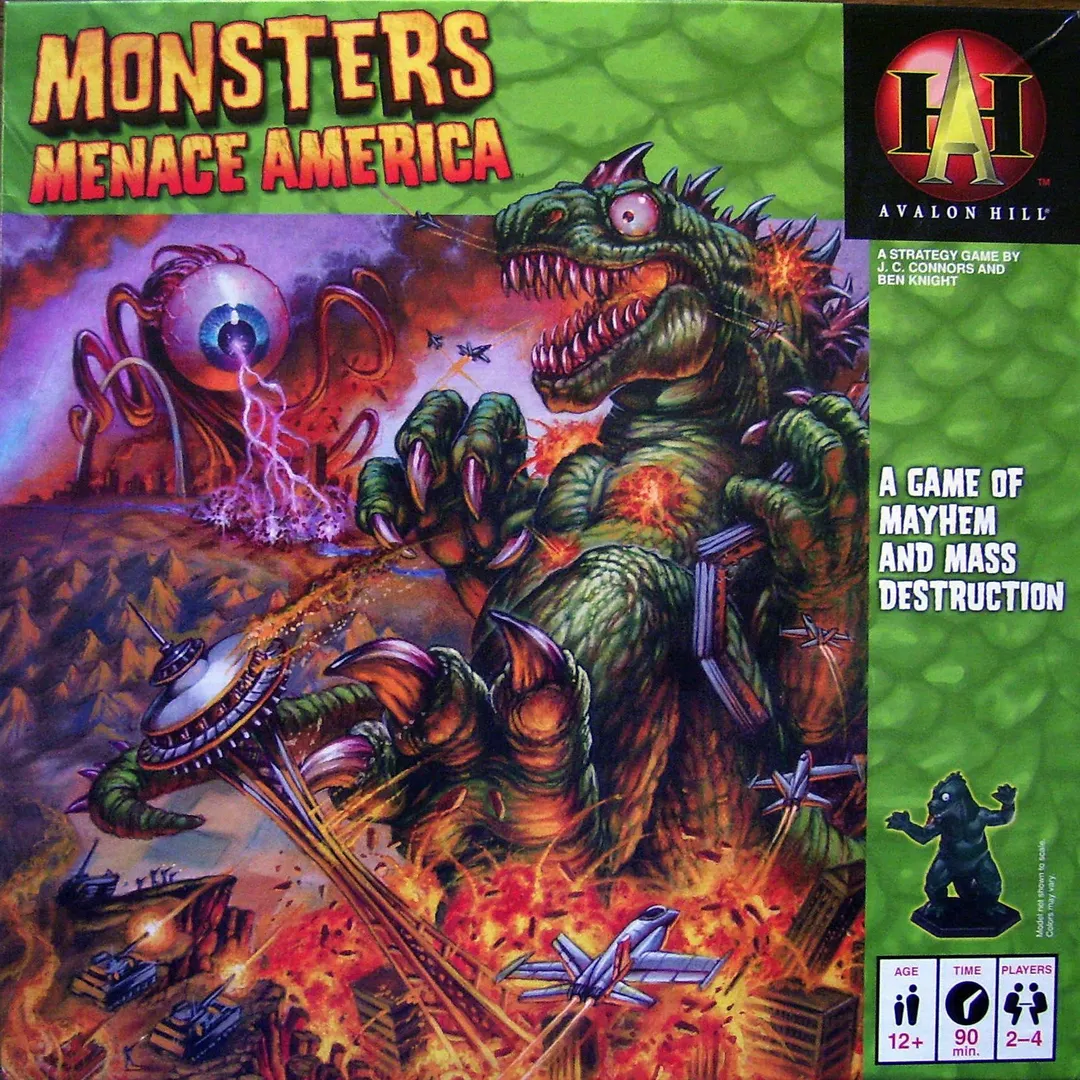
Monsters Menace America
- 2–4 joueurs
- 90 min
- Complexité 1,8/5
- 2005
2008
Aide aux règles de Pacific Typhoon
Des explications claires des tours, effets de cartes et situations litigieuses, avec des références aux sources officielles et un historique des questions sauvegardé.
Pour 3 joueurs
Que voulez-vous savoir ?
Les réponses viennent du livret officiel, avec la page à vérifier.
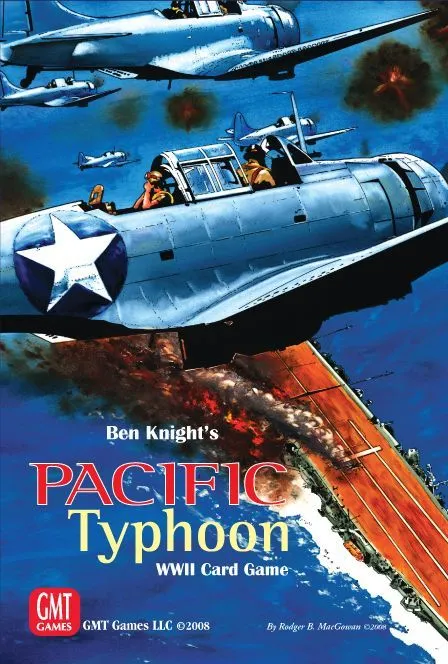
Pacific Typhoon est un jeu de société sorti en 2008 pour 3 à 7 joueurs, avec des parties de 60 à 120 minutes et à partir de 10 ans. Il a été conçu par Ben Knight et John Coussis et ses principales mécaniques sont Hand Management, Dice Rolling et Team-Based Game.
En anglais
Pacific Typhoon is a card-wargame for 3-7 players, ages 10 to adult. The game uses the same system that first appeared in the popular 1998 Avalon Hill card game Atlantic Storm. The game setting is the naval and air war in the Pacific theatre during World War II. Pacific Typhoon depicts the history of the air-naval battles of the Pacific War with 40 battle cards, each of which represents an historical naval or air battle such as Pearl Harbor, Midway, Surigao Strait, etc. Players compete by fighting a non-sequential series of twenty of these battles. A battle lasts for one round of play, so each player gets to play once per battle. The round-leader starts by picking one of two battle cards (he discards the unpicked one). The chosen battle card determines the year of battle. The battle card is also worth a certain number of victory points and resources to whoever wins it. The round-leader alternates after each battle, and the game ends after 20 battles (when the Battle Card deck is exhausted). Players are not assigned to sides. Instead, each player has a hand of force cards that typically includes both Allied and Japanese cards. The force cards represent warships, submarines, aircraft, special weapons, and events. Non-event cards have three separate combat values: Air, Surface, and Sub. For example, the battlecruiser Kirishima has combat values of 1 air, 4 surface and 0 sub; the submarine Flasher has combat values of 0 air, 1 surface and 3 sub; the Zero fighter (Sakai) has combat values of 3 air, 0 surface and 0 sub. Force cards are also worth victory points because they can be destroyed in battle. After the round-leader selects the battle card, he announces the "suit" of battle: Air, Surface, Sub or Combined. Only the combat values in the announced suit will affect the outcome of the battle. In a Combined battle, the combat values of all three suits are added together. The round-leader also announces the time of battle: Day or Night. Some force cards are only playable in a day battle (for example, the aircraft carrier Lexington), a few are only playable in a night battle, but most are playable in day or night battles. The round-leader then gets to play from his hand. He may play on one side or the other (but not both sides together). Each player after him in turn may then play on one side or the other.
Selon le catalogue, Pacific Typhoon se joue de 3 à 7 personnes. Cette fourchette correspond au nombre de joueurs indiqué par l’éditeur : le jeu s’installe donc pour toute taille de groupe dans cette limite. La mise en place, certaines règles et le décompte peuvent varier selon l’effectif ; vérifiez la configuration exacte dans la règle de votre édition.
La durée indiquée pour Pacific Typhoon est de 60 à 120 minutes, selon l’estimation de l’éditeur pour une partie complète. La durée réelle dépend du groupe, de l’effectif et de la connaissance des règles : les premières parties sont plus longues, les groupes expérimentés terminent plus vite. Mise en place et explication des règles ne sont pas comprises.
Le catalogue indique Pacific Typhoon à partir de 10 ans. C’est la recommandation de l’éditeur ; elle tient compte de la lecture nécessaire, de la complexité des règles et des petits composants, pas seulement du thème. Les plus jeunes peuvent souvent participer avec l’aide d’un adulte : vérifiez l’âge indiqué sur votre édition et tenez compte de l’expérience de votre groupe.
Pacific Typhoon obtient une note de complexité de 2,0 sur 5 auprès des joueurs de BoardGameGeek, ce qui en fait un jeu plutôt léger. Cette note reflète la quantité de règles, de planification et de décisions qu’exige une partie typique. Prévoyez une explication plus longue pour les jeux exigeants et utilisez un guide de préparation avant la soirée.
Pacific Typhoon appartient à ces catégories : Card Game, Wargame et Nautical. Ses principales mécaniques sont Hand Management, Dice Rolling et Team-Based Game. Les catégories décrivent le thème et l’univers d’un jeu, tandis que les mécaniques décrivent ce que les joueurs font réellement pendant leur tour. Chaque mécanique mène à une page du catalogue avec des jeux similaires.
Les auteurs crédités pour Pacific Typhoon sont : Ben Knight et John Coussis. Ces crédits proviennent des données publiées du jeu et désignent les personnes responsables de sa conception, et non les illustrateurs ou les éditeurs. Les pages d’auteurs sur MeepleRules regroupent les autres titres des mêmes auteurs, ce qui est utile lorsqu’un jeu vous plaît et que vous en cherchez de similaires.
Le catalogue présente Pacific Typhoon comme un jeu de base. Il se joue seul avec le matériel contenu dans la boîte et ne nécessite aucun autre titre. Les extensions, s’il en existe, y ajoutent du contenu ou des règles et sont répertoriées séparément dans le catalogue, avec un lien vers ce jeu de base.