
- Rang BGG
- BGG #6 483
- Note BGG
- 8,0
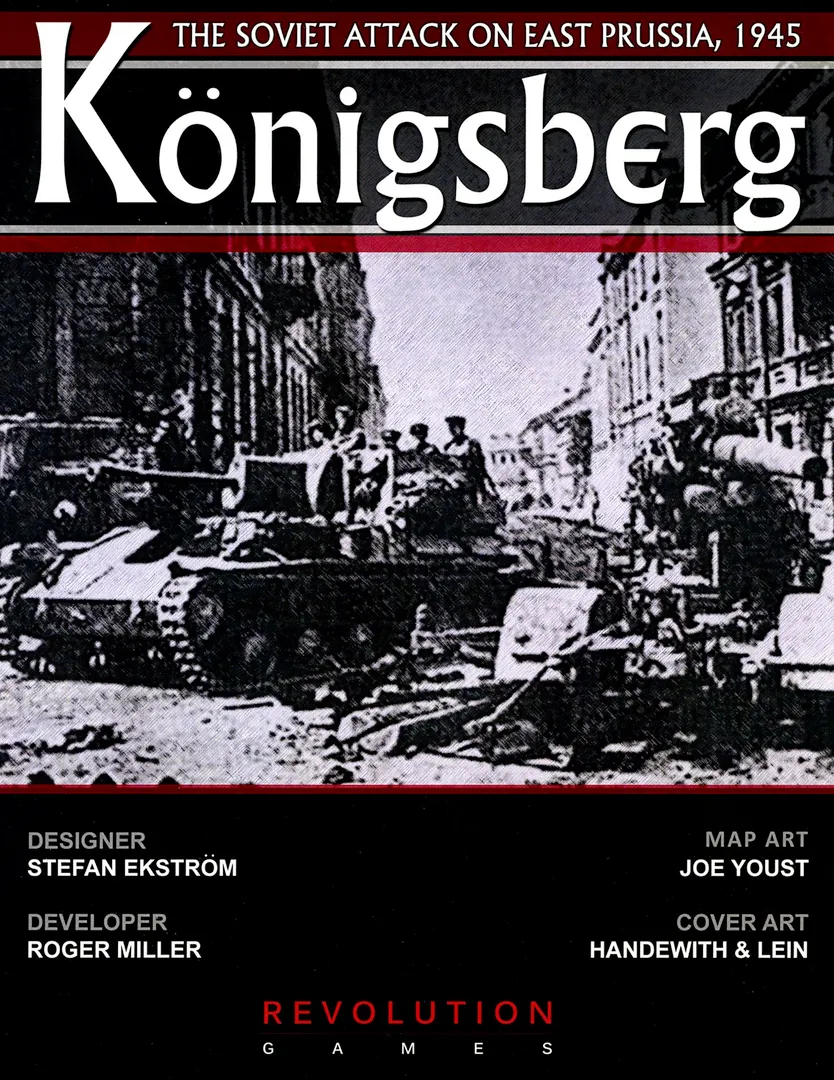
Königsberg: The Soviet Attack on East Prussia, 1945
- 1–3 joueurs
- 240–480 min
- Complexité 2,3/5
- 2018
2009
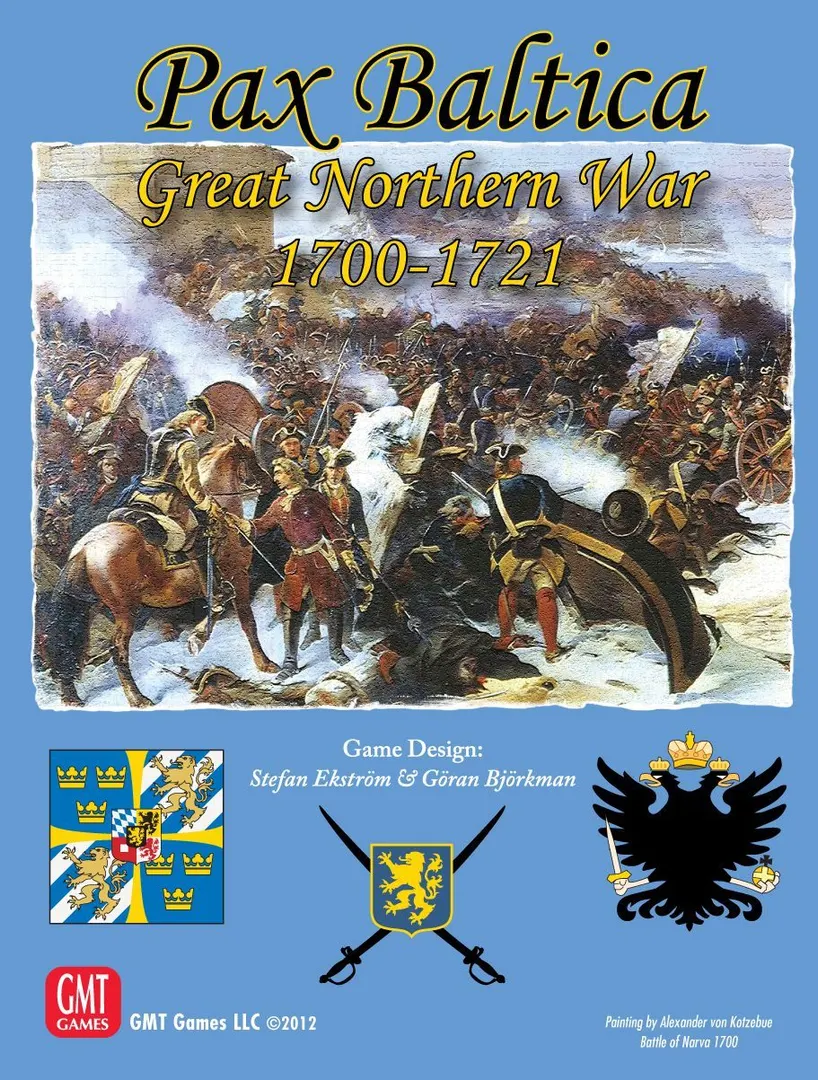
Aide aux règles de Pax Baltica: Great Northern War 1700-1721
Des explications claires des tours, effets de cartes et situations litigieuses, avec des références aux sources officielles et un historique des questions sauvegardé.
Pour 2 joueurs
Que voulez-vous savoir ?
Les réponses viennent du livret officiel, avec la page à vérifier.
Pax Baltica: Great Northern War 1700-1721 est un jeu de société sorti en 2009 pour 2 joueurs, avec des parties de 60 à 840 minutes et à partir de 12 ans. Il a été conçu par Stefan Ekström et Göran Björkman et ses principales mécaniques sont Area Movement, Dice Rolling et Secret Unit Deployment.

En anglais
It is 1700, and a youthful Karl XII has recently come to power as King of Sweden. Rivals around the Baltic Sea seize the opportunity to get their hands on Swedish territory. An alliance is struck between Denmark, Saxony-Poland, and Russia, the last under the vibrant leadership of Tsar Pyotr. This coalition mobilizes to take advantage of the untried King, and break Swedish dominance in the Baltics forever... Thus opened the Great Northern War, ravaging Northern and Eastern Europe for over two decades at the beginning of the eighteenth century. By the end of the war, one nation would lose its status as a Great Power, while another would rise to dominate the region for centuries onward. PAX BALTICA is a two-player wargame covering the entire Great Northern War (1700-1721). Published first as a limited “guerilla” edition in 2009 by Three Crowns Game Productions of Sweden, this new enhanced edition has been revised and upgraded by GMT Games in conjunction with the original designers. Over twenty years of fighting span the map from Norway to Turkey, Saxony to Finland. Units are represented by labeled wooden blocks, which are stood upright to conceal their identity and strength from the enemy, allowing players to dupe and outfox each other on campaign. Action points are spent to maneuver on the map, but also for reconnaissance, replacements, or a roll on the treacherous but lucrative National Politics Table. Straightforward rules account for lines of communication and forage, as well as time-consuming sieges, adding to the period flavor. The fast-paced and exciting combat system captures the aggressive "charge with cold steel" tactics that Sweden used to defeat her enemies in succession at the start of the war. Players are subject to a host of influences and distractions that will hinder their plans at every turn. An elaborate plan will be at the mercy of a poor action roll or sudden plague, while other events shape strategy with historical motivations and deterrents. Players must prepare for the worst, but be open to fleeting opportunities. Special rules capture simply the unique events and circumstances of the Great Northern War, including: • Russian army reforms • Ukrainian Cossack uprisings • Intervention by the Ottoman Empire • Polish royal politics • Attrition of Swedish manpower • Founding of Sankt-Peterburg Four scenarios are included with the game: a short tournament scenario covering the Swedish invasion of Russia that led to the Battle of Poltáva; two scenarios that simulate the first and last half of the war; and a “grand campaign” scenario that refights the entirety of the Great Northern War, a first in wargame publishing. Turns typically take no more than a couple of minutes, ensuring a fast pace of play. Swings of fortune ensure that no two games will turn out the same. Can you save Sweden’s empire? Or ensure Russia’s rise to prominence? You make the choices that will determine who reigns over the PAX BALTICA. Components: • 1 Map (22” x 34”) • 1 Rulebook (16 pages) • 1 Playbook (32 pages) • 65 wooden blocks (units) in five colors • 1 sticker sheet for mounting on blocks • 51 wooden cubes (control markers, etc.) in six colors • 8 dice, 4 blue and 4 green Game Design: Stefan Ekström and Göran Björkman Development for GMT: Scott Muldoon Complexity: 4 Solitaire Suitability: 3 Scale: Strategic. 1 turn = one season; units are armies, regiments, and fleets; 1 strength step = approx. 1500 troops or 6-8 fighting ships Players: 2 Time to Play: 1-2 hours for the shortest scenario, 7-14 hours for the grand campaign Original Three Crowns edition: Great Northern war, a 21-year long war lasted from 1700 to 1721 and ended Sweden’s period as a major power in northern Europe and started Russia’s domination of Eastern Europe. An intriguing conflict that is often considered a side-show of the War of Spanish succession. Nevertheless the former had probably greater impact of the developments in Europe during the 100 years to come than the latter. The effects of the war are in fact still seen today. Pax Baltica. Probably the first board game ever covering the entire Great Northern War. The game includes five different scenarios with a varying playtime between two hours and a day. The units in the game are blocks which give a great flexibility in taking steps and differentiate the quality and strength of the troops. The high quality map is divided into provinces which you have to conquer in order to take control over a country. This dynamic conflict covers large parts of northern and eastern Europe. From Bremen in the West to Smolensk in the East. From Trondheim in the North to Bender in the South. Playable nations are Sweden, Russia, Turkey, Denmark and Saxony. Other countries represented as minors are: Great Britain, Poland, Ukraine, Prussia and Hanover. The game, packed in a book case, includes a A2 full color map, 60 high quality wooden blocks, 4 dice, various markers and rules including 5 scenarios.
Selon le catalogue, Pax Baltica: Great Northern War 1700-1721 se joue à 2 personnes. C’est le nombre de joueurs indiqué par l’éditeur : le jeu est donc conçu pour exactement ce nombre de participants. Les variantes pour d’autres tailles de groupe, s’il en existe, sont décrites dans la règle de votre édition ; consultez-la avant d’installer une autre configuration.
La durée indiquée pour Pax Baltica: Great Northern War 1700-1721 est de 60 à 840 minutes, selon l’estimation de l’éditeur pour une partie complète. La durée réelle dépend du groupe, de l’effectif et de la connaissance des règles : les premières parties sont plus longues, les groupes expérimentés terminent plus vite. Mise en place et explication des règles ne sont pas comprises.
Le catalogue indique Pax Baltica: Great Northern War 1700-1721 à partir de 12 ans. C’est la recommandation de l’éditeur ; elle tient compte de la lecture nécessaire, de la complexité des règles et des petits composants, pas seulement du thème. Les plus jeunes peuvent souvent participer avec l’aide d’un adulte : vérifiez l’âge indiqué sur votre édition et tenez compte de l’expérience de votre groupe.
Pax Baltica: Great Northern War 1700-1721 obtient une note de complexité de 2,9 sur 5 auprès des joueurs de BoardGameGeek, ce qui en fait un jeu plutôt léger. Cette note reflète la quantité de règles, de planification et de décisions qu’exige une partie typique. Prévoyez une explication plus longue pour les jeux exigeants et utilisez un guide de préparation avant la soirée.
Pax Baltica: Great Northern War 1700-1721 appartient à ces catégories : Wargame et Age of Reason. Ses principales mécaniques sont Area Movement, Dice Rolling et Secret Unit Deployment. Les catégories décrivent le thème et l’univers d’un jeu, tandis que les mécaniques décrivent ce que les joueurs font réellement pendant leur tour. Chaque mécanique mène à une page du catalogue avec des jeux similaires.
Les auteurs crédités pour Pax Baltica: Great Northern War 1700-1721 sont : Stefan Ekström et Göran Björkman. Ces crédits proviennent des données publiées du jeu et désignent les personnes responsables de sa conception, et non les illustrateurs ou les éditeurs. Les pages d’auteurs sur MeepleRules regroupent les autres titres des mêmes auteurs, ce qui est utile lorsqu’un jeu vous plaît et que vous en cherchez de similaires.
Le catalogue présente Pax Baltica: Great Northern War 1700-1721 comme un jeu de base. Il se joue seul avec le matériel contenu dans la boîte et ne nécessite aucun autre titre. Les extensions, s’il en existe, y ajoutent du contenu ou des règles et sont répertoriées séparément dans le catalogue, avec un lien vers ce jeu de base.