

- Note BGG
- 8,7
Regimental Fire and Fury: Civil War Battle Scenarios Volume 1 – 1861-1862
- 2 joueurs
- 180 min
- 2012
2010
Aide aux règles de Regimental Fire and Fury
Des explications claires des tours, effets de cartes et situations litigieuses, avec des références aux sources officielles et un historique des questions sauvegardé.
Pour 2 joueurs
Que voulez-vous savoir ?
Les réponses viennent du livret officiel, avec la page à vérifier.
Regimental Fire and Fury est un jeu de société sorti en 2010 pour 2 joueurs, avec des parties de 180 minutes et à partir de 14 ans. Il a été conçu par Rich Hasenauer et ses principales mécaniques sont Dice Rolling.



En anglais
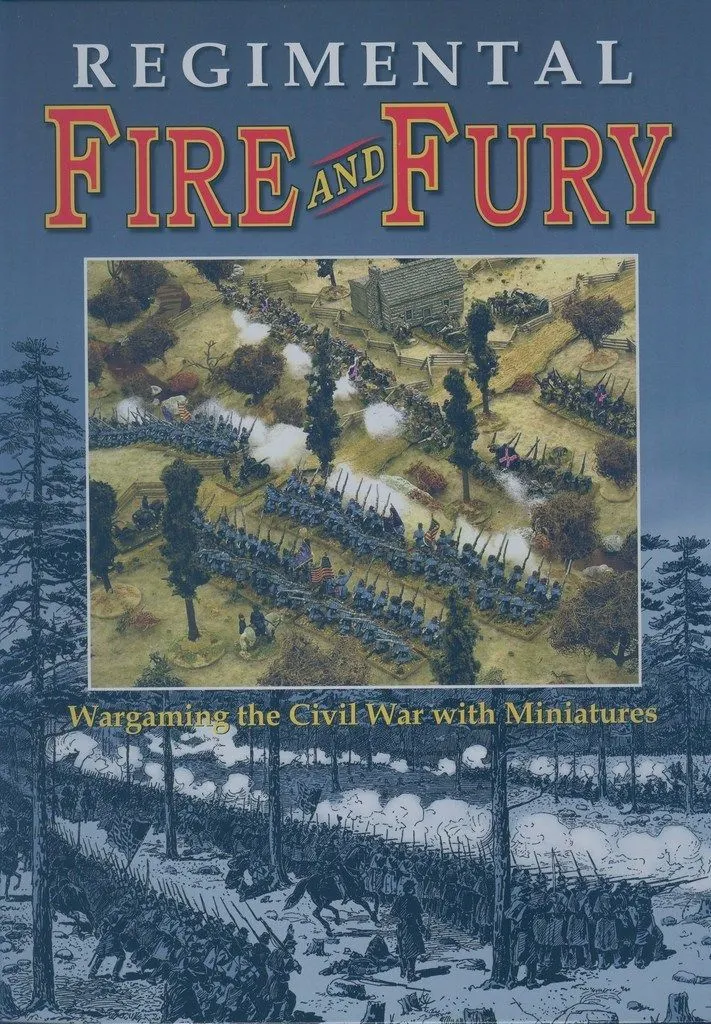
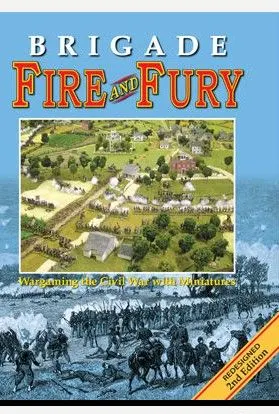
From the publisher's website (fireandfury.com): Regimental Fire and Fury: Wargaming the Civil War with Miniatures By Rich Hasenauer Fire and Fury is one of the most popular historical military miniatures wargames in the hobby. This new regimental edition provides players a more in-depth look at American Civil War combat. The smaller scale allows you to take command of individual regiments and batteries and refight in greater detail many of the war's smaller engagements, as well as critical actions of the conflict's famous battles. For the new player it is an easy game to learn and enjoy. The veteran Fire and Fury gamer will find much that is familiar, like the play sequence, maneuver table, and combat system, while discovering a game taken to a new level of sophistication. Refined game mechanics strike a balance between playability and historical accuracy that draw upon twenty years of the Fire and Fury gaming experience. Brief Description Scope. A set of wargame rules using military miniatures, that allows players to recreate the small engagements and portions of larger battles of the American Civil War, 1861-1864. Scale. Tactical. 10-15 minutes per turn. 1" = 25 yards. Units are regiments of infantry or cavalry and gun sections grouped into batteries for artillery. Intended for 15mm figures, other scale figures can be used by increasing or decreasing the basing and ground scales as described in the rules. Basing. Each 1" x 3/4" stand with 3 infantry figures, and 1" x 1" with 2 cavalry figures, represents 40 men. Each 1" x 1-1/2" stand with a gun model and 2 or 3 figure crew represents a 2-gun section. Unit size can range from 3 to 20 troop stands per regiment, with the average of 8-12 stands per unit. Batteries are represented by 2 to 3 gun stands. Game Turn Sequence. A game turn is divided into an alternating Union player turn and Confederate player turn. Players must follow the Player Turn Sequence. Each player turn consists of three phases. One phase must be completed before moving to the next. Some activities in a phase are performed by the opposing player or jointly by both players. Maneuver Phase - In the first phase of a player turn the player must resolve a maneuver check for each unit which he controls on the game table. A maneuver check involves either one or more units under the command of a single leader, or a single unit that is out of command. The maneuver check combines the elements in warfare of morale, command and control into a single die roll procedure using the Maneuver Table. The effects from the table describe the movement and other maneuvers that each unit is allowed or required to perform in this phase. Musketry and Cannonade Phase - There are two kinds of combat in the game: fire combat and charge combat. All fire combat is resolved in the second phase of the player turn. Both Union and Confederate units may fire during this phase. The phase consists of two rounds of fire combat. It begins with a round of defensive fire followed by a round of offensive fire. In the Confederate player turn only Union units may defensive fire, and only Confederate units may offensive fire. During the Union player turn the order is reversed with Confederate defensive fire followed by Union offensive fire. All fire combat is resolved using the Musketry & Cannonade Table to determine casualties and other combat effects. Charge Phase - In the third and final phase of a player turn a charge combat must be resolved wherever a charging unit made contact with the enemy. The relative position between attacking and defending units will determine which combats need to be divided into less complex combat situations. Both sides then follow a joint die roll procedure to resolve a round of charge combat. The Charge Table is used to determine casualties and other combat effects. Depending on the results of the first round of combat, a second round of breakthrough charge combat may follow after all first round charge combats are resolved. After all charge combat is resolved, the current player turn ends and the next player turn begins. Battle Scenarios. The book provides guidelines for designing your own scenarios and six historical scenarios covering different periods and theaters of the war: 1.The Battle of Ball's Bluff, October 21, 1861. 2.Bloody Hill, The Battle of Wilson's Creek, August 10, 1861. 3.Casey's Redoubt, The Battle of Seven Pines, May 31, 1862. 4.The Battle Comes to Sheridan, The Battle of Stones River, December 31, 1862. 5.Little Round Top, The Battle of Gettysburg, July 2, 1863. 6.The Battle of Olustee, February 20, 1864.
Selon le catalogue, Regimental Fire and Fury se joue à 2 personnes. C’est le nombre de joueurs indiqué par l’éditeur : le jeu est donc conçu pour exactement ce nombre de participants. Les variantes pour d’autres tailles de groupe, s’il en existe, sont décrites dans la règle de votre édition ; consultez-la avant d’installer une autre configuration.
La durée indiquée pour Regimental Fire and Fury est de 180 minutes, selon l’estimation de l’éditeur pour une partie complète. La durée réelle dépend du groupe, de l’effectif et de la connaissance des règles : les premières parties sont plus longues, les groupes expérimentés terminent plus vite. Mise en place et explication des règles ne sont pas comprises.
Le catalogue indique Regimental Fire and Fury à partir de 14 ans. C’est la recommandation de l’éditeur ; elle tient compte de la lecture nécessaire, de la complexité des règles et des petits composants, pas seulement du thème. Les plus jeunes peuvent souvent participer avec l’aide d’un adulte : vérifiez l’âge indiqué sur votre édition et tenez compte de l’expérience de votre groupe.
Regimental Fire and Fury obtient une note de complexité de 2,9 sur 5 auprès des joueurs de BoardGameGeek, ce qui en fait un jeu plutôt léger. Cette note reflète la quantité de règles, de planification et de décisions qu’exige une partie typique. Prévoyez une explication plus longue pour les jeux exigeants et utilisez un guide de préparation avant la soirée.
Regimental Fire and Fury appartient à ces catégories : Wargame, Miniatures et American Civil War. Ses principales mécaniques sont Dice Rolling. Les catégories décrivent le thème et l’univers d’un jeu, tandis que les mécaniques décrivent ce que les joueurs font réellement pendant leur tour. Chaque mécanique mène à une page du catalogue avec des jeux similaires.
Les auteurs crédités pour Regimental Fire and Fury sont : Rich Hasenauer. Ces crédits proviennent des données publiées du jeu et désignent les personnes responsables de sa conception, et non les illustrateurs ou les éditeurs. Les pages d’auteurs sur MeepleRules regroupent les autres titres des mêmes auteurs, ce qui est utile lorsqu’un jeu vous plaît et que vous en cherchez de similaires.
Le catalogue présente Regimental Fire and Fury comme un jeu de base. Il se joue seul avec le matériel contenu dans la boîte et ne nécessite aucun autre titre. Les extensions, s’il en existe, y ajoutent du contenu ou des règles et sont répertoriées séparément dans le catalogue, avec un lien vers ce jeu de base.

