
- Rang BGG
- BGG #4 883
- Note BGG
- 7,1
Neotopia
- 2–4 joueurs
- 30–60 min
- Complexité 2,0/5
- 2023
2020
Aide aux règles de Rossio
Des explications claires des tours, effets de cartes et situations litigieuses, avec des références aux sources officielles et un historique des questions sauvegardé.
Pour 1 joueur
Que voulez-vous savoir ?
Les réponses viennent du livret officiel, avec la page à vérifier.
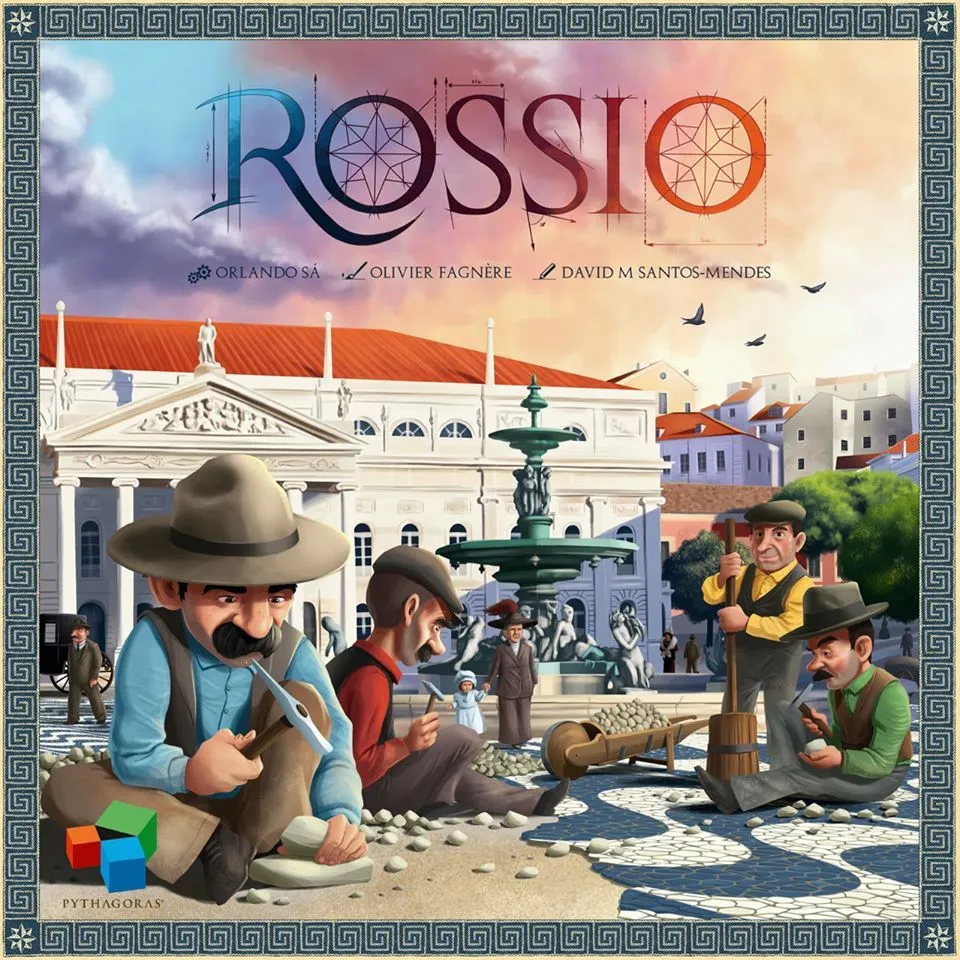
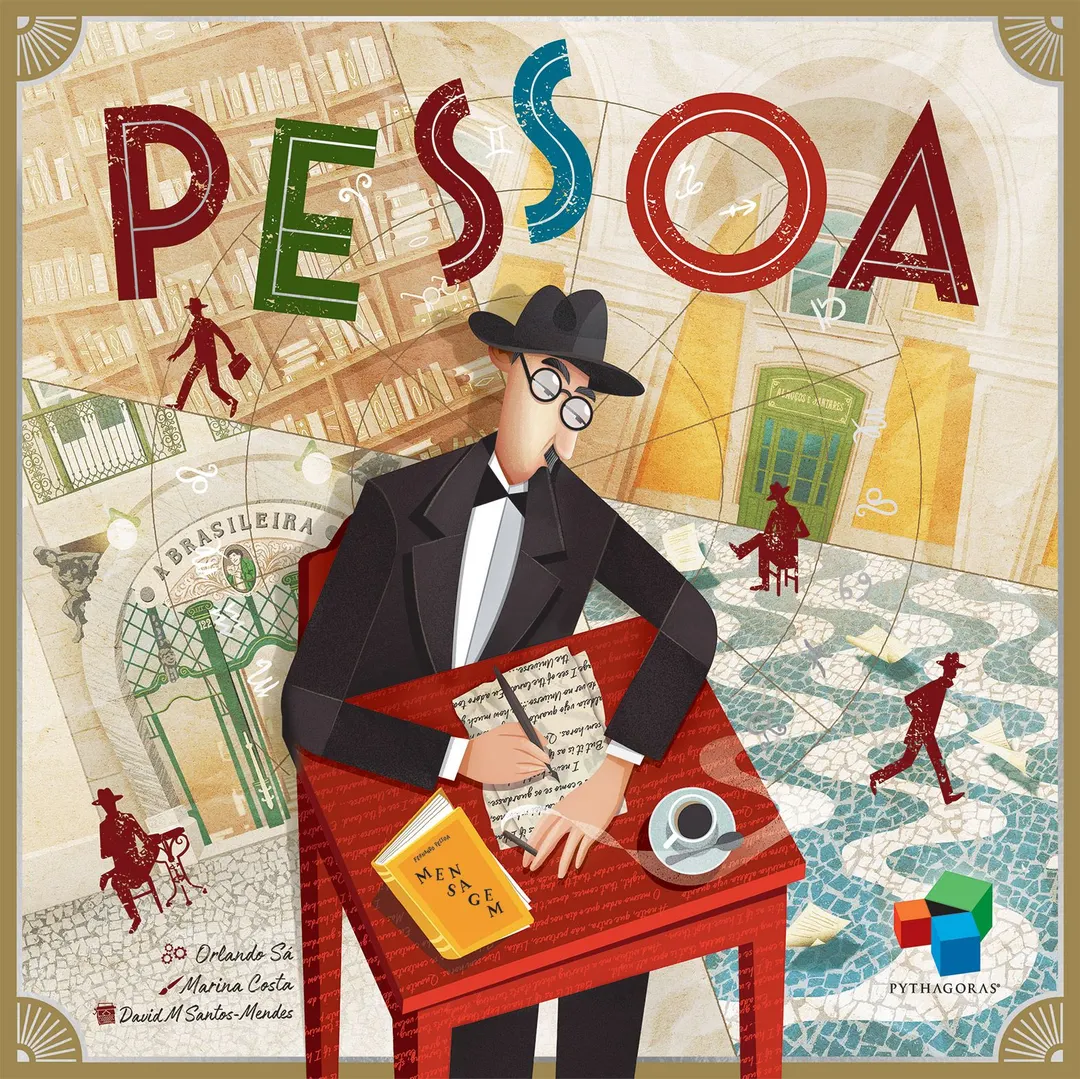
Rossio est un jeu de société sorti en 2020 pour 1 à 4 joueurs, avec des parties de 30 à 45 minutes et à partir de 8 ans. Il a été conçu par Orlando Sá et ses principales mécaniques sont Hand Management, Area Majority / Influence et Tile Placement.


En anglais
The Portuguese King has called the finest stonemasons of the country to pave one of the most important squares with calçada tiles (worldwide famous black and white tiles that pave several squares in Portugal). But the task is enormous and players will have to count with the aid of helper cards who will help them score points and/or collect money. In Rossio, players start the game by drawing five cards and keeping three of them on their hands. On a player's turn, players will first recruit a card from their hands, placing it on the rightmost space under their player board, sliding to the left all cards previously recruited, discarding the card that slides off their boards (under each player board there are only 3 card slots). If the newly recruited card is played face-up, players must pay its cost in coins. If the card is played face-down, no money needs to be spent. Then, ALL cards under a player board will activate: face-up cards will give the player Points for each time the pattern depicted on the card is found on the square. Face-down cards will provide the player 1 coin each. Then, players must build the leftmost calçada tile of their player boards. Players can never voluntarily change the order of the tiles on their board. At any moment players can, however, spend 1 coin to swap 2 pieces on their board that are orthogonally adjacent. The tile must be built in the square orthogonally adjacent to at least 2 elements: 1 tile and 1 wall, or 2 tiles. And must be built on the leftmost available space of the line it is being built. If the players manage to build orthogonally adjacent to a similar tile, they can as bonus build the next leftmost tile, and so on, until they decide to stop or until they can't build more. Players collect then 1 coin for each coin depicted on the spaces that were left free on their player boards after tiles were built. Finally, players end their turn by drawing 1 card into their hand from the 4 cards available on the market. However, the amount of cards players can choose from depends on the number of tiles that they have built. So, if players build only 1 tile, they must take the 1st card. If they build 3 tiles, for example, they can choose between the 1st, 2nd or 3rd cards. Players end their turns by refilling the empty spaces of their player boards with tiles from the facedown stacks. As the square is being cooperatively built, certain patterns appear more often than others and the scoring of face-up cards becomes exponential. Also, when players complete a column, they collect a bonus, that can be either 1 coin or drawing more cards. Money is very tight in this game, so gaining an extra coin can be crucial to recruiting a card from your hand face-up. The game ends when the square is finished and the player with most points wins the game. Rossio is all about timing: Recruit a card face-up late in the game, and then it will score fewer times than expected. Recruit it too early, and it will score you a few points since there are few tiles built on the square. To many cards recruited face down will give that extra amount of money, but, they won't score any points. Build several tiles and you're probably helping your opponents. Build fewer tiles and you probably won't have money next turn to recruit a face-up card. Rossio is a game with very simple rules, but with high interaction between players and interesting decisions every single turn. —description from the designer
Selon le catalogue, Rossio se joue de 1 à 4 personnes. Cette fourchette correspond au nombre de joueurs indiqué par l’éditeur : le jeu s’installe donc pour toute taille de groupe dans cette limite. La mise en place, certaines règles et le décompte peuvent varier selon l’effectif ; vérifiez la configuration exacte dans la règle de votre édition.
La durée indiquée pour Rossio est de 30 à 45 minutes, selon l’estimation de l’éditeur pour une partie complète. La durée réelle dépend du groupe, de l’effectif et de la connaissance des règles : les premières parties sont plus longues, les groupes expérimentés terminent plus vite. Mise en place et explication des règles ne sont pas comprises.
Le catalogue indique Rossio à partir de 8 ans. C’est la recommandation de l’éditeur ; elle tient compte de la lecture nécessaire, de la complexité des règles et des petits composants, pas seulement du thème. Les plus jeunes peuvent souvent participer avec l’aide d’un adulte : vérifiez l’âge indiqué sur votre édition et tenez compte de l’expérience de votre groupe.
Rossio obtient une note de complexité de 1,9 sur 5 auprès des joueurs de BoardGameGeek, ce qui en fait un jeu léger. Cette note reflète la quantité de règles, de planification et de décisions qu’exige une partie typique. Prévoyez une explication plus longue pour les jeux exigeants et utilisez un guide de préparation avant la soirée.
Rossio appartient à ces catégories : Card Game. Ses principales mécaniques sont Hand Management, Area Majority / Influence et Tile Placement. Les catégories décrivent le thème et l’univers d’un jeu, tandis que les mécaniques décrivent ce que les joueurs font réellement pendant leur tour. Chaque mécanique mène à une page du catalogue avec des jeux similaires.
Les auteurs crédités pour Rossio sont : Orlando Sá. Ces crédits proviennent des données publiées du jeu et désignent les personnes responsables de sa conception, et non les illustrateurs ou les éditeurs. Les pages d’auteurs sur MeepleRules regroupent les autres titres des mêmes auteurs, ce qui est utile lorsqu’un jeu vous plaît et que vous en cherchez de similaires.
Le catalogue présente Rossio comme un jeu de base. Il se joue seul avec le matériel contenu dans la boîte et ne nécessite aucun autre titre. Les extensions, s’il en existe, y ajoutent du contenu ou des règles et sont répertoriées séparément dans le catalogue, avec un lien vers ce jeu de base.