
- Rang BGG
- BGG #246
- Note BGG
- 7,6
Azul: Summer Pavilion
- 2–4 joueurs
- 30–45 min
- Complexité 2,1/5
- 2019
2013
Aide aux règles de Sanssouci
Des explications claires des tours, effets de cartes et situations litigieuses, avec des références aux sources officielles et un historique des questions sauvegardé.
Pour 2 joueurs
Que voulez-vous savoir ?
Les réponses viennent du livret officiel, avec la page à vérifier.
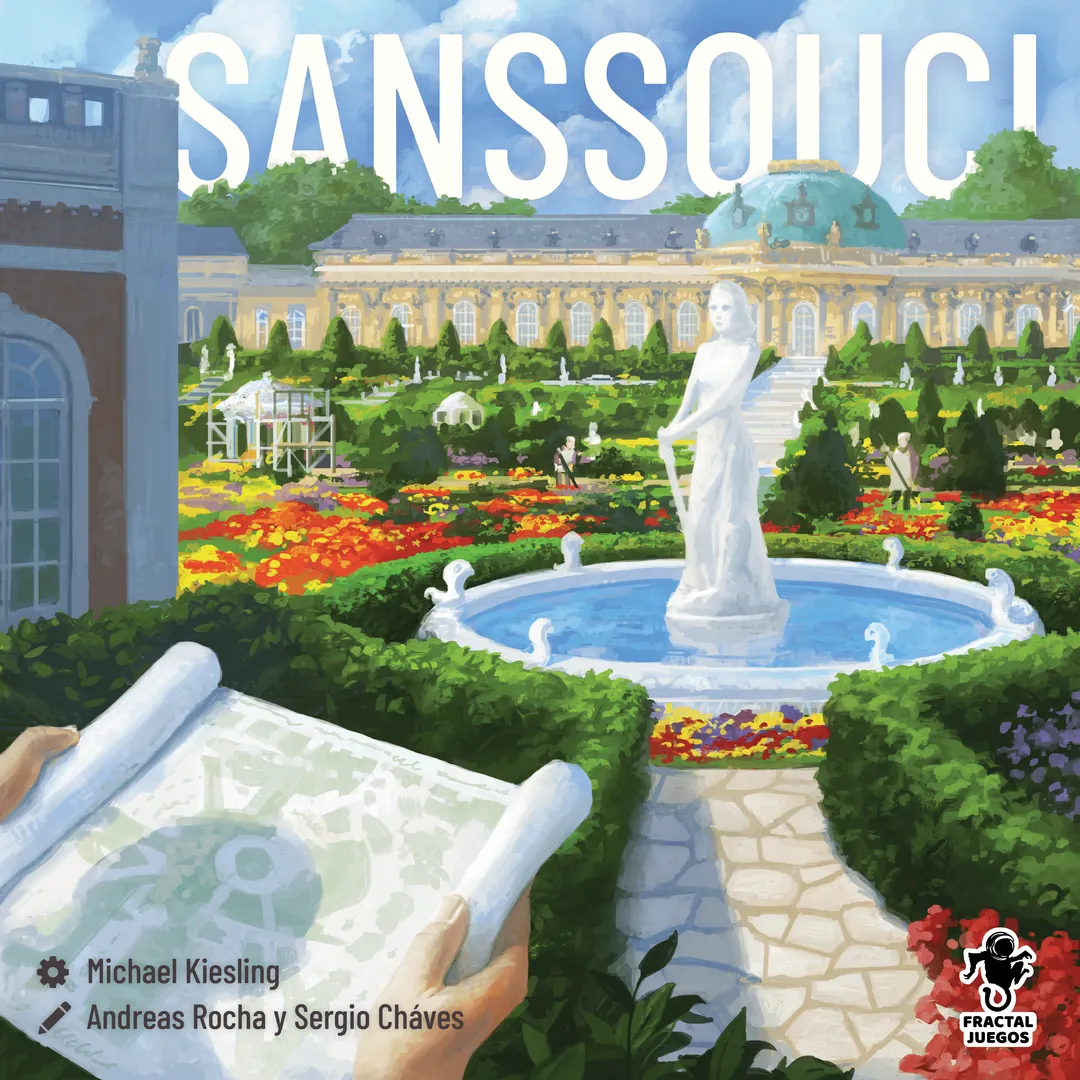
Sanssouci est un jeu de société sorti en 2013 pour 2 à 4 joueurs, avec des parties de 30 à 45 minutes et à partir de 8 ans. Il a été conçu par Michael Kiesling et ses principales mécaniques sont Hand Management, Tile Placement et Pattern Building.






En anglais
Your task in the tile-laying game Sanssouci is to create a flower garden for the world-famous Sanssouci Palace. Competing against up to three other landscape architects, you'll have your own garden layout game board on which you'll build rose gardens and vineyard terraces, labyrinths and fountains – but not just anywhere, mind you. No, the landscapers must meet certain building requirements, and unfortunately you won't always have at hand everything that you might need. In game terms, each player has a personal garden that's divided into rows and columns; each row shows a color, while each column shows one of nine garden elements, such as the wells or a pavilion. Players start with one noble at the top of each column. A shared tile supply board has five rows – with colored spaces matching the colors on each player board – and two columns, which are unlabeled. At the start of the game, ten tiles are placed on this supply board; each tile depicts one of the nine garden elements. Each turn, a player plays one of his two cards in hand, which determines the tile he can take from the supply, e.g. take a pavilion tile, take a tile from the red or gray spaces, etc. The player has only a single card that lets him take any tile – but if he plays a card showing a garden element that isn't present, then he can instead take any tile! The player must place this tile on his player board in the column that matches the image on the tile and the row that matches the color from which the tile was taken. If this space is already filled, he flips the tile to show the gardener on the other side, then places this tile on any free space in the same row or the same column. After placing the tile, he may move one of his nobles along a path of placed tiles as long as the noble ends up in the same column in which it started, but on a lower row. The player scores points equal to the row reached. The player then refills the supply and draws a new card. The game ends after 18 rounds. Each player then receives bonus points for each completed row and column. Furthermore, each player has received two order cards at the start of the game, each of which shows one of the nine columns; each player receives bonus points for the row reached by the noble in that column. The player with the most points wins.
Selon le catalogue, Sanssouci se joue de 2 à 4 personnes. Cette fourchette correspond au nombre de joueurs indiqué par l’éditeur : le jeu s’installe donc pour toute taille de groupe dans cette limite. La mise en place, certaines règles et le décompte peuvent varier selon l’effectif ; vérifiez la configuration exacte dans la règle de votre édition.
La durée indiquée pour Sanssouci est de 30 à 45 minutes, selon l’estimation de l’éditeur pour une partie complète. La durée réelle dépend du groupe, de l’effectif et de la connaissance des règles : les premières parties sont plus longues, les groupes expérimentés terminent plus vite. Mise en place et explication des règles ne sont pas comprises.
Le catalogue indique Sanssouci à partir de 8 ans. C’est la recommandation de l’éditeur ; elle tient compte de la lecture nécessaire, de la complexité des règles et des petits composants, pas seulement du thème. Les plus jeunes peuvent souvent participer avec l’aide d’un adulte : vérifiez l’âge indiqué sur votre édition et tenez compte de l’expérience de votre groupe.
Sanssouci obtient une note de complexité de 2,1 sur 5 auprès des joueurs de BoardGameGeek, ce qui en fait un jeu plutôt léger. Cette note reflète la quantité de règles, de planification et de décisions qu’exige une partie typique. Prévoyez une explication plus longue pour les jeux exigeants et utilisez un guide de préparation avant la soirée.
Sanssouci appartient à ces catégories : Puzzle et Age of Reason. Ses principales mécaniques sont Hand Management, Tile Placement et Pattern Building. Les catégories décrivent le thème et l’univers d’un jeu, tandis que les mécaniques décrivent ce que les joueurs font réellement pendant leur tour. Chaque mécanique mène à une page du catalogue avec des jeux similaires.
Les auteurs crédités pour Sanssouci sont : Michael Kiesling. Ces crédits proviennent des données publiées du jeu et désignent les personnes responsables de sa conception, et non les illustrateurs ou les éditeurs. Les pages d’auteurs sur MeepleRules regroupent les autres titres des mêmes auteurs, ce qui est utile lorsqu’un jeu vous plaît et que vous en cherchez de similaires.
Le catalogue présente Sanssouci comme un jeu de base. Il se joue seul avec le matériel contenu dans la boîte et ne nécessite aucun autre titre. Les extensions, s’il en existe, y ajoutent du contenu ou des règles et sont répertoriées séparément dans le catalogue, avec un lien vers ce jeu de base.