

- Rang BGG
- BGG #16 183
- Note BGG
- 7,0
El Ministerio del Tiempo
- 2–4 joueurs
- 45–60 min
- Complexité 1,9/5
- 2017
2013
Aide aux règles de Seven Swords
Des explications claires des tours, effets de cartes et situations litigieuses, avec des références aux sources officielles et un historique des questions sauvegardé.
Pour 2 joueurs
Que voulez-vous savoir ?
Les réponses viennent du livret officiel, avec la page à vérifier.
Seven Swords est un jeu de société sorti en 2013 pour 2 joueurs, avec des parties de 60 minutes et à partir de 14 ans. Il a été conçu par Óscar Arévalo et ses principales mécaniques sont Variable Player Powers, Dice Rolling et Pick-up and Deliver.







En anglais
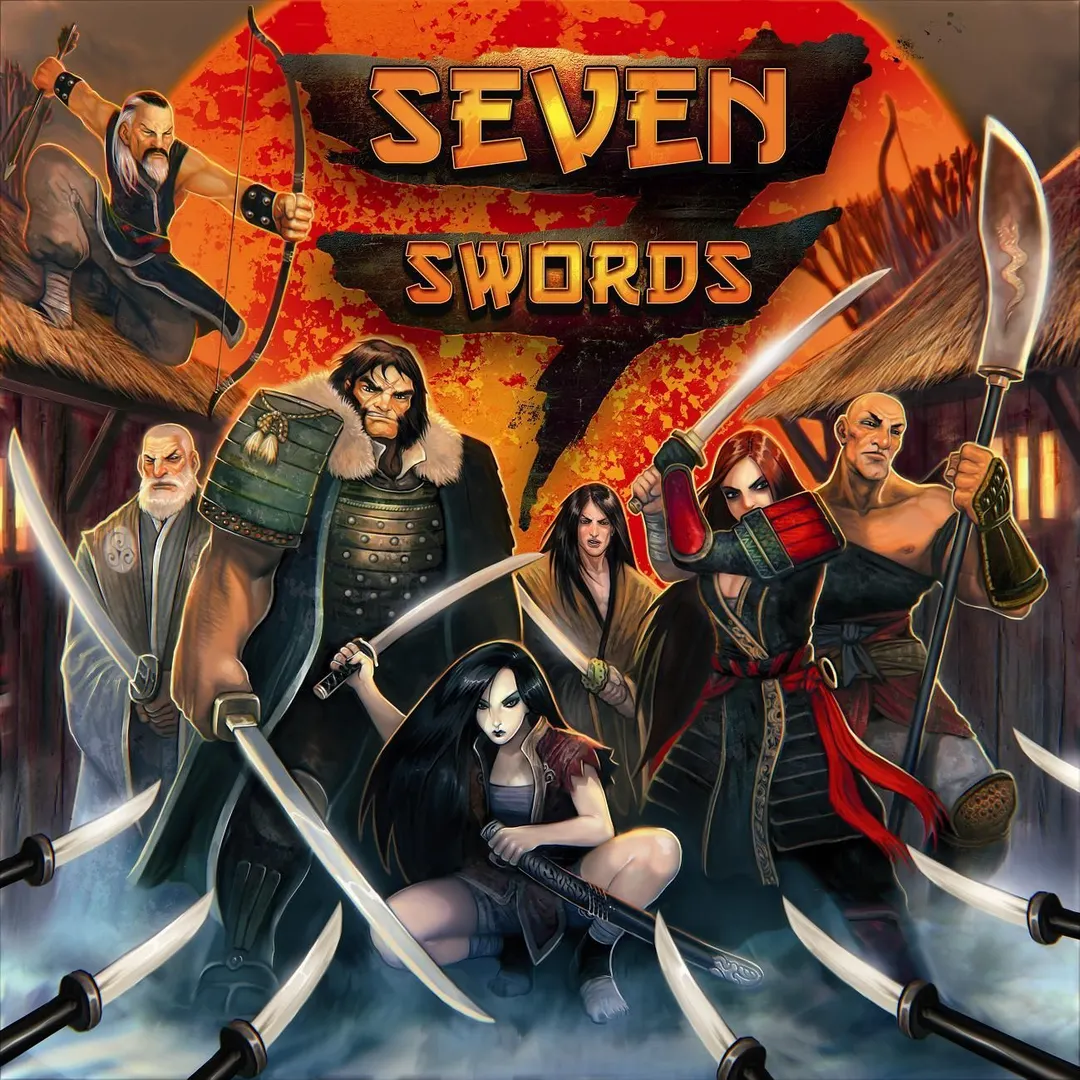
Seven honorable and brave samurai, aided by a handful of frightened villagers, are the only defenders of the village. Will you help these villagers to fend off bandits, or will you command the thieves to steal all the rice you can and punish the insolent peasants? Seven Swords is a game for two players in which one player controls seven samurai and the villagers to try to repel the attack of the evil villains while the other player controls the bandits who try to steal all the rice they can and destroy the village. The game lasts 18 turns, after which the player with the most victory points (VPs) wins. The samurai player begins the game with the VPs in the villagers' houses and rice stores, and the bandit player must attack peasant houses and steal rice to acquire these VPs. The bandit player can also earn extra points if he eliminates the samurai in combat. Each turns consists of two phases. The bandit, who plays first, has seven cards in hand that symbolize the seven sectors of the village. He discards a card to give himself a number of actions that turn, and he might receive additional actions from the samurai player. With these actions, the bandit can play different bandit troops – including infantry, archers and cavalry – with which he can then move around the village and attack the samurai, villagers and rice storage. The samurai player then chooses between five chips – combat, movement, leadership and two special action chips – to see how many actions that he has that turn. A samurai can perform three types of actions – attack, move, and use the villagers to attack bandits – but only one time for each samurai until one of the special chips has removed the counters of such action. The more actions that the samurai player performs, the more actions the bandit has. After a certain number of turns, the bandit player discards one of his action cards, then eliminates any samurai who is in the field of the discarded card. Other details in the game include bows that help players attack from a distance and fences that keep the bandits from just walking into the village. In addition to having a double-sided game board with different village layouts, the samurai player establishes the placement of villagers, fences, nows and rice storage at the start of each game, allowing for wide variability in gameplay.
Selon le catalogue, Seven Swords se joue à 2 personnes. C’est le nombre de joueurs indiqué par l’éditeur : le jeu est donc conçu pour exactement ce nombre de participants. Les variantes pour d’autres tailles de groupe, s’il en existe, sont décrites dans la règle de votre édition ; consultez-la avant d’installer une autre configuration.
La durée indiquée pour Seven Swords est de 60 minutes, selon l’estimation de l’éditeur pour une partie complète. La durée réelle dépend du groupe, de l’effectif et de la connaissance des règles : les premières parties sont plus longues, les groupes expérimentés terminent plus vite. Mise en place et explication des règles ne sont pas comprises.
Le catalogue indique Seven Swords à partir de 14 ans. C’est la recommandation de l’éditeur ; elle tient compte de la lecture nécessaire, de la complexité des règles et des petits composants, pas seulement du thème. Les plus jeunes peuvent souvent participer avec l’aide d’un adulte : vérifiez l’âge indiqué sur votre édition et tenez compte de l’expérience de votre groupe.
Seven Swords obtient une note de complexité de 3,0 sur 5 auprès des joueurs de BoardGameGeek, ce qui en fait un jeu de complexité moyenne. Cette note reflète la quantité de règles, de planification et de décisions qu’exige une partie typique. Prévoyez une explication plus longue pour les jeux exigeants et utilisez un guide de préparation avant la soirée.
Seven Swords appartient à ces catégories : Fighting. Ses principales mécaniques sont Variable Player Powers, Dice Rolling et Pick-up and Deliver. Les catégories décrivent le thème et l’univers d’un jeu, tandis que les mécaniques décrivent ce que les joueurs font réellement pendant leur tour. Chaque mécanique mène à une page du catalogue avec des jeux similaires.
Les auteurs crédités pour Seven Swords sont : Óscar Arévalo. Ces crédits proviennent des données publiées du jeu et désignent les personnes responsables de sa conception, et non les illustrateurs ou les éditeurs. Les pages d’auteurs sur MeepleRules regroupent les autres titres des mêmes auteurs, ce qui est utile lorsqu’un jeu vous plaît et que vous en cherchez de similaires.
Le catalogue présente Seven Swords comme un jeu de base. Il se joue seul avec le matériel contenu dans la boîte et ne nécessite aucun autre titre. Les extensions, s’il en existe, y ajoutent du contenu ou des règles et sont répertoriées séparément dans le catalogue, avec un lien vers ce jeu de base.