
- Note BGG
- 6,0
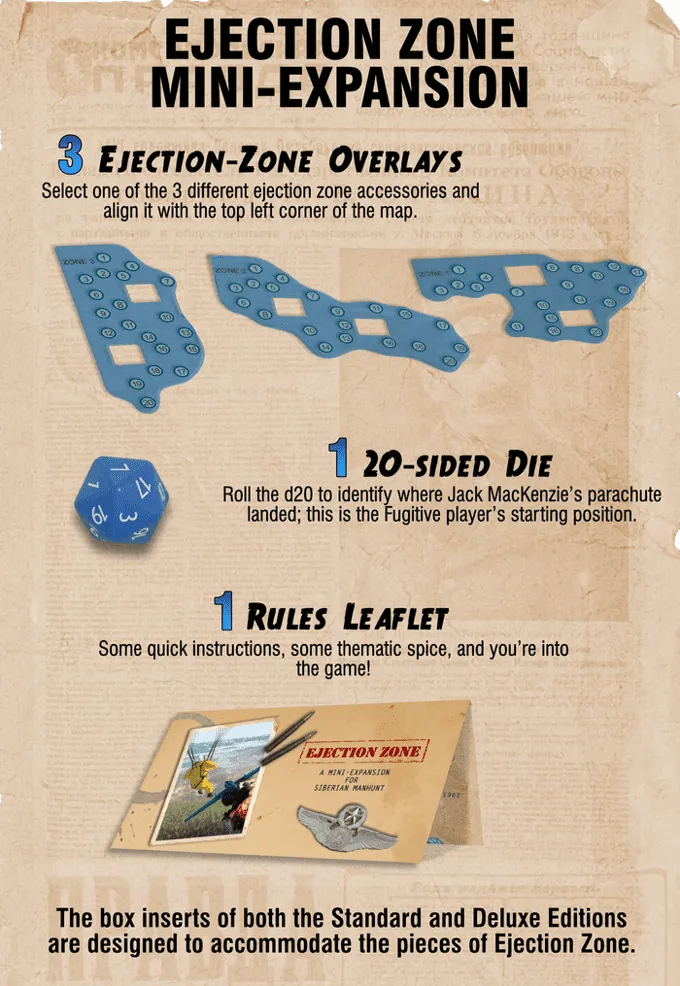
Siberian Manhunt: Ejection Zone Mini Expansion
- 2 joueurs
- 2025
2025
Aide aux règles de Siberian Manhunt
Des explications claires des tours, effets de cartes et situations litigieuses, avec des références aux sources officielles et un historique des questions sauvegardé.
Pour 2 joueurs
Que voulez-vous savoir ?
Les réponses viennent du livret officiel, avec la page à vérifier.
Siberian Manhunt est un jeu de société sorti en 2025 pour 2 joueurs, avec des parties de 60 à 120 minutes et à partir de 14 ans. Il a été conçu par Jesse Eyer et ses principales mécaniques sont Dice Rolling, Deck, Bag, and Pool Building et Action Points.

En anglais
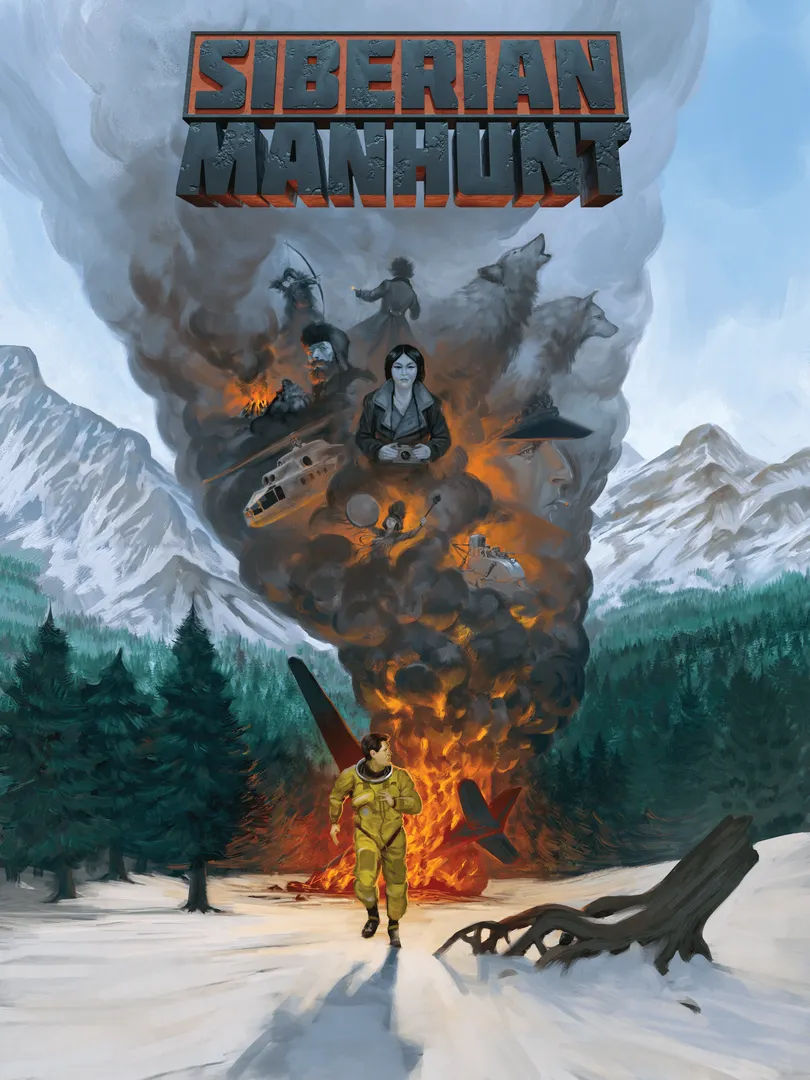
During the height of the Cold War, the U.S. mounted a surveillance program over the Soviet Union, flying U-2 spy planes at high altitude to avoid radar and fighter interceptors. Not every pilot returned... Siberian Manhunt is an asymmetrical hidden movement game for two players. One player takes the role of a U-2 spy plane pilot who has crashed behind enemy lines and must escape across the border into China. The fugitive must use their wits to navigate the dangerous landscape, survive encounters with predatory animals, and avoid starvation and hypothermia, all while being pursued by the KGB. Do they dare enter towns, risking detection by the local authorities, or will they strike out into the wilds and rely on their wilderness survival skills to stay alive? The other player is a Soviet general assigned to capture or kill the fugitive. At their disposal is the full might of the USSR: KGB agents and Yakut trackers, the Red Army, aerial searches, road blocks, and propaganda campaigns. But the Soviet government is fickle and not all Russians are loyal communists — and sometimes the hunted is deadlier than the hunter. —description from the designer
Selon le catalogue, Siberian Manhunt se joue à 2 personnes. C’est le nombre de joueurs indiqué par l’éditeur : le jeu est donc conçu pour exactement ce nombre de participants. Les variantes pour d’autres tailles de groupe, s’il en existe, sont décrites dans la règle de votre édition ; consultez-la avant d’installer une autre configuration.
La durée indiquée pour Siberian Manhunt est de 60 à 120 minutes, selon l’estimation de l’éditeur pour une partie complète. La durée réelle dépend du groupe, de l’effectif et de la connaissance des règles : les premières parties sont plus longues, les groupes expérimentés terminent plus vite. Mise en place et explication des règles ne sont pas comprises.
Le catalogue indique Siberian Manhunt à partir de 14 ans. C’est la recommandation de l’éditeur ; elle tient compte de la lecture nécessaire, de la complexité des règles et des petits composants, pas seulement du thème. Les plus jeunes peuvent souvent participer avec l’aide d’un adulte : vérifiez l’âge indiqué sur votre édition et tenez compte de l’expérience de votre groupe.
Siberian Manhunt obtient une note de complexité de 3,1 sur 5 auprès des joueurs de BoardGameGeek, ce qui en fait un jeu de complexité moyenne. Cette note reflète la quantité de règles, de planification et de décisions qu’exige une partie typique. Prévoyez une explication plus longue pour les jeux exigeants et utilisez un guide de préparation avant la soirée.
Siberian Manhunt appartient à ces catégories : Fighting, Wargame et Deduction. Ses principales mécaniques sont Dice Rolling, Deck, Bag, and Pool Building et Action Points. Les catégories décrivent le thème et l’univers d’un jeu, tandis que les mécaniques décrivent ce que les joueurs font réellement pendant leur tour. Chaque mécanique mène à une page du catalogue avec des jeux similaires.
Les auteurs crédités pour Siberian Manhunt sont : Jesse Eyer. Ces crédits proviennent des données publiées du jeu et désignent les personnes responsables de sa conception, et non les illustrateurs ou les éditeurs. Les pages d’auteurs sur MeepleRules regroupent les autres titres des mêmes auteurs, ce qui est utile lorsqu’un jeu vous plaît et que vous en cherchez de similaires.
Le catalogue présente Siberian Manhunt comme un jeu de base. Il se joue seul avec le matériel contenu dans la boîte et ne nécessite aucun autre titre. Les extensions, s’il en existe, y ajoutent du contenu ou des règles et sont répertoriées séparément dans le catalogue, avec un lien vers ce jeu de base.