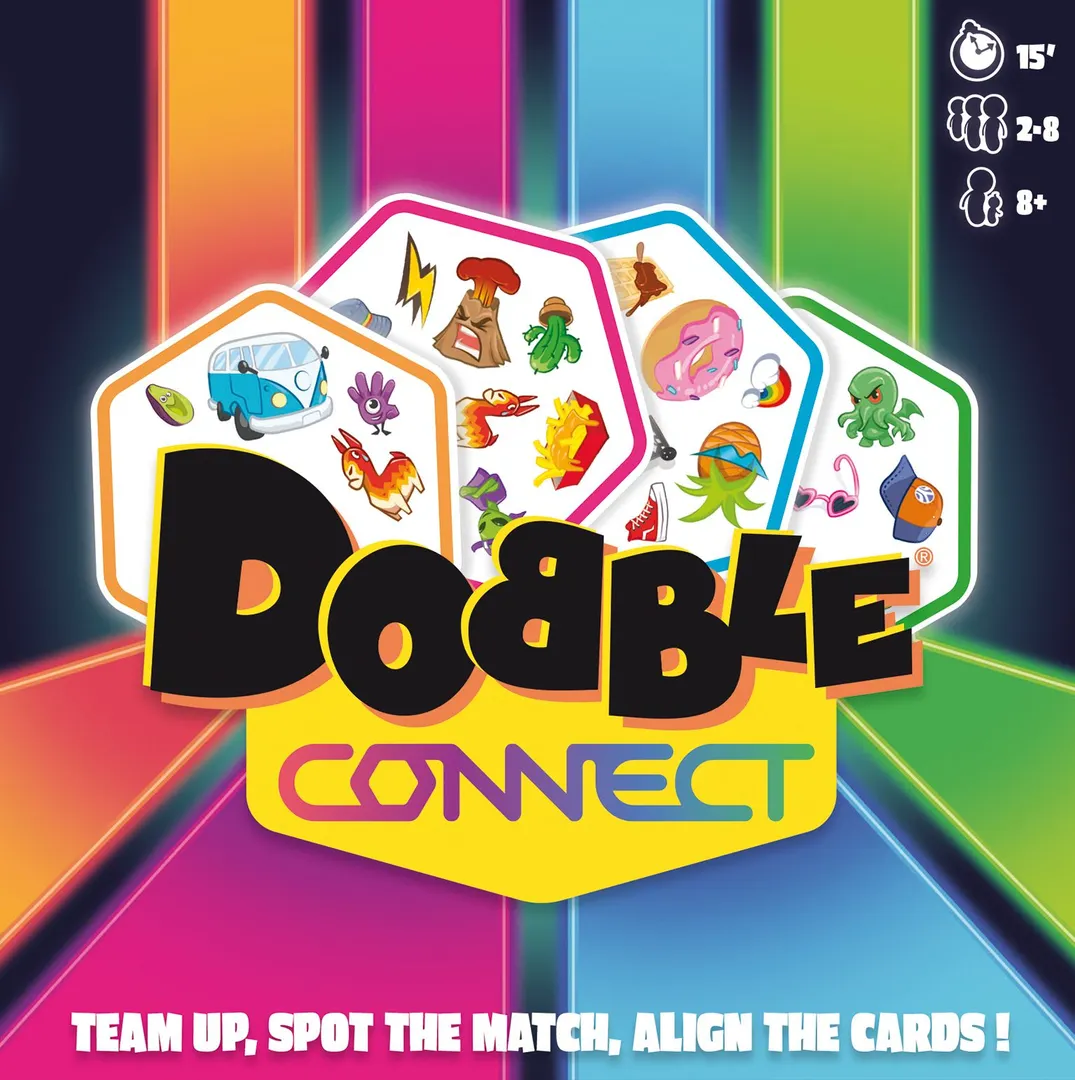
- Rang BGG
- BGG #9 572
- Note BGG
- 6,2
Spot it!: Connect
- 2–8 joueurs
- 15 min
- Complexité 1,1/5
- 2023


Aide aux règles de Stealing Bundles
Des explications claires des tours, effets de cartes et situations litigieuses, avec des références aux sources officielles et un historique des questions sauvegardé.
Que voulez-vous savoir ?
Les réponses viennent du livret officiel, avec la page à vérifier.
Stealing Bundles est un jeu de société pour 2 à 4 joueurs, avec des parties de 15 minutes et à partir de 4 ans. Ses principales mécaniques sont Pattern Building et Pattern Recognition.







En anglais
From pagat.com: This children's game is also commonly known as Steal the Old Man's Bundle, Steal the Old Man's Pack or Steal Pile. A very similar game is played by children in Argentina, where it is known as Casita Robada. In Italy it is known as Rubamazzo, and in Quebec it is called Paquet Voleur (literal translation of steal pile in French). Players and Cards Stealing Bundles is a fairly simple fishing game, for 2, 3 or 4 players, normally using a standard 52-card pack. To start the game, everyone draws a card and the player drawing the highest card deals first. Play The dealer shuffles, and then deals the cards out clockwise one at a time: four cards face down to each player and four face up to the centre of the table. The centre cards are laid out separately so that all are visible. The remainder of the pack is kept face down by the dealer and will be used later. The players then pick up their hands of four cards and look at them (but of course are not allowed to look at other players' cards). The player to the dealer's left starts, the turn to play passes clockwise around the table. At your turn you must play one card from your hand face up to the table. If the card you play matches the rank of any of the face up centre cards, you must take the card you played and any matched cards and place them in a face up pile in front of you, to start your 'bundle'. (Suits are ignored in this game: a King matches a King, an Eight matches an Eight, and so on.) No matter whether you matched a card or not, it is then the next player's turn to play. Any matched cards that you acquire during the game are always stacked on top of your bundle, with the card you played on top, so that only this top card is visible. If you play a card that matches the top card of an opponent's bundle, you steal their whole of their bundle and add it to the top of yours, placing the matching card that you played on top. After everyone has played their four cards, the same dealer takes the remaining undealt cards and deals another four cards face down to each player, one at a time (but no further cards to the layout). Again the players look at their hands, and play continues as before. After all these cards have been played another four cards each are dealt by the same dealer, and this process of dealing and playing continues until all the cards have been dealt and everyone has played their last four cards. At this point, any cards remaining face up in the centre are added to the bundle of the last player who matched a card. Now the cards in each are counted and whoever has the largest bundle wins. If you want to play again, the turn to deal now passes to the left. The new dealer shuffles all the cards and another game is played as described above. Casita Robada and Rubamazzo The Argentinean game Casita Robata, is essentially the same. The only differences from Stealing Bundles are: A Spanish suited pack of 40 (or 48) cards is used; The game is played counter-clockwise. The Italian game Rubamazzo is played counter-clockwise with an Italian 40-card pack.
Selon le catalogue, Stealing Bundles se joue de 2 à 4 personnes. Cette fourchette correspond au nombre de joueurs indiqué par l’éditeur : le jeu s’installe donc pour toute taille de groupe dans cette limite. La mise en place, certaines règles et le décompte peuvent varier selon l’effectif ; vérifiez la configuration exacte dans la règle de votre édition.
La durée indiquée pour Stealing Bundles est de 15 minutes, selon l’estimation de l’éditeur pour une partie complète. La durée réelle dépend du groupe, de l’effectif et de la connaissance des règles : les premières parties sont plus longues, les groupes expérimentés terminent plus vite. Mise en place et explication des règles ne sont pas comprises.
Le catalogue indique Stealing Bundles à partir de 4 ans. C’est la recommandation de l’éditeur ; elle tient compte de la lecture nécessaire, de la complexité des règles et des petits composants, pas seulement du thème. Les plus jeunes peuvent souvent participer avec l’aide d’un adulte : vérifiez l’âge indiqué sur votre édition et tenez compte de l’expérience de votre groupe.
Stealing Bundles obtient une note de complexité de 1,2 sur 5 auprès des joueurs de BoardGameGeek, ce qui en fait un jeu léger. Cette note reflète la quantité de règles, de planification et de décisions qu’exige une partie typique. Prévoyez une explication plus longue pour les jeux exigeants et utilisez un guide de préparation avant la soirée.
Stealing Bundles appartient à ces catégories : Card Game et Children's Game. Ses principales mécaniques sont Pattern Building et Pattern Recognition. Les catégories décrivent le thème et l’univers d’un jeu, tandis que les mécaniques décrivent ce que les joueurs font réellement pendant leur tour. Chaque mécanique mène à une page du catalogue avec des jeux similaires.
Le catalogue présente Stealing Bundles comme un jeu de base. Il se joue seul avec le matériel contenu dans la boîte et ne nécessite aucun autre titre. Les extensions, s’il en existe, y ajoutent du contenu ou des règles et sont répertoriées séparément dans le catalogue, avec un lien vers ce jeu de base.