
- Note BGG
- 6,8
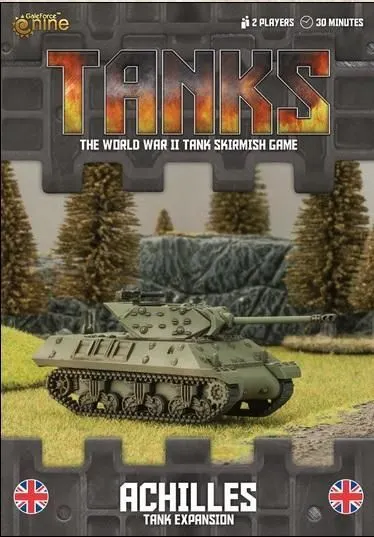
Tanks: Achilles Tank Expansion
- 2 joueurs
- 30–60 min
- 2016
2016
Aide aux règles de Tanks: Panther vs Sherman Starter Set
Des explications claires des tours, effets de cartes et situations litigieuses, avec des références aux sources officielles et un historique des questions sauvegardé.
Pour 2 joueurs
Que voulez-vous savoir ?
Les réponses viennent du livret officiel, avec la page à vérifier.
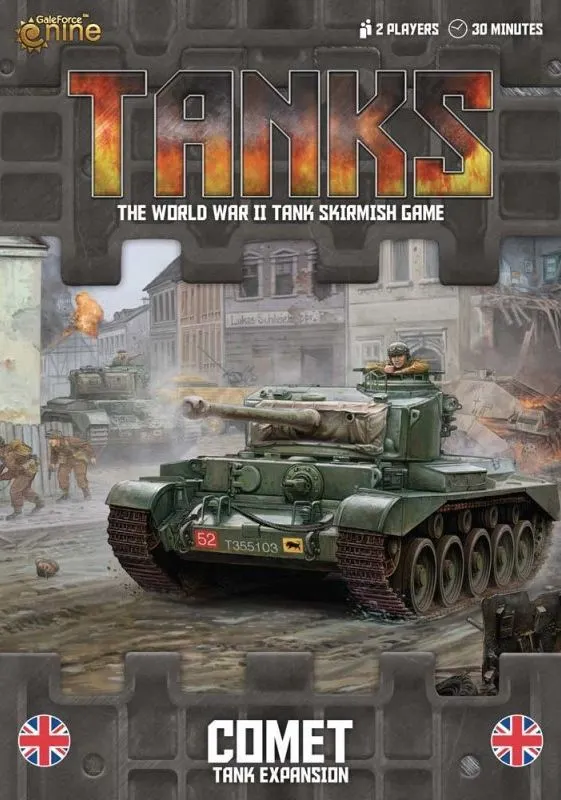
Tanks: Panther vs Sherman Starter Set est un jeu de société sorti en 2016 pour 2 joueurs et avec des parties de 60 minutes. Il a été conçu par Andrew Haught, Phil Yates et Chris Townley et ses principales mécaniques sont Variable Player Powers, Dice Rolling et Scenario / Mission / Campaign Game.
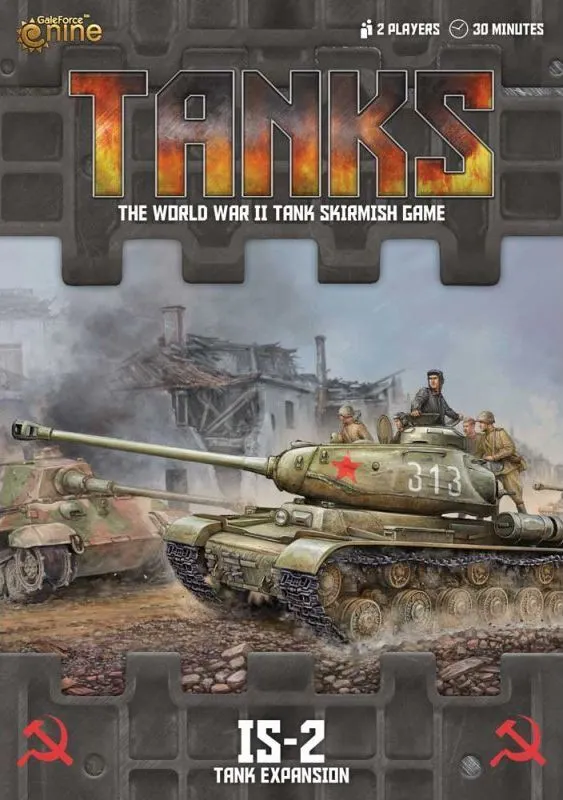
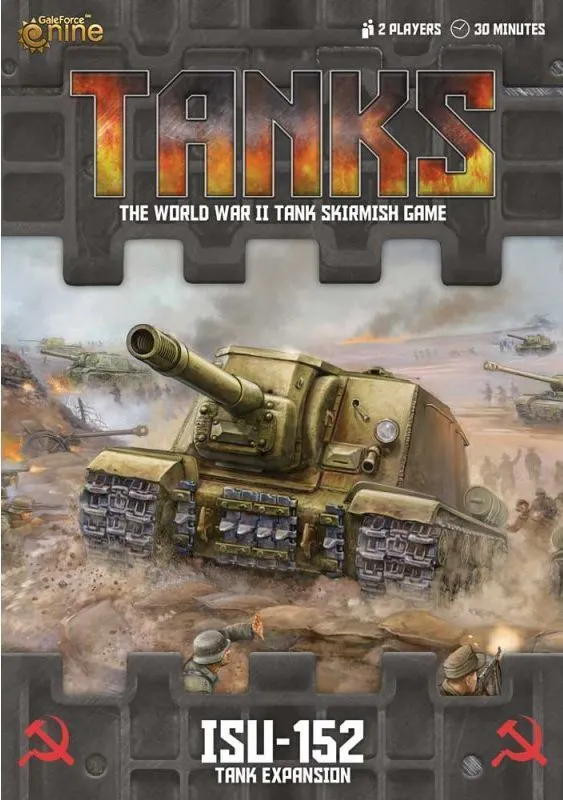
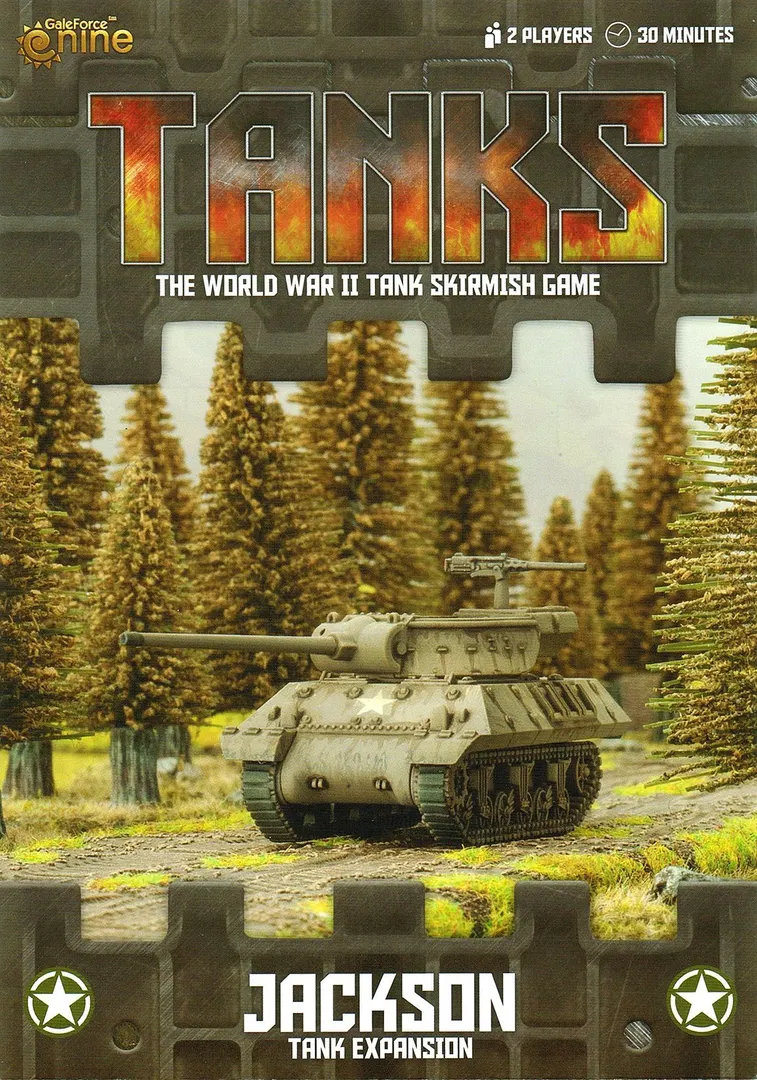
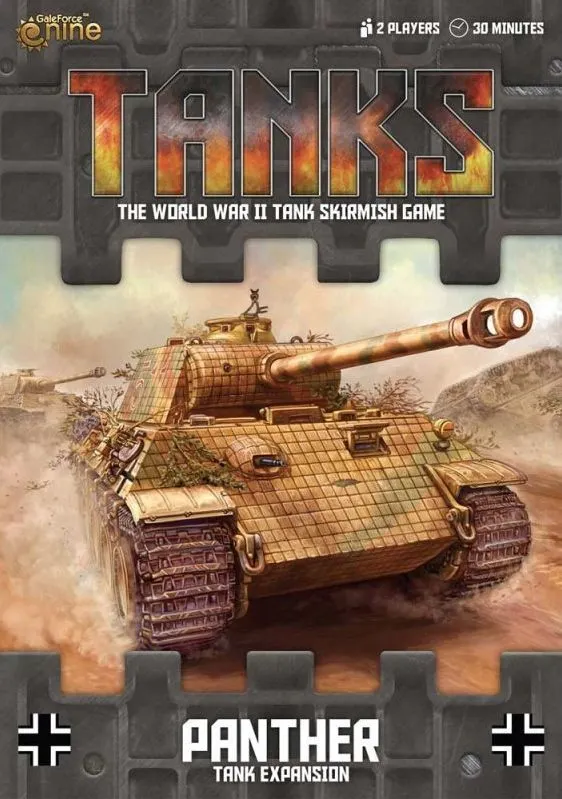




En anglais
Tanks: Panther vs Sherman is an easy-to-learn, quick play, small-scale game in which you take command of a tank platoon, seeking to destroy your opponent's tanks and secure victory. Tanks is a flexible game with lots of ways to create a finely-tuned army that fits your play style. In a half-hour, you can pick your tanks and crew, upgrade them to your specifications, defeat your enemy (or die trying), and be ready for the rematch! During the game, players go through a number of turns until one player achieves victory. Each turn consists of three Phases: Movement Phase: Players move each of their tanks in Initiative order starting with the lowest Initiative tanks moving on to the highest Initiative. Shooting Phase: Players shoot with each of their tanks in Initiative order starting with the highest Initiative moving on to the lowest Initiative. Command Phase: Players mark destroyed tanks, repair special damage, check for victory conditions, shuffle the Critical card deck, and clear all the Speed tokens.
Selon le catalogue, Tanks: Panther vs Sherman Starter Set se joue à 2 personnes. C’est le nombre de joueurs indiqué par l’éditeur : le jeu est donc conçu pour exactement ce nombre de participants. Les variantes pour d’autres tailles de groupe, s’il en existe, sont décrites dans la règle de votre édition ; consultez-la avant d’installer une autre configuration.
La durée indiquée pour Tanks: Panther vs Sherman Starter Set est de 60 minutes, selon l’estimation de l’éditeur pour une partie complète. La durée réelle dépend du groupe, de l’effectif et de la connaissance des règles : les premières parties sont plus longues, les groupes expérimentés terminent plus vite. Mise en place et explication des règles ne sont pas comprises.
Tanks: Panther vs Sherman Starter Set obtient une note de complexité de 1,8 sur 5 auprès des joueurs de BoardGameGeek, ce qui en fait un jeu léger. Cette note reflète la quantité de règles, de planification et de décisions qu’exige une partie typique. Prévoyez une explication plus longue pour les jeux exigeants et utilisez un guide de préparation avant la soirée.
Tanks: Panther vs Sherman Starter Set appartient à ces catégories : Wargame, Miniatures et Collectible Components. Ses principales mécaniques sont Variable Player Powers, Dice Rolling et Scenario / Mission / Campaign Game. Les catégories décrivent le thème et l’univers d’un jeu, tandis que les mécaniques décrivent ce que les joueurs font réellement pendant leur tour. Chaque mécanique mène à une page du catalogue avec des jeux similaires.
Les auteurs crédités pour Tanks: Panther vs Sherman Starter Set sont : Andrew Haught, Phil Yates et Chris Townley. Ces crédits proviennent des données publiées du jeu et désignent les personnes responsables de sa conception, et non les illustrateurs ou les éditeurs. Les pages d’auteurs sur MeepleRules regroupent les autres titres des mêmes auteurs, ce qui est utile lorsqu’un jeu vous plaît et que vous en cherchez de similaires.
Le catalogue présente Tanks: Panther vs Sherman Starter Set comme un jeu de base. Il se joue seul avec le matériel contenu dans la boîte et ne nécessite aucun autre titre. Les extensions, s’il en existe, y ajoutent du contenu ou des règles et sont répertoriées séparément dans le catalogue, avec un lien vers ce jeu de base.