
- Rang BGG
- BGG #16 309
- Note BGG
- 6,1
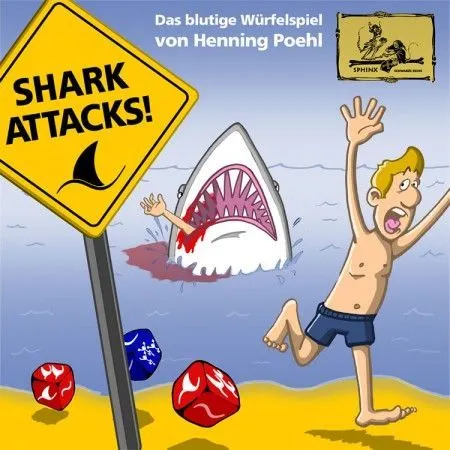
Shark Attacks!
- 2–6 joueurs
- 20 min
- Complexité 1,0/5
- 2012
2013
Aide aux règles de The Rats in the Walls
Des explications claires des tours, effets de cartes et situations litigieuses, avec des références aux sources officielles et un historique des questions sauvegardé.
Que voulez-vous savoir ?
Les réponses viennent du livret officiel, avec la page à vérifier.
The Rats in the Walls est un jeu de société sorti en 2013 pour 3 à 6 joueurs, avec des parties de 30 minutes et à partir de 12 ans. Il a été conçu par Henning Poehl et ses principales mécaniques sont Dice Rolling.





En anglais
The Rats in the Walls puts players in the same position as the narrator of the H.P. Lovecraft story of the same name – that is, they don't know whether or not rats truly scamper behind the walls of their residence. In the game, one player is the Giver and starts the round with the dice cup and a single die, which shows one rat on one face, two rats on another face, and no rats on the remaining four faces. The Giver places the die in the cup, shakes the cup, places it face down, then peeks inside. He then claims to hear no rats behind the walls or some number of rats. If he says no rats and the next player – the Receiver – believes him, the Receiver becomes the new Giver, adds a die to the cup, and the game continues; if the Receiver doesn't believe him, then he lifts the cup. If no rats are present, the Receiver loses one "brain" scoring token to the Giver; clearly he's touched in the head if he's hearing rats where none exist. If rats are present, however, then the Giver loses two brains, giving one of them to the Receiver. The Caller's an even worse case! If the Giver claims that rats are present, he must pay one brain, then the Receiver taking the cup can call him (with penalties going one way or the other) or he can believe the Giver, handing over one brain to the Giver as the sanity cost of accepting such nonsense. The Receiver can then either pass the cup along to the next person or he can add a die to the cup, shake all the dice, and make another claim about the number of mice in the walls, with this number being at least one larger than the previous number. In this case, the Receiver becomes the Giver, and the round continues as before. Once one player has lost all of his brains, the game ends, and the player with the most brains wins.
Selon le catalogue, The Rats in the Walls se joue de 3 à 6 personnes. Cette fourchette correspond au nombre de joueurs indiqué par l’éditeur : le jeu s’installe donc pour toute taille de groupe dans cette limite. La mise en place, certaines règles et le décompte peuvent varier selon l’effectif ; vérifiez la configuration exacte dans la règle de votre édition.
La durée indiquée pour The Rats in the Walls est de 30 minutes, selon l’estimation de l’éditeur pour une partie complète. La durée réelle dépend du groupe, de l’effectif et de la connaissance des règles : les premières parties sont plus longues, les groupes expérimentés terminent plus vite. Mise en place et explication des règles ne sont pas comprises.
Le catalogue indique The Rats in the Walls à partir de 12 ans. C’est la recommandation de l’éditeur ; elle tient compte de la lecture nécessaire, de la complexité des règles et des petits composants, pas seulement du thème. Les plus jeunes peuvent souvent participer avec l’aide d’un adulte : vérifiez l’âge indiqué sur votre édition et tenez compte de l’expérience de votre groupe.
The Rats in the Walls obtient une note de complexité de 1,0 sur 5 auprès des joueurs de BoardGameGeek, ce qui en fait un jeu léger. Cette note reflète la quantité de règles, de planification et de décisions qu’exige une partie typique. Prévoyez une explication plus longue pour les jeux exigeants et utilisez un guide de préparation avant la soirée.
The Rats in the Walls appartient à ces catégories : Dice et Bluffing. Ses principales mécaniques sont Dice Rolling. Les catégories décrivent le thème et l’univers d’un jeu, tandis que les mécaniques décrivent ce que les joueurs font réellement pendant leur tour. Chaque mécanique mène à une page du catalogue avec des jeux similaires.
Les auteurs crédités pour The Rats in the Walls sont : Henning Poehl. Ces crédits proviennent des données publiées du jeu et désignent les personnes responsables de sa conception, et non les illustrateurs ou les éditeurs. Les pages d’auteurs sur MeepleRules regroupent les autres titres des mêmes auteurs, ce qui est utile lorsqu’un jeu vous plaît et que vous en cherchez de similaires.
Le catalogue présente The Rats in the Walls comme un jeu de base. Il se joue seul avec le matériel contenu dans la boîte et ne nécessite aucun autre titre. Les extensions, s’il en existe, y ajoutent du contenu ou des règles et sont répertoriées séparément dans le catalogue, avec un lien vers ce jeu de base.