
- Rang BGG
- BGG #13 751
- Note BGG
- 7,6
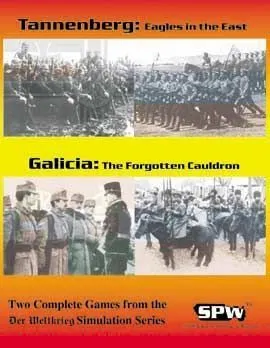
Tannenberg: Eagles in the East / Galicia: The Forgotten Cauldron
- 2 joueurs
- 360 min
- Complexité 2,7/5
- 1999
1997
Aide aux règles de The Schlieffen Plan
Des explications claires des tours, effets de cartes et situations litigieuses, avec des références aux sources officielles et un historique des questions sauvegardé.
Pour 2 joueurs
Que voulez-vous savoir ?
Les réponses viennent du livret officiel, avec la page à vérifier.
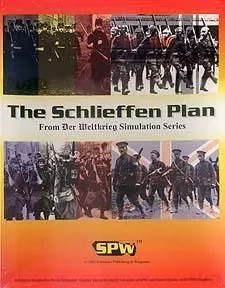
The Schlieffen Plan est un jeu de société sorti en 1997 pour 2 joueurs, avec des parties de 360 minutes et à partir de 12 ans. Il a été conçu par David Schroeder et ses principales mécaniques sont Dice Rolling, Grid Movement et Hexagon Grid.




En anglais
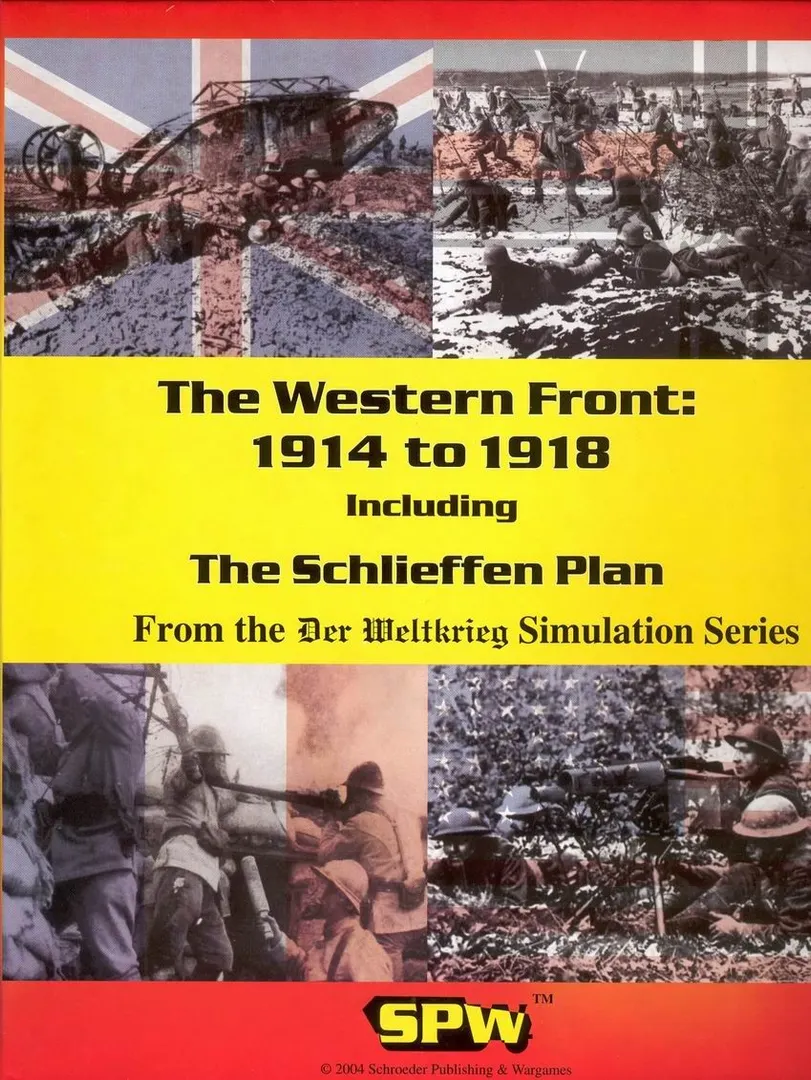
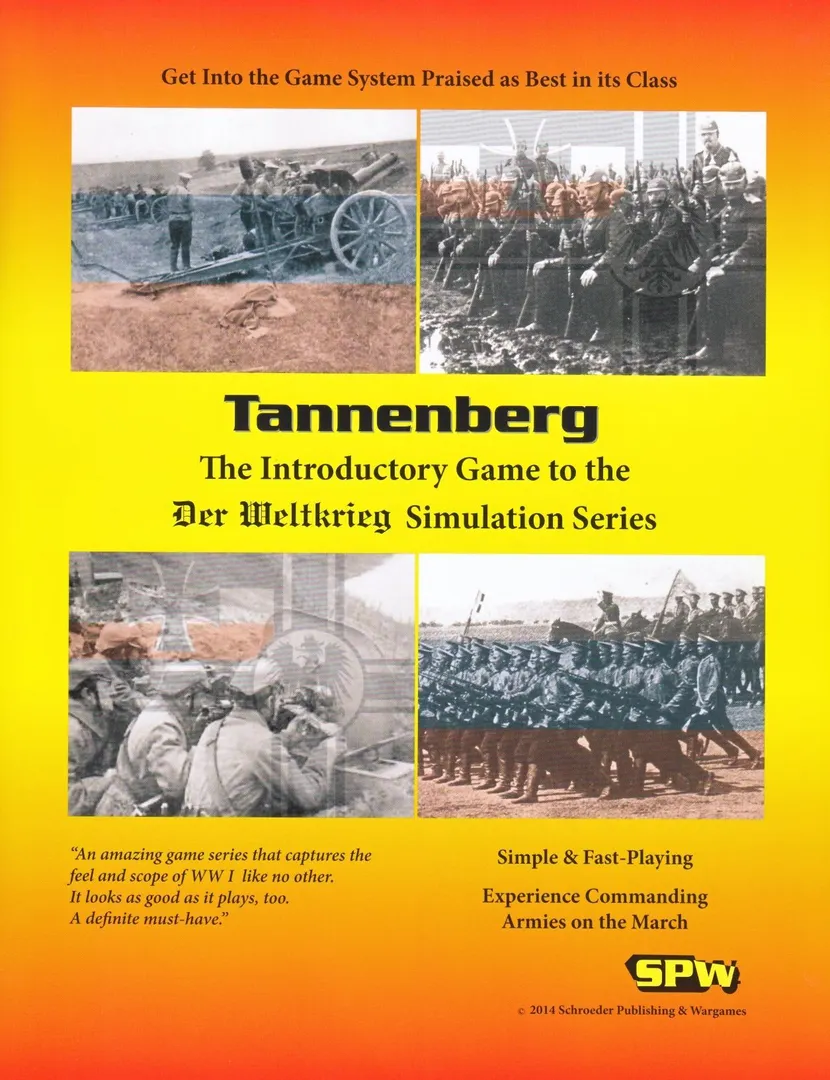
Part of David Schroeder's "Der Weltkrieg" wargame series. 'The Schlieffen Plan' covers the campaigns in France and Belgium in 1914. 24"x17" map [From the back of the box] August 1914: Diplomacy fails in the aftermath of the assassination of the Austrian Archduke in Sarajevo. The great powers of Europe begin to mobilize their armies, initially believing that their potential opponents will back down at the show of strength. Yet no one shrinks from the face of an increasingly inevitable war. The Germans move towards war according to the Schlieffen plan. As chief of the pre-war German general staff, von Schlieffen envisions a powerful group of German armies (the Right Wing) quickly moving through Belgium and northern France to attack Paris from the rear, while weaker forces protect the German border with France. France mobilizes according to their own 'Plan 17'. This offensive-minded plan calls for the bulk of French forces to quickly re-conquer those parts of France lost to Germany in 1870. To do this, France masses her armies along the German border between Belgium and Switzerland. As the Schlieffen plan is executed, tiny Belgium is invaded by 4 separate German armies. The Germans believe that the Belgians will either offer no resistance, or will quickly be swept aside by their might. But Belgium does resist, fighting on in the face of hopeless odds, even as the Germans employ secret weapons like the massive Big Bertha guns. As events quickly unfold, Great Britain lands an expeditionary force in France to help defend Belgium and assist France. It meets the German juggernaught as it pushes through Belgium. The French, meanwhile, incur huge losses when they execute 'Plan 17'. They now rush to stop the Germans from reaching Paris. The plans of both sides fail, due to not only to mistakes in execution, but due to causes that could have been foreseen and acted upon. As a result, neither side is able to achieve its objectives, and the consequences is the stalemate of trench warfare. The Schlieffen Plan covers the campaign in Belgium and France from August to November 1914. In this simulation, you assume the role of the commander of either the German or Allied armies. The forces available to you are the same that were available to the historical participants. Bit it is up to you to make your own strategic decisions, and to execute your your own plans as you see fit. This is your chance to prove that you could have done better, that you could have changed the course of history. This is the first in a series of simulations designed to interlock to allow you to simulate conflicts and campaigns from 1914 to the present and beyond across all of Europe, North Africa, and the Middle East. Each simulation is self contained. Yet, tied together, they will allow you to control all aspects of land, sea, & air warfare. Scale is 20km/hex 4 days per turn Unit Sizes: Division/Brigade 560 Backprinted Counters Medium Complexity Very High Solitaire Suitability
Selon le catalogue, The Schlieffen Plan se joue à 2 personnes. C’est le nombre de joueurs indiqué par l’éditeur : le jeu est donc conçu pour exactement ce nombre de participants. Les variantes pour d’autres tailles de groupe, s’il en existe, sont décrites dans la règle de votre édition ; consultez-la avant d’installer une autre configuration.
La durée indiquée pour The Schlieffen Plan est de 360 minutes, selon l’estimation de l’éditeur pour une partie complète. La durée réelle dépend du groupe, de l’effectif et de la connaissance des règles : les premières parties sont plus longues, les groupes expérimentés terminent plus vite. Mise en place et explication des règles ne sont pas comprises.
Le catalogue indique The Schlieffen Plan à partir de 12 ans. C’est la recommandation de l’éditeur ; elle tient compte de la lecture nécessaire, de la complexité des règles et des petits composants, pas seulement du thème. Les plus jeunes peuvent souvent participer avec l’aide d’un adulte : vérifiez l’âge indiqué sur votre édition et tenez compte de l’expérience de votre groupe.
The Schlieffen Plan obtient une note de complexité de 3,3 sur 5 auprès des joueurs de BoardGameGeek, ce qui en fait un jeu de complexité moyenne. Cette note reflète la quantité de règles, de planification et de décisions qu’exige une partie typique. Prévoyez une explication plus longue pour les jeux exigeants et utilisez un guide de préparation avant la soirée.
The Schlieffen Plan appartient à ces catégories : Wargame et World War I. Ses principales mécaniques sont Dice Rolling, Grid Movement et Hexagon Grid. Les catégories décrivent le thème et l’univers d’un jeu, tandis que les mécaniques décrivent ce que les joueurs font réellement pendant leur tour. Chaque mécanique mène à une page du catalogue avec des jeux similaires.
Les auteurs crédités pour The Schlieffen Plan sont : David Schroeder. Ces crédits proviennent des données publiées du jeu et désignent les personnes responsables de sa conception, et non les illustrateurs ou les éditeurs. Les pages d’auteurs sur MeepleRules regroupent les autres titres des mêmes auteurs, ce qui est utile lorsqu’un jeu vous plaît et que vous en cherchez de similaires.
Le catalogue présente The Schlieffen Plan comme un jeu de base. Il se joue seul avec le matériel contenu dans la boîte et ne nécessite aucun autre titre. Les extensions, s’il en existe, y ajoutent du contenu ou des règles et sont répertoriées séparément dans le catalogue, avec un lien vers ce jeu de base.