

- Rang BGG
- BGG #337
- Note BGG
- 7,3
Hive
- 2 joueurs
- 20 min
- Complexité 2,3/5
- 2001
1799
Aide aux règles de Tori Shogi
Des explications claires des tours, effets de cartes et situations litigieuses, avec des références aux sources officielles et un historique des questions sauvegardé.
Pour 2 joueurs
Que voulez-vous savoir ?
Les réponses viennent du livret officiel, avec la page à vérifier.
Tori Shogi est un jeu de société sorti en 1799 pour 2 joueurs, avec des parties de 60 minutes et à partir de 6 ans. Il a été conçu par Toyota Genryu et ses principales mécaniques sont Grid Movement.











En anglais
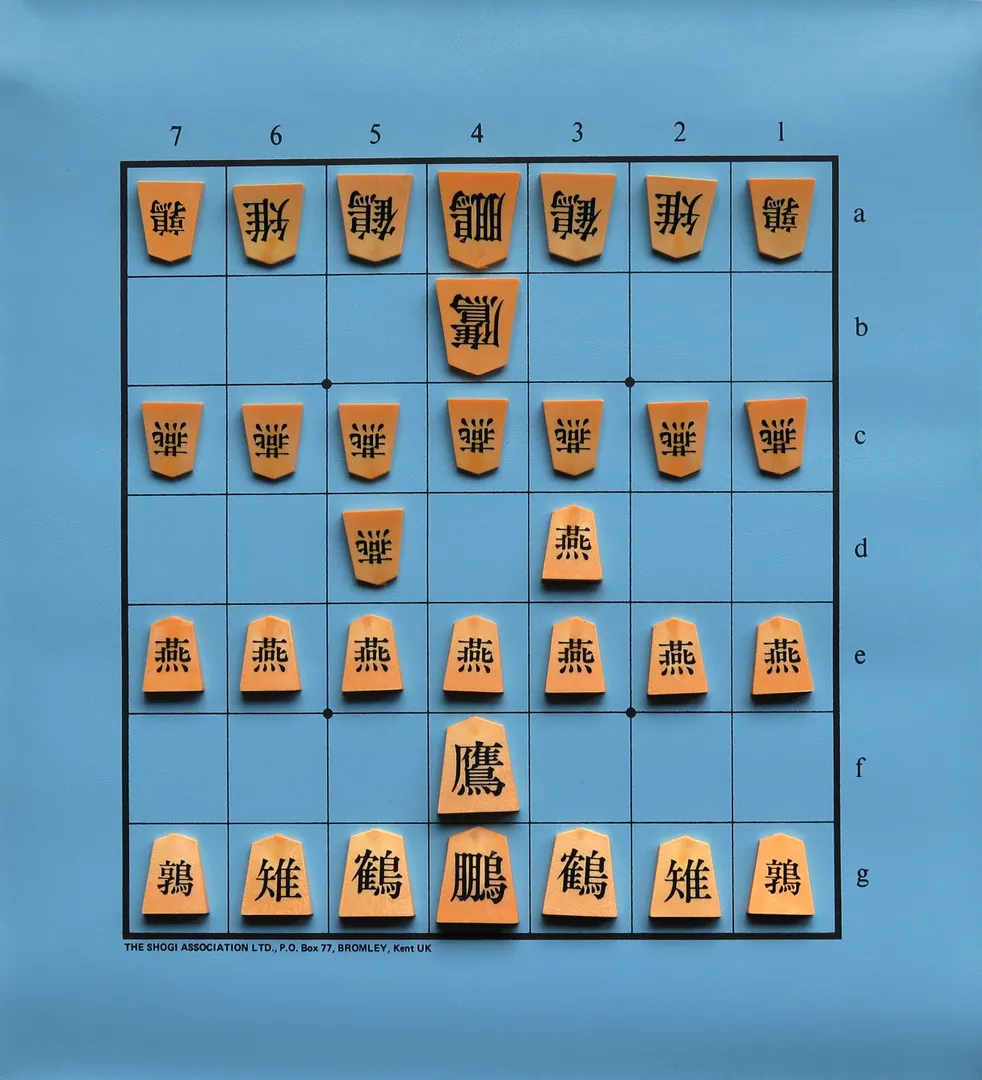
Tori (Bird) Shogi is a delightful variant played on a 7×7 board that dates from the late 18th century. It is thought to have been the first Shogi variant to utilize drops (a mechanic in the modern version of 9×9 Shogi and absent from the original 9×9 Sho Shogi). Each piece is named after a type of bird. The royal piece (King) is the Phoenix. Other pieces include the Swallow (promotes to Wild Goose), Falcon (promotes to Eagle), Crane, Pheasant, and Quail. The goal of the game is to capture the opposing Phoenix. Somewhat of an oddity is the fact that a player's two Quail pieces are actually asymmetrical, being designated as the Left Quail and the Right Quail, with their movement capabilities mirrored. Drops are handled in a manner very similar to modern Shogi. A third swallow cannot be dropped in a file that contains two others, nor can one be dropped on the last rank, where it would not be able to move. In addition, a swallow cannot be dropped so as to give immediate mate. The promotion zone for Swallows and the Falcon consists of the opponent's back two ranks. Promoted pieces revert to their un-promoted value when they are captured (for purposes of dropping back into play).
Selon le catalogue, Tori Shogi se joue à 2 personnes. C’est le nombre de joueurs indiqué par l’éditeur : le jeu est donc conçu pour exactement ce nombre de participants. Les variantes pour d’autres tailles de groupe, s’il en existe, sont décrites dans la règle de votre édition ; consultez-la avant d’installer une autre configuration.
La durée indiquée pour Tori Shogi est de 60 minutes, selon l’estimation de l’éditeur pour une partie complète. La durée réelle dépend du groupe, de l’effectif et de la connaissance des règles : les premières parties sont plus longues, les groupes expérimentés terminent plus vite. Mise en place et explication des règles ne sont pas comprises.
Le catalogue indique Tori Shogi à partir de 6 ans. C’est la recommandation de l’éditeur ; elle tient compte de la lecture nécessaire, de la complexité des règles et des petits composants, pas seulement du thème. Les plus jeunes peuvent souvent participer avec l’aide d’un adulte : vérifiez l’âge indiqué sur votre édition et tenez compte de l’expérience de votre groupe.
Tori Shogi obtient une note de complexité de 3,5 sur 5 auprès des joueurs de BoardGameGeek, ce qui en fait un jeu de complexité moyenne. Cette note reflète la quantité de règles, de planification et de décisions qu’exige une partie typique. Prévoyez une explication plus longue pour les jeux exigeants et utilisez un guide de préparation avant la soirée.
Tori Shogi appartient à ces catégories : Animals et Abstract Strategy. Ses principales mécaniques sont Grid Movement. Les catégories décrivent le thème et l’univers d’un jeu, tandis que les mécaniques décrivent ce que les joueurs font réellement pendant leur tour. Chaque mécanique mène à une page du catalogue avec des jeux similaires.
Les auteurs crédités pour Tori Shogi sont : Toyota Genryu. Ces crédits proviennent des données publiées du jeu et désignent les personnes responsables de sa conception, et non les illustrateurs ou les éditeurs. Les pages d’auteurs sur MeepleRules regroupent les autres titres des mêmes auteurs, ce qui est utile lorsqu’un jeu vous plaît et que vous en cherchez de similaires.
Le catalogue présente Tori Shogi comme un jeu de base. Il se joue seul avec le matériel contenu dans la boîte et ne nécessite aucun autre titre. Les extensions, s’il en existe, y ajoutent du contenu ou des règles et sont répertoriées séparément dans le catalogue, avec un lien vers ce jeu de base.