
- Rang BGG
- BGG #15 168
- Note BGG
- 7,4
Velikye Luki: Little Stalingrad of the North
- 1–2 joueurs
- 180 min
- Complexité 2,8/5
- 2000
1998
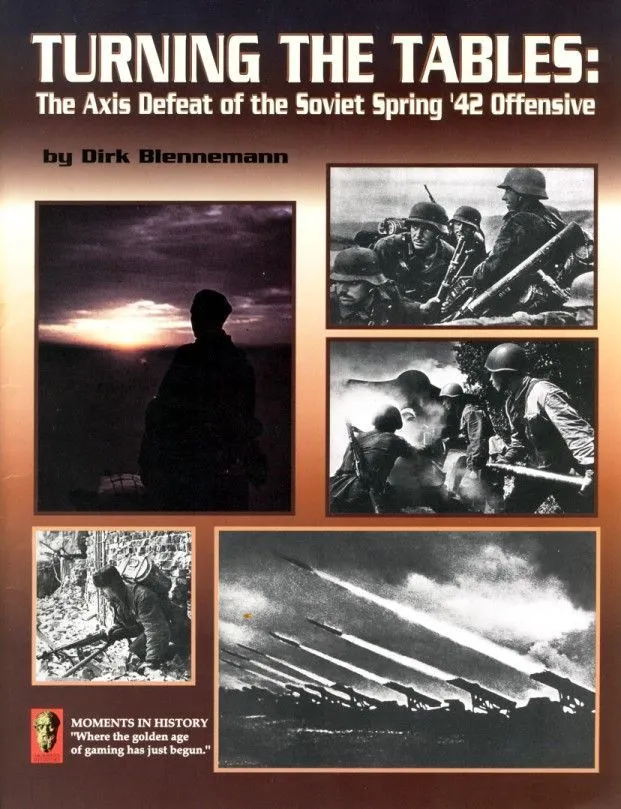
Aide aux règles de Turning the Tables: The Axis Defeat of the Soviet Spring '42 Offensive
Des explications claires des tours, effets de cartes et situations litigieuses, avec des références aux sources officielles et un historique des questions sauvegardé.
Pour 1 joueur
Que voulez-vous savoir ?
Les réponses viennent du livret officiel, avec la page à vérifier.
Turning the Tables: The Axis Defeat of the Soviet Spring '42 Offensive est un jeu de société sorti en 1998 pour 1 à 2 joueurs et avec des parties de 180 minutes. Il a été conçu par Dirk Blennemann et ses principales mécaniques sont Grid Movement, Hexagon Grid et Action Points.


En anglais
Folio format, operational level treatment of the launch and subsequent defeat of the Soviet Spring 1942 offensive. First installment in Moments in History's "T3" series, which has subsequently become the "Schwerpunkt" series for GMT Games. Hallmarks of the system are ease of play and the "fog of war" element. Contrary to the playing time above this game takes about 6 hours to play unless their is an earlier sudden death decision. Features C3I points used to generate the number of units that can be activated to move and the number of attacks that can be made during each segment. There are three segments per turn in which each player must begin by deciding whether they will move and then attack or attack and then move. Not only is combat strength compared but also a unit's tactical rating when resolving combats. The side with the higher tactical rating gets to draw more random chits most of which have beneficial drms for that side. To a limited extent combat losses can be converted into retreats and enemy retreats can occasionally result in an additional advance for the attacker. Occasionally, extreme die rolls allow additional spontaneous activities. ZoCs are hard except friendly units allow tracing supply through them. Loss of supply reduces unit effectiveness and can result in attrition. Victory is determined mostly by units losses but also the Soviet control of objective cities and the presence of even one friendly unit on the other players side of the Donets river provides a healthy number of VPs. Both players begin with units in this position and so cancel each other out. All in all it is a tense game. The Russian player with the benefit of hindsight can avoid many of the hazards of the original campaign by not over extending himself. Republished in Command Magazine Japan #56.
Selon le catalogue, Turning the Tables: The Axis Defeat of the Soviet Spring '42 Offensive se joue de 1 à 2 personnes. Cette fourchette correspond au nombre de joueurs indiqué par l’éditeur : le jeu s’installe donc pour toute taille de groupe dans cette limite. La mise en place, certaines règles et le décompte peuvent varier selon l’effectif ; vérifiez la configuration exacte dans la règle de votre édition.
La durée indiquée pour Turning the Tables: The Axis Defeat of the Soviet Spring '42 Offensive est de 180 minutes, selon l’estimation de l’éditeur pour une partie complète. La durée réelle dépend du groupe, de l’effectif et de la connaissance des règles : les premières parties sont plus longues, les groupes expérimentés terminent plus vite. Mise en place et explication des règles ne sont pas comprises.
Turning the Tables: The Axis Defeat of the Soviet Spring '42 Offensive obtient une note de complexité de 2,6 sur 5 auprès des joueurs de BoardGameGeek, ce qui en fait un jeu plutôt léger. Cette note reflète la quantité de règles, de planification et de décisions qu’exige une partie typique. Prévoyez une explication plus longue pour les jeux exigeants et utilisez un guide de préparation avant la soirée.
Turning the Tables: The Axis Defeat of the Soviet Spring '42 Offensive appartient à ces catégories : Wargame et World War II. Ses principales mécaniques sont Grid Movement, Hexagon Grid et Action Points. Les catégories décrivent le thème et l’univers d’un jeu, tandis que les mécaniques décrivent ce que les joueurs font réellement pendant leur tour. Chaque mécanique mène à une page du catalogue avec des jeux similaires.
Les auteurs crédités pour Turning the Tables: The Axis Defeat of the Soviet Spring '42 Offensive sont : Dirk Blennemann. Ces crédits proviennent des données publiées du jeu et désignent les personnes responsables de sa conception, et non les illustrateurs ou les éditeurs. Les pages d’auteurs sur MeepleRules regroupent les autres titres des mêmes auteurs, ce qui est utile lorsqu’un jeu vous plaît et que vous en cherchez de similaires.
Le catalogue présente Turning the Tables: The Axis Defeat of the Soviet Spring '42 Offensive comme un jeu de base. Il se joue seul avec le matériel contenu dans la boîte et ne nécessite aucun autre titre. Les extensions, s’il en existe, y ajoutent du contenu ou des règles et sont répertoriées séparément dans le catalogue, avec un lien vers ce jeu de base.