
- Rang BGG
- BGG #4 580
- Note BGG
- 6,8
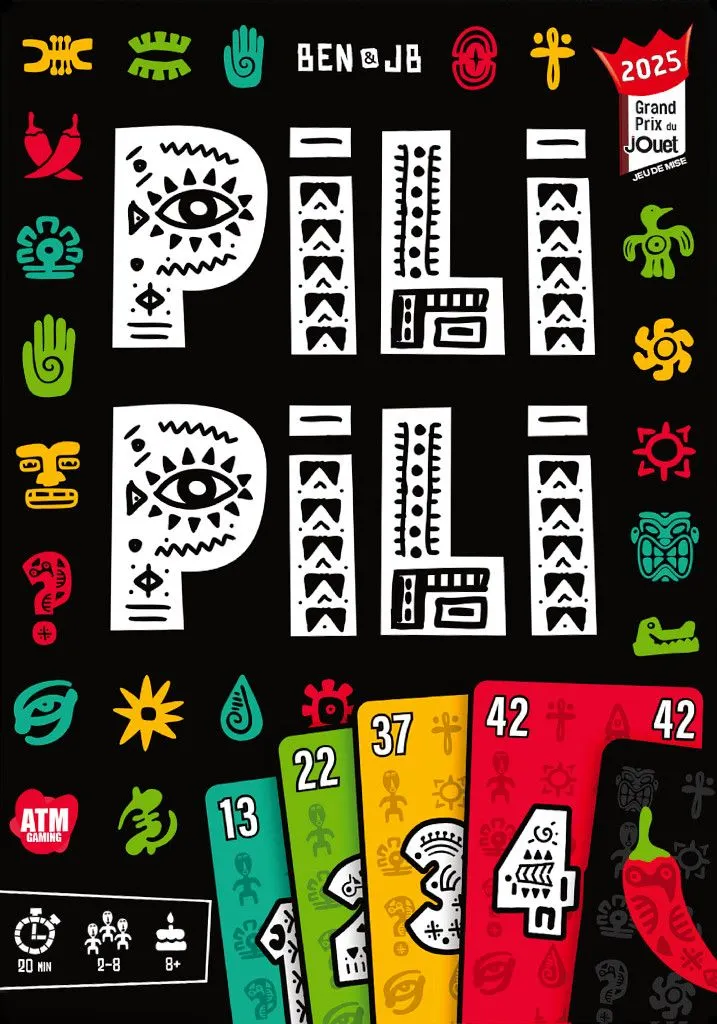
Pili Pili
- 2–8 joueurs
- 20–30 min
- Complexité 1,1/5
- 2025
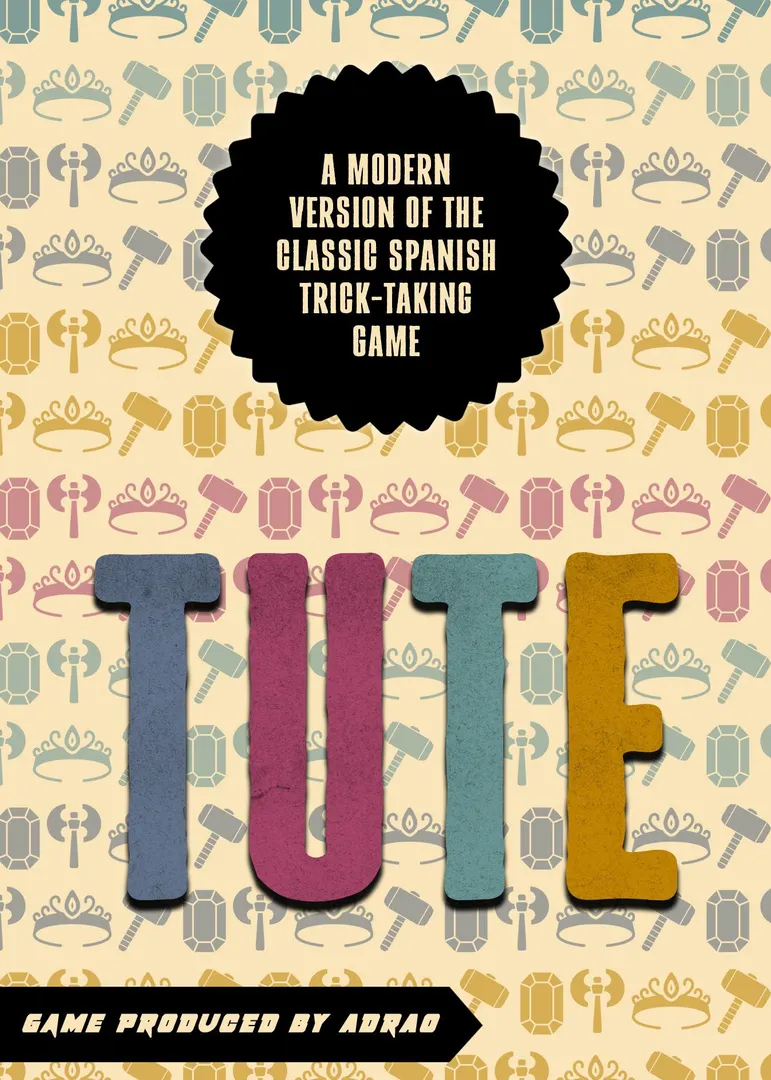
Aide aux règles de Tute
Des explications claires des tours, effets de cartes et situations litigieuses, avec des références aux sources officielles et un historique des questions sauvegardé.
Pour 2 joueurs
Que voulez-vous savoir ?
Les réponses viennent du livret officiel, avec la page à vérifier.
Tute est un jeu de société pour 2 à 4 joueurs, avec des parties de 20 minutes et à partir de 10 ans. Ses principales mécaniques sont Memory et Trick-taking.






En anglais
Tute is an Spanish trick-taking card game for two to four players. During the 19th century, the game spread in Spain, becoming one of the most popular card games in the country. The name of the game was later modified by Spanish speakers, who started calling the game Tute. The game is played with a deck of traditional Spanish playing cards, or naipes, that is very similar to the Italian 40-card deck. The classic version of the game is Two-player Tute, while the most played is Tute in Pairs, where four players form two teams. The object of the game is to score the most points in the baza (a pile next to a player that contains the cards that the player gets after winning a trick) and by declarations (holding certain combinations of cards). Due to its wide popularity, several variations of the game exist. The game is played with a Spanish deck of cards, which is divided into four suits: Oros (coins), Espadas (spades), Copas (cups) and Bastos (clubs). The 8s and 9s of each suit are excluded, leaving forty cards in the deck. The object of the game is to score the most points in the baza and from declarations. Tute in Pairs is played by four players—two teams of two players each—and every player receives ten cards (since there are 40 cards, this means that all of the cards in the deck are dealt). The last card to be dealt is shown to the rest of the players and becomes the trump. This card belongs to the player it was dealt to. The four people sit in a circle, with opponent players to the right and left of each player, and players sitting opposite their team members. One person plays a card, and the player to the right of this person, from the opponent team, plays a card. As with Two-player Tute, if the second player has one or more higher cards of the same suit as the first player's card, one of these must be played. If the second player has cards of the same suit, but only ones of less value than the first card, one of these must be played. If the second player does not have any cards of the same suit but has one or more trump cards, one of these must be played. If the second player has no cards of the same suit and no trumps, any other card can be played. Now, the next player to the right plays a card following the same rules as the second player: if possible, a card of the same suit as the first player's card must be played, higher than the first two cards if possible; or if this is not possible, then lower; if no card of the same suit is held, then if possible, a trump card must be played; if no trump card is held, then any card may be played. The fourth player likewise plays a card following these same rules. When all four cards of the trick are on the table, the pair that played the card with the strongest card wins the hand. The trump suit beats the other three suits, with the ranking of trump cards from strongest to weakest as follows: Ace-3-King-Knight-Knave-7-6-5-4-2. The next strongest suit is the one the first player played, again with the card rankings being Ace-3-King-Knight-Knave-7-6-5-4-2. Cards of the other two suits always lose to trumps and the first player's suit. The winning team places the four cards from the trick into their baza. The rules for the declarations are similar to Two-player Tute, but it is mandatory to declare the cards after a player or the partner begins a baza. Only the scoring team can declare. To declare their cards, the opposing team has to begin a baza. Declaring cards in the plays that follow the beginning of a baza is not allowed. After the hand is over, the counting starts (see Scoring below). When the counting ends, and after the score is calculated, the cards in the bazas are mixed again in a single stack to be dealt at the start of the next round. The deal of cards rotates counter-clockwise during the subsequent hands Tute games are played until an established number of game points is reached. Each time one of the competitors wins a round, one point is added to the total score of the player or pair. New rounds are played until a player or pair reaches the game points goal (three and six point games are the most common). When the number is reached the player or pair wins. The winner (or the pair of winners) of the round is determined by the total of round points each player (or pair) collects. These points are calculated as the sum of card values in baza, bonus points for declarations and the final trick bonus. A player (or a pair), who wins at least one trick receives an ability to gain more round points upon declaring the card combinations. In Tute in Pairs the declarations can be performed until the end of round; in Two-player Tute this ability persists until only two cards are left in the deck. The player, who collected all the four Kings, is entitled to declare tute (all), which automatically ends the round with a collector's victory. Having both King and Knight of the trump suit, one can declare las cuarenta (forty), scoring additional 40 round points. The combination of King and Knight of any other suit can be declared as veinte (twenty); it adds 20 round points to the player's score. If possible, a player can declare several combination. In such cases the declarations with the higher round point value must be made first. For example, after declaring veinte the player loses right to declare las cuarenta, though declaring another veinte is still allowed. In Two-player games the declaration order rule only applies to declarations between each trick is played, so the player can declare las cuarenta after veinte if the combination is collected by picking the previously missing card from the stock. The total of the round points the player (or pair) has gained is calculated as the sum of values of the cards collected in the baza and the values of the declared combinations. The winner of the last trick also receives ten bonus round points. The total value of the deck (and thus the maximum amount of round points) is 230 points.
Selon le catalogue, Tute se joue de 2 à 4 personnes. Cette fourchette correspond au nombre de joueurs indiqué par l’éditeur : le jeu s’installe donc pour toute taille de groupe dans cette limite. La mise en place, certaines règles et le décompte peuvent varier selon l’effectif ; vérifiez la configuration exacte dans la règle de votre édition.
La durée indiquée pour Tute est de 20 minutes, selon l’estimation de l’éditeur pour une partie complète. La durée réelle dépend du groupe, de l’effectif et de la connaissance des règles : les premières parties sont plus longues, les groupes expérimentés terminent plus vite. Mise en place et explication des règles ne sont pas comprises.
Le catalogue indique Tute à partir de 10 ans. C’est la recommandation de l’éditeur ; elle tient compte de la lecture nécessaire, de la complexité des règles et des petits composants, pas seulement du thème. Les plus jeunes peuvent souvent participer avec l’aide d’un adulte : vérifiez l’âge indiqué sur votre édition et tenez compte de l’expérience de votre groupe.
Tute obtient une note de complexité de 2,0 sur 5 auprès des joueurs de BoardGameGeek, ce qui en fait un jeu plutôt léger. Cette note reflète la quantité de règles, de planification et de décisions qu’exige une partie typique. Prévoyez une explication plus longue pour les jeux exigeants et utilisez un guide de préparation avant la soirée.
Tute appartient à ces catégories : Card Game. Ses principales mécaniques sont Memory et Trick-taking. Les catégories décrivent le thème et l’univers d’un jeu, tandis que les mécaniques décrivent ce que les joueurs font réellement pendant leur tour. Chaque mécanique mène à une page du catalogue avec des jeux similaires.
Le catalogue présente Tute comme un jeu de base. Il se joue seul avec le matériel contenu dans la boîte et ne nécessite aucun autre titre. Les extensions, s’il en existe, y ajoutent du contenu ou des règles et sont répertoriées séparément dans le catalogue, avec un lien vers ce jeu de base.