
- Posizione BGG
- BGG #30.491
- Valutazione BGG
- 5,3
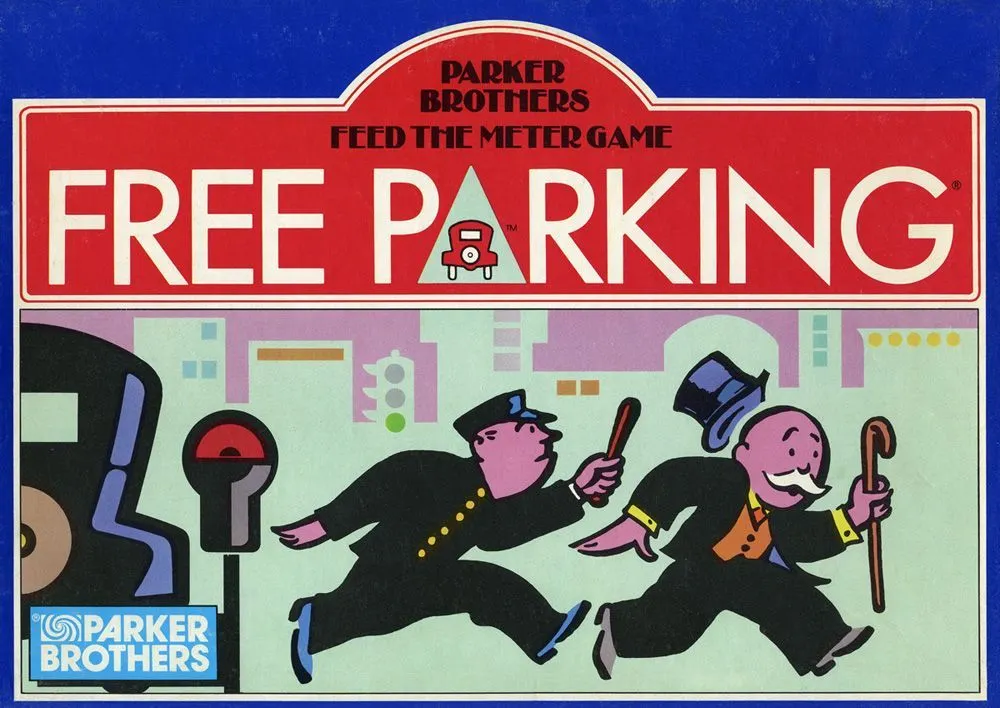
Free Parking
- 2–4 giocatori
- 30 min
- Complessità 1,1/5
- 1988
1985
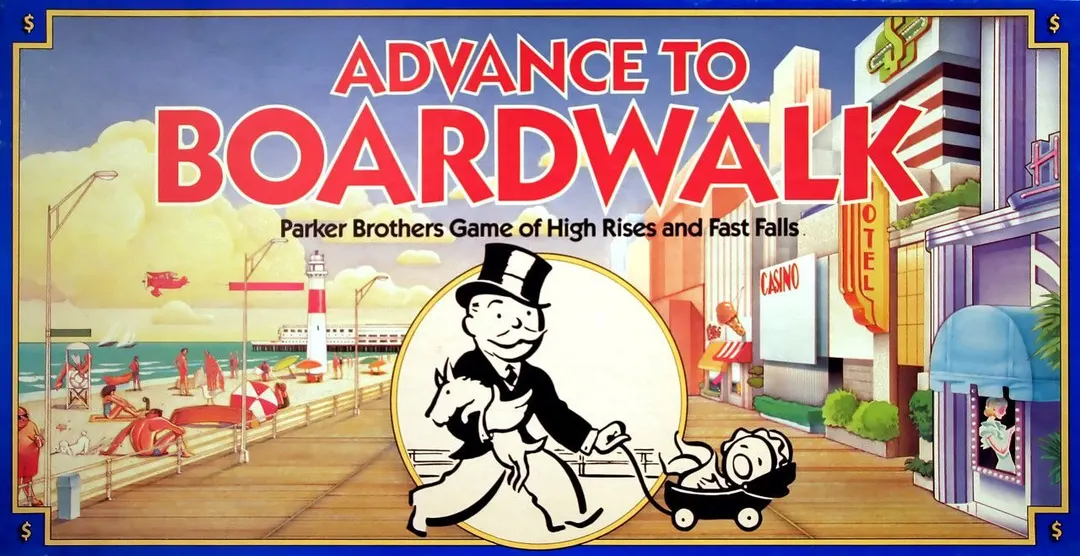
Aiuto con le regole di Advance to Boardwalk
Spiegazioni chiare di turni, effetti delle carte e situazioni dubbie, con riferimenti alle fonti ufficiali e cronologia delle domande salvata.
Cosa vuoi sapere?
Le risposte vengono dal regolamento ufficiale, con la pagina da verificare.
Advance to Boardwalk è un gioco da tavolo pubblicato nel 1985 per 2–4 giocatori, con partite da 60 minuti e dai 8 anni in su. È stato ideato da Charles Phillips e le sue meccaniche principali sono Hand Management, Take That e Dice Rolling.








In inglese
Don't let the name fool you. The game has nothing to do with Monopoly. The name was obviously chosen in an attempt to capitalize on that mega-selling monster. There are four tracts of land illustrated on the board, which depicts an ocean-front boardwalk. Each tract of land contains five properties valued from $1 million to $8 million. Each turn, a player rolls two regular dice and one special die. The special die has four sides depicting a color matching one of the land tracts, with the other two sides depicting a 'W' and 'F' respectively. The number rolled on the regular two dice is the amount of money the player can spend on development, while the color depicted on the special die is the tract of land he may build on. Thus, if a player rolled an 8 and a red, he has $8 million to spend on developing buildings in the red tract. He can split this $8 million as he sees fit. For example, he may build a building on the $5 million plot and one on the $3 million plot; or he may opt to build one building on the $8 million plot. Quite a few building options here. The 'W' on the special die is a 'wild' color. If it was rolled instead of a color, the player may select which tract he wishes to build on. The 'F' means that a player draws a Fortune card and does not build that turn. Fortune cards allow a player to perform a variety of actions, including constructing extra buildings, moving one of his already placed buildings, removing an opponent's building, etc. A player may play one of these Fortune cards per turn. When a player constructs a building and obtains the most buildings on a particular plot, he takes the deed to that property and moves his token along the boardwalk an amount equal to the value of the deed. If a player wrested control of the deed from an opponent, the opponent is then moved back that number of spaces. Buildings are placed on the board in a fashion identical to that used in Manhattan...they are stacked on top of existing buildings. If there is a tie for the most buildings, the player who built first on that plot possesses the deed. Some have described this game as 'Manhattan lite', and they're not far off. One certainly has similar thought processes and must constantly keep an eye out for optimum plays which will wrest control of deeds (control of buildings in Manhattan) from opponents. There's another planning element thrown in, too. Certain spaces along the boardwalk are marked with an 'F'. If a player advances his token to one of these locations, he draws a Fortune card. These cards can be extremely powerful and cause a severe swing in deed controls. Thus, it is not always wise to go for the largest deed acquisition if a lesser gain would allow you to move your token onto an 'F' location. Clever. The game continues until one player has placed all of his buildings (sounds a bit like Rheinländer, doesn't it?) or until one player has reached the end of the boardwalk. The player with the highest total value of deeds is the victor.
Secondo il catalogo, Advance to Boardwalk supporta da 2 a 4 giocatori. L’intervallo corrisponde al numero di giocatori indicato dall’editore, quindi il gioco si può preparare per qualsiasi gruppo entro quei limiti. Preparazione, alcune regole e punteggio possono comunque variare in base al numero di giocatori: controlla la configurazione esatta nel regolamento della tua edizione.
La durata indicata per Advance to Boardwalk è di 60 minuti, la stima dell’editore per una partita completa. La durata effettiva dipende dal gruppo, dal numero di giocatori e dalla conoscenza delle regole: le prime partite durano di più, i gruppi esperti finiscono prima. Preparazione e spiegazione delle regole non sono comprese nella stima.
Il catalogo indica Advance to Boardwalk dai 8 anni in su. È la raccomandazione dell’editore e tiene conto della lettura richiesta, della complessità delle regole e dei componenti piccoli, non solo del tema. I più giovani spesso possono giocare con l’aiuto di un adulto: controlla l’età consigliata sulla tua edizione e l’esperienza del tuo gruppo con i giochi da tavolo.
Advance to Boardwalk ha un punteggio di complessità di 1,5 su 5 secondo i giocatori di BoardGameGeek, il che lo rende un gioco leggero. Il punteggio riflette quanta conoscenza delle regole, pianificazione e decisioni richiede una partita tipica. I giochi impegnativi richiedono una prima spiegazione più lunga, quindi conviene usare una guida di preparazione.
Advance to Boardwalk appartiene a queste categorie: Economic. Le sue meccaniche principali sono Hand Management, Take That e Dice Rolling. Le categorie descrivono il tema e l’ambientazione di un gioco, mentre le meccaniche descrivono ciò che i giocatori fanno davvero nel proprio turno. Ogni meccanica porta a una pagina del catalogo con giochi simili.
Gli autori accreditati di Advance to Boardwalk sono: Charles Phillips. Questi crediti provengono dai dati pubblicati del gioco e indicano le persone responsabili della sua progettazione, non gli illustratori o gli editori. Le pagine degli autori su MeepleRules raccolgono altri titoli degli stessi autori, utili quando un gioco ti piace e ne cerchi di simili.
Il catalogo classifica Advance to Boardwalk come gioco base. Si gioca da solo con i componenti presenti nella scatola e non richiede altri titoli. Le espansioni, se esistono, aggiungono nuovo contenuto o nuove regole e sono elencate separatamente nel catalogo con un collegamento a questo gioco base.