

- Posizione BGG
- BGG #1659
- Valutazione BGG
- 6,6
Kahuna
- 2 giocatori
- 30–40 min
- Complessità 2,1/5
- 1998
2016
Aiuto con le regole di Agamemnon
Spiegazioni chiare di turni, effetti delle carte e situazioni dubbie, con riferimenti alle fonti ufficiali e cronologia delle domande salvata.
Per 2 giocatori
Cosa vuoi sapere?
Le risposte vengono dal regolamento ufficiale, con la pagina da verificare.
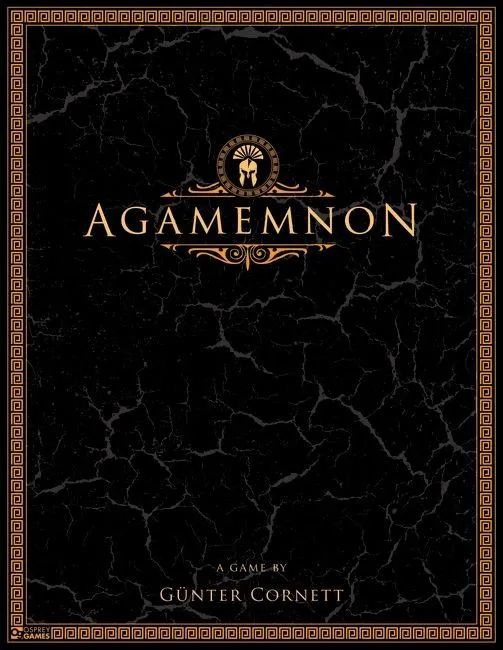
Agamemnon è un gioco da tavolo pubblicato nel 2016 per 2 giocatori, con partite da 20 a 30 minuti e dai 12 anni in su. È stato ideato da Günter Cornett e le sue meccaniche principali sono Area Majority / Influence e Modular Board.



In inglese
None can defy the will of the gods but the gods themselves. Driven by the ambition of their king, the Greeks have arrived on the shores of Troy. Some seek power, some seek revenge, while still others seek the great moment in battle that will define their place in history. Agamemnon is a fast-paced strategy board game in which two players take on the roles of ancient Greek gods during the Trojan War. By tactically deploying warriors to where they're needed across the board, each player may influence the final outcome of the battles famously detailed in Homer's Iliad. Some areas will be decided by the strength of the warriors, others by sheer weight of numbers, and some by the inspiration your heroes provide. To begin the game, Strings of Fate tiles are placed on their matching spaces on the board, and each player receives one set of fifteen playing tiles. These tiles come in three varieties: Warriors, with a numerical value marking their strength, Leaders, with both a letter rank and a strength value, and Weavers who have no strength or rank, but instead manipulate the Strings of Fate. Each player will shuffle their tiles face down in front of them. The first player flips over one of their tiles, and places it on any available space. If it’s a Weaver, its effect immediately comes into play: the Warp Weaver may swap two adjacent Strings of Fate, whilst the Weft Weaver simply splits all strings it’s connected to. After the first turn, each player flips and plays two tiles on their turns. Once all the tiles have been placed, each string is resolved: each Strength String is won by the player with the highest combined strength contained within it; each Leadership String is won by the player with the single highest ranked tile within the string; and Force Strings are won by the player with the most tiles, including Weavers, in the string. Players claim all the tiles from Strings of Fate they have won, and the player with the most tiles at the end wins.
Secondo il catalogo, Agamemnon supporta 2 giocatori. È il numero di giocatori indicato dall’editore, quindi il gioco è pensato esattamente per quel numero di partecipanti. Le varianti per gruppi di altre dimensioni, se esistono, sono descritte nel regolamento della tua edizione: consultalo prima di preparare una configurazione diversa.
La durata indicata per Agamemnon è di 20–30 minuti, la stima dell’editore per una partita completa. La durata effettiva dipende dal gruppo, dal numero di giocatori e dalla conoscenza delle regole: le prime partite durano di più, i gruppi esperti finiscono prima. Preparazione e spiegazione delle regole non sono comprese nella stima.
Il catalogo indica Agamemnon dai 12 anni in su. È la raccomandazione dell’editore e tiene conto della lettura richiesta, della complessità delle regole e dei componenti piccoli, non solo del tema. I più giovani spesso possono giocare con l’aiuto di un adulto: controlla l’età consigliata sulla tua edizione e l’esperienza del tuo gruppo con i giochi da tavolo.
Agamemnon ha un punteggio di complessità di 2,2 su 5 secondo i giocatori di BoardGameGeek, il che lo rende un gioco piuttosto leggero. Il punteggio riflette quanta conoscenza delle regole, pianificazione e decisioni richiede una partita tipica. I giochi impegnativi richiedono una prima spiegazione più lunga, quindi conviene usare una guida di preparazione.
Agamemnon appartiene a queste categorie: Abstract Strategy e Ancient. Le sue meccaniche principali sono Area Majority / Influence e Modular Board. Le categorie descrivono il tema e l’ambientazione di un gioco, mentre le meccaniche descrivono ciò che i giocatori fanno davvero nel proprio turno. Ogni meccanica porta a una pagina del catalogo con giochi simili.
Gli autori accreditati di Agamemnon sono: Günter Cornett. Questi crediti provengono dai dati pubblicati del gioco e indicano le persone responsabili della sua progettazione, non gli illustratori o gli editori. Le pagine degli autori su MeepleRules raccolgono altri titoli degli stessi autori, utili quando un gioco ti piace e ne cerchi di simili.
Il catalogo classifica Agamemnon come gioco base. Si gioca da solo con i componenti presenti nella scatola e non richiede altri titoli. Le espansioni, se esistono, aggiungono nuovo contenuto o nuove regole e sono elencate separatamente nel catalogo con un collegamento a questo gioco base.