

- Posizione BGG
- BGG #10.262
- Valutazione BGG
- 6,9
Combi-Nations
- 1–5 giocatori
- 30–40 min
- Complessità 2,0/5
- 2022

2005
Aiuto con le regole di Aloha
Spiegazioni chiare di turni, effetti delle carte e situazioni dubbie, con riferimenti alle fonti ufficiali e cronologia delle domande salvata.
Cosa vuoi sapere?
Le risposte vengono dal regolamento ufficiale, con la pagina da verificare.
Aloha è un gioco da tavolo pubblicato nel 2005 per 2–5 giocatori, con partite da 45 minuti e dai 10 anni in su. È stato ideato da Corné van Moorsel e le sue meccaniche principali sono Push Your Luck, Tile Placement e Modular Board.






In inglese
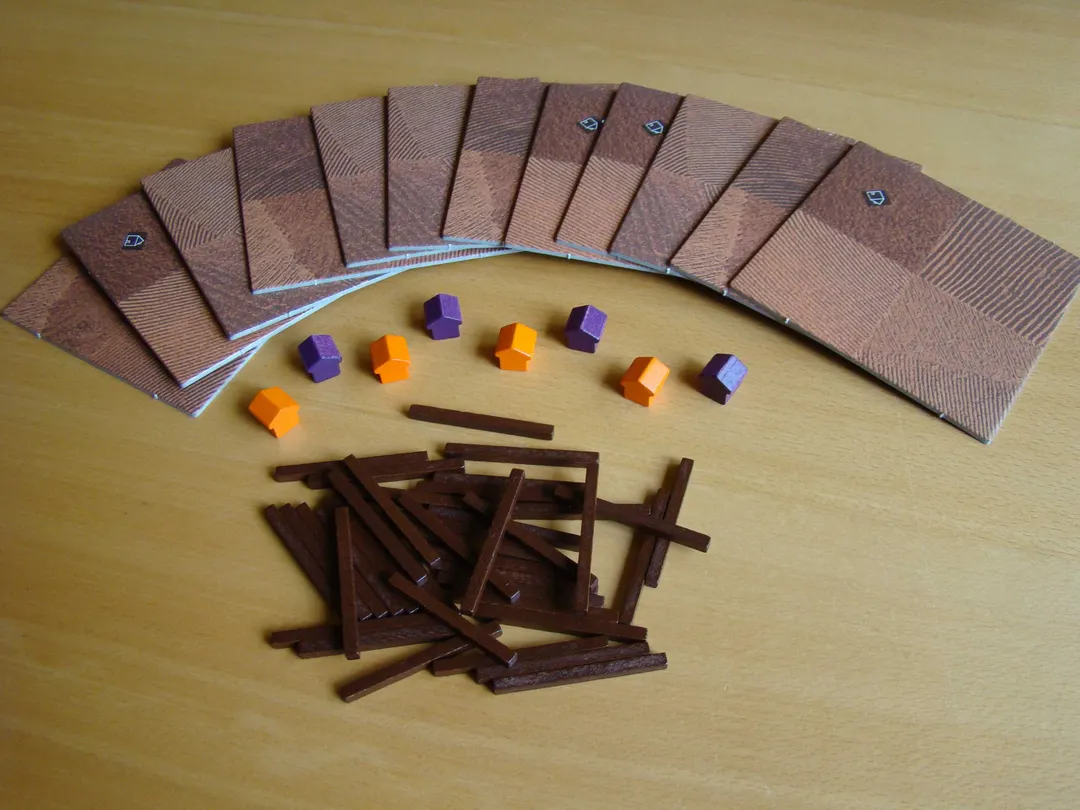
From the publisher: "Aloha, Holiday Island. Island tourism grew explosively around 1960 and travel agents searched desperately for new paradise beaches. Your travel office asks you to explore new holiday destinations. Your task is to find the best beaches and the most attractive locations." Aloha is a nice mix of tile play and push-your-luck. Players are travel reps trying to secure the best beaches by placing sun loungers on beaches as they explore the island. The tiles show a good mix of land and water, with 1-3 golden beaches on most tiles. On your turn, you jump your rep to a new place, then draw a tile. This must be placed adjacent so you can walk straight onto it, otherwise your turn is over. If you walk on, and it has a beach, you have the option of dropping a lounger in your color onto it on its side. Then you can decide to push your luck and draw another tile. Each time you walk on, you may drop another lounger, but these go onto their sides. When you decide you've done enough or cannot move on anyway, you stop drawing and turn your loungers upright. But if you draw a tile you can't place so that you walk on, you lose all the loungers on their sides back to your pot. The tile still gets placed, and the game has a clever rule. Whenever a tile is placed, it must go where it touches the most tiles. So if the tile is going next to where you stand, sometimes you have no choice, the game forces its placement. But usually you have a few choices and these are crucial to pushing your luck. Finally, when all the tiles are down, the island is scored. The longest beach gets a 10pt marker, the next a 9pt marker and so on (with rules for tie-breaks). Then, the player with the most loungers on that beach collects to points markers (more tie-breaks). Also, any loungers still in your pot are also worth 1 pt each. At first, you think you must fight over owning beaches, and try to wrest back control of a beach. But in fact you will only win by occupying several beaches, and often you only need 3 or 4 markers to secure control. Being able to start a beach, get control, then extend it to get most points will win. Players can be unlucky and draw un-walkable tiles a few times, but this means you are not picking the correct places when jumping. As the game ends, your options reduce, but you should have done your work already. The result is a nice looking island, with lush jungle and bluewater inlets, dotted with lots of loungers. You have nothing to do till your turn, but if you make the right choices, you should have a winning chance. Knowing when to go one more tile matters, and knowing when to stop. Players with lots of loungers left in front of them can still win, but may have wasted their opportunities.
Secondo il catalogo, Aloha supporta da 2 a 5 giocatori. L’intervallo corrisponde al numero di giocatori indicato dall’editore, quindi il gioco si può preparare per qualsiasi gruppo entro quei limiti. Preparazione, alcune regole e punteggio possono comunque variare in base al numero di giocatori: controlla la configurazione esatta nel regolamento della tua edizione.
La durata indicata per Aloha è di 45 minuti, la stima dell’editore per una partita completa. La durata effettiva dipende dal gruppo, dal numero di giocatori e dalla conoscenza delle regole: le prime partite durano di più, i gruppi esperti finiscono prima. Preparazione e spiegazione delle regole non sono comprese nella stima.
Il catalogo indica Aloha dai 10 anni in su. È la raccomandazione dell’editore e tiene conto della lettura richiesta, della complessità delle regole e dei componenti piccoli, non solo del tema. I più giovani spesso possono giocare con l’aiuto di un adulto: controlla l’età consigliata sulla tua edizione e l’esperienza del tuo gruppo con i giochi da tavolo.
Aloha ha un punteggio di complessità di 2,2 su 5 secondo i giocatori di BoardGameGeek, il che lo rende un gioco piuttosto leggero. Il punteggio riflette quanta conoscenza delle regole, pianificazione e decisioni richiede una partita tipica. I giochi impegnativi richiedono una prima spiegazione più lunga, quindi conviene usare una guida di preparazione.
Aloha appartiene a queste categorie: Territory Building. Le sue meccaniche principali sono Push Your Luck, Tile Placement e Modular Board. Le categorie descrivono il tema e l’ambientazione di un gioco, mentre le meccaniche descrivono ciò che i giocatori fanno davvero nel proprio turno. Ogni meccanica porta a una pagina del catalogo con giochi simili.
Gli autori accreditati di Aloha sono: Corné van Moorsel. Questi crediti provengono dai dati pubblicati del gioco e indicano le persone responsabili della sua progettazione, non gli illustratori o gli editori. Le pagine degli autori su MeepleRules raccolgono altri titoli degli stessi autori, utili quando un gioco ti piace e ne cerchi di simili.
Il catalogo classifica Aloha come gioco base. Si gioca da solo con i componenti presenti nella scatola e non richiede altri titoli. Le espansioni, se esistono, aggiungono nuovo contenuto o nuove regole e sono elencate separatamente nel catalogo con un collegamento a questo gioco base.