

- Posizione BGG
- BGG #1485
- Valutazione BGG
- 7,9
Street Masters
- 1–4 giocatori
- 45–120 min
- Complessità 2,8/5
- 2018
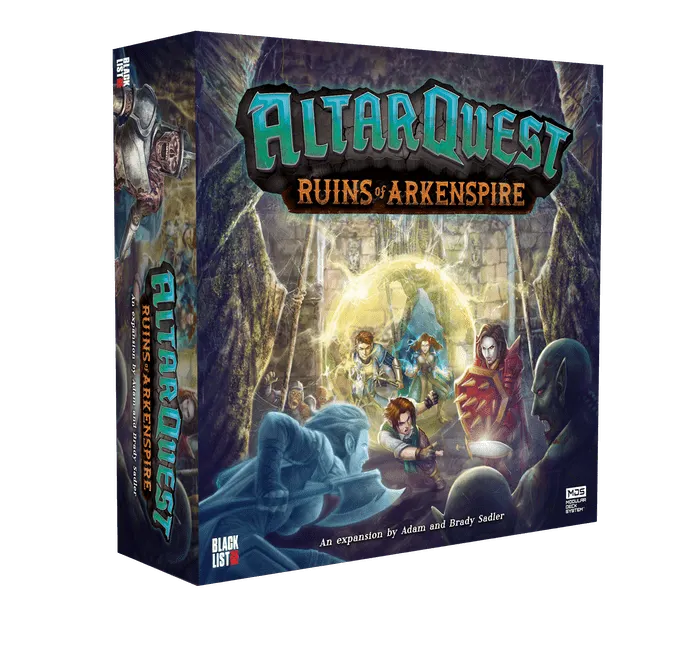
Aiuto con le regole di Altar Quest: Ruins of Arkenspire
Spiegazioni chiare di turni, effetti delle carte e situazioni dubbie, con riferimenti alle fonti ufficiali e cronologia delle domande salvata.
Cosa vuoi sapere?
Le risposte vengono dal regolamento ufficiale, con la pagina da verificare.
Altar Quest: Ruins of Arkenspire è un’espansione di Altar Quest pubblicata nel 2020 per 1–4 giocatori, con partite da 30 a 90 minuti e dai 14 anni in su. È stato ideato da Adam Sadler e Brady Sadler e le sue meccaniche principali sono Variable Player Powers, Hand Management e Dice Rolling.



In inglese
In the heart of Nethermoor is the broken tower of Arkenspire—a once-mighty tower built by the sole survivor of the Pheran empire, Szera the Doomchild. Szera’s history is inexorably tied to her fortress of Arkenspire. Vague written histories of Vaulsk have been deciphered by scholars to reveal that the earthquake (known by the Pheras as “the Welcoming”) was both prophesied and coordinated by a large faction of Phera necromancers led by the lich-born girl Szera. Despite the accepted Phera practice of worshipping death, the art of necromancy was new and rather taboo in Pheran society. Szera became a plague on Vaulsk, and was eventually banished along with her retinue. The young girl boldly accepted her exile, and went on to found her own kingdom in what would eventually become Aridika. However, Szera had left her stain on the Pheras, and her will continued even in her absence, to the eventual doom of Vaulsk. The Welcoming completely swallowed the capital city, and only the elder Phera who lived in the safety of the ziggurats survived. Thus, the greater Pheran empire fell, and its remnants held the lich queen Szera and her burgeoning empire of Aridika directly responsible. The elder Pheras formed a suicide army and crossed the Jaded Depths, determined to tear apart Szera’s tower fortress of Arkenspire, stone by stone. Guided by the elder’s burgeoning control of the hex magic believed to be released by the Welcoming, the Pheras brought war to Aridika, and gave their collective lives to break apart Arkenspire and its connection to the Arkenhold—the underworld spiritual prison that Szera sought to rule. With their dying breath, the Phera elders spoke the mysterious hexes given to them by the Welcoming and bound Szera’s supernatural energies to the very soil of Aridika. While the Doomchild lived, her physical existence was injected into the land itself. The Doomchild was cursed to wander her broken kingdom, seeking a way to break the spell that prevented her from merging the worlds of life and death. Eventually, the First Four Heroes of Eastony defeated Szera and bound her in the depths of her wicked ruined tower… there the Doomchild sleeps, but still schemes, determined to finish her work. The Ruins of Arkenspire expansion takes heroes to the accursed tower that was once the Doomchild Szera’s seat of power in Aridika. In the heart of Aridika, the entire region of Nethermoor is completely under the control of the Profaned—a legion of undead abominations that serve their necromantic overlords. As the Profaned begin threatening the provinces surrounding Nethermoor, valiant heroes are needed to push back the undead assault! Unfortunately, there are worse things lurking around Arkenspire than just the living dead. But the heroes will have to discover those mysteries as they unlock the secrets of the story deck included in Ruins of Arkenspire. —description from the publisher
Secondo il catalogo, Altar Quest: Ruins of Arkenspire supporta da 1 a 4 giocatori. L’intervallo corrisponde al numero di giocatori indicato dall’editore, quindi il gioco si può preparare per qualsiasi gruppo entro quei limiti. Preparazione, alcune regole e punteggio possono comunque variare in base al numero di giocatori: controlla la configurazione esatta nel regolamento della tua edizione.
La durata indicata per Altar Quest: Ruins of Arkenspire è di 30–90 minuti, la stima dell’editore per una partita completa. La durata effettiva dipende dal gruppo, dal numero di giocatori e dalla conoscenza delle regole: le prime partite durano di più, i gruppi esperti finiscono prima. Preparazione e spiegazione delle regole non sono comprese nella stima.
Il catalogo indica Altar Quest: Ruins of Arkenspire dai 14 anni in su. È la raccomandazione dell’editore e tiene conto della lettura richiesta, della complessità delle regole e dei componenti piccoli, non solo del tema. I più giovani spesso possono giocare con l’aiuto di un adulto: controlla l’età consigliata sulla tua edizione e l’esperienza del tuo gruppo con i giochi da tavolo.
Altar Quest: Ruins of Arkenspire ha un punteggio di complessità di 3,5 su 5 secondo i giocatori di BoardGameGeek, il che lo rende un gioco di media complessità. Il punteggio riflette quanta conoscenza delle regole, pianificazione e decisioni richiede una partita tipica. I giochi impegnativi richiedono una prima spiegazione più lunga, quindi conviene usare una guida di preparazione.
Altar Quest: Ruins of Arkenspire appartiene a queste categorie: Card Game, Fantasy e Fighting. Le sue meccaniche principali sono Variable Player Powers, Hand Management e Dice Rolling. Le categorie descrivono il tema e l’ambientazione di un gioco, mentre le meccaniche descrivono ciò che i giocatori fanno davvero nel proprio turno. Ogni meccanica porta a una pagina del catalogo con giochi simili.
Gli autori accreditati di Altar Quest: Ruins of Arkenspire sono: Adam Sadler e Brady Sadler. Questi crediti provengono dai dati pubblicati del gioco e indicano le persone responsabili della sua progettazione, non gli illustratori o gli editori. Le pagine degli autori su MeepleRules raccolgono altri titoli degli stessi autori, utili quando un gioco ti piace e ne cerchi di simili.
Il catalogo classifica Altar Quest: Ruins of Arkenspire come espansione di Altar Quest. Le espansioni aggiungono contenuti, regole o scenari al gioco base e di solito non si possono giocare da sole, quindi per usarla ti serve Altar Quest. Controlla che la tua edizione di Altar Quest sia compatibile, perché alcune espansioni sono state riviste tra un’edizione e l’altra.