
- Posizione BGG
- BGG #55
- Valutazione BGG
- 8,2
Cthulhu: Death May Die
- 1–5 giocatori
- 90–120 min
- Complessità 2,5/5
- 2019
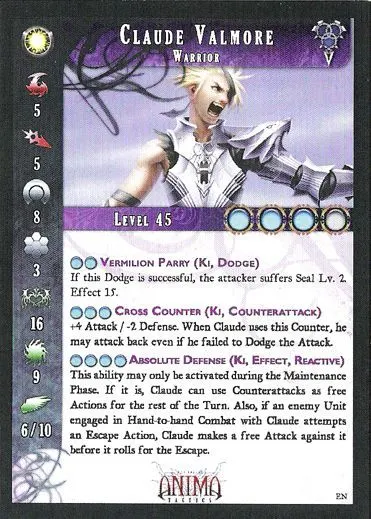
Aiuto con le regole di Anima Tactics: Claude Valmore
Spiegazioni chiare di turni, effetti delle carte e situazioni dubbie, con riferimenti alle fonti ufficiali e cronologia delle domande salvata.
Cosa vuoi sapere?
Le risposte vengono dal regolamento ufficiale, con la pagina da verificare.
Anima Tactics: Claude Valmore è un’espansione di Anima Tactics pubblicata nel 2009 con partite da 60 minuti e dai 12 anni in su. Le sue meccaniche principali sono Dice Rolling e Action Points.






In inglese
Publihser Blurb: Claude Valmore, a former member of the Cerberus Division, is now one of the most enthusiastic champions of the Azur Alliance. A devout follower of the Arbitrator Arkeid, who he considers a beacon of hope for Gaïa, this intrepid fighter is ready to prove that his inhuman endurance can only be matched by his determination. Warrior - Light Azur Alliance - Level 45 Vermilion Parry (Ki, Dodge) - If the dodge is a success, the attacker suffers Seal Lvl 2.Effect 15. Counter of the Cross (Ki, Counterattack) - Attack +4 / Defense -2. By using this Counter, Claude may counterattack even if he failed to dodge the attack. Absolute Defense (Ki, Effect, Reactive) - This ability may only be activated during the Maintenance Phase. Counterattacks become free actions for the rest of the turn. If an enemy unit engaged in hand-to-hand combat with Claude try to escape, Claude perform a free attack against it before it rolls for the escape. This pewter figure is unpainted and unassembled. Requires additional Anima Tactics figures to play.
La durata indicata per Anima Tactics: Claude Valmore è di 60 minuti, la stima dell’editore per una partita completa. La durata effettiva dipende dal gruppo, dal numero di giocatori e dalla conoscenza delle regole: le prime partite durano di più, i gruppi esperti finiscono prima. Preparazione e spiegazione delle regole non sono comprese nella stima.
Il catalogo indica Anima Tactics: Claude Valmore dai 12 anni in su. È la raccomandazione dell’editore e tiene conto della lettura richiesta, della complessità delle regole e dei componenti piccoli, non solo del tema. I più giovani spesso possono giocare con l’aiuto di un adulto: controlla l’età consigliata sulla tua edizione e l’esperienza del tuo gruppo con i giochi da tavolo.
Anima Tactics: Claude Valmore ha un punteggio di complessità di 3,0 su 5 secondo i giocatori di BoardGameGeek, il che lo rende un gioco di media complessità. Il punteggio riflette quanta conoscenza delle regole, pianificazione e decisioni richiede una partita tipica. I giochi impegnativi richiedono una prima spiegazione più lunga, quindi conviene usare una guida di preparazione.
Anima Tactics: Claude Valmore appartiene a queste categorie: Fantasy, Fighting e Miniatures. Le sue meccaniche principali sono Dice Rolling e Action Points. Le categorie descrivono il tema e l’ambientazione di un gioco, mentre le meccaniche descrivono ciò che i giocatori fanno davvero nel proprio turno. Ogni meccanica porta a una pagina del catalogo con giochi simili.
Il catalogo classifica Anima Tactics: Claude Valmore come espansione di Anima Tactics. Le espansioni aggiungono contenuti, regole o scenari al gioco base e di solito non si possono giocare da sole, quindi per usarla ti serve Anima Tactics. Controlla che la tua edizione di Anima Tactics sia compatibile, perché alcune espansioni sono state riviste tra un’edizione e l’altra.