

- Posizione BGG
- BGG #3750
- Valutazione BGG
- 6,8
City of Remnants
- 2–4 giocatori
- 90 min
- Complessità 3,1/5
- 2013
2011
Aiuto con le regole di Aquileia
Spiegazioni chiare di turni, effetti delle carte e situazioni dubbie, con riferimenti alle fonti ufficiali e cronologia delle domande salvata.
Per 3 giocatori
Cosa vuoi sapere?
Le risposte vengono dal regolamento ufficiale, con la pagina da verificare.
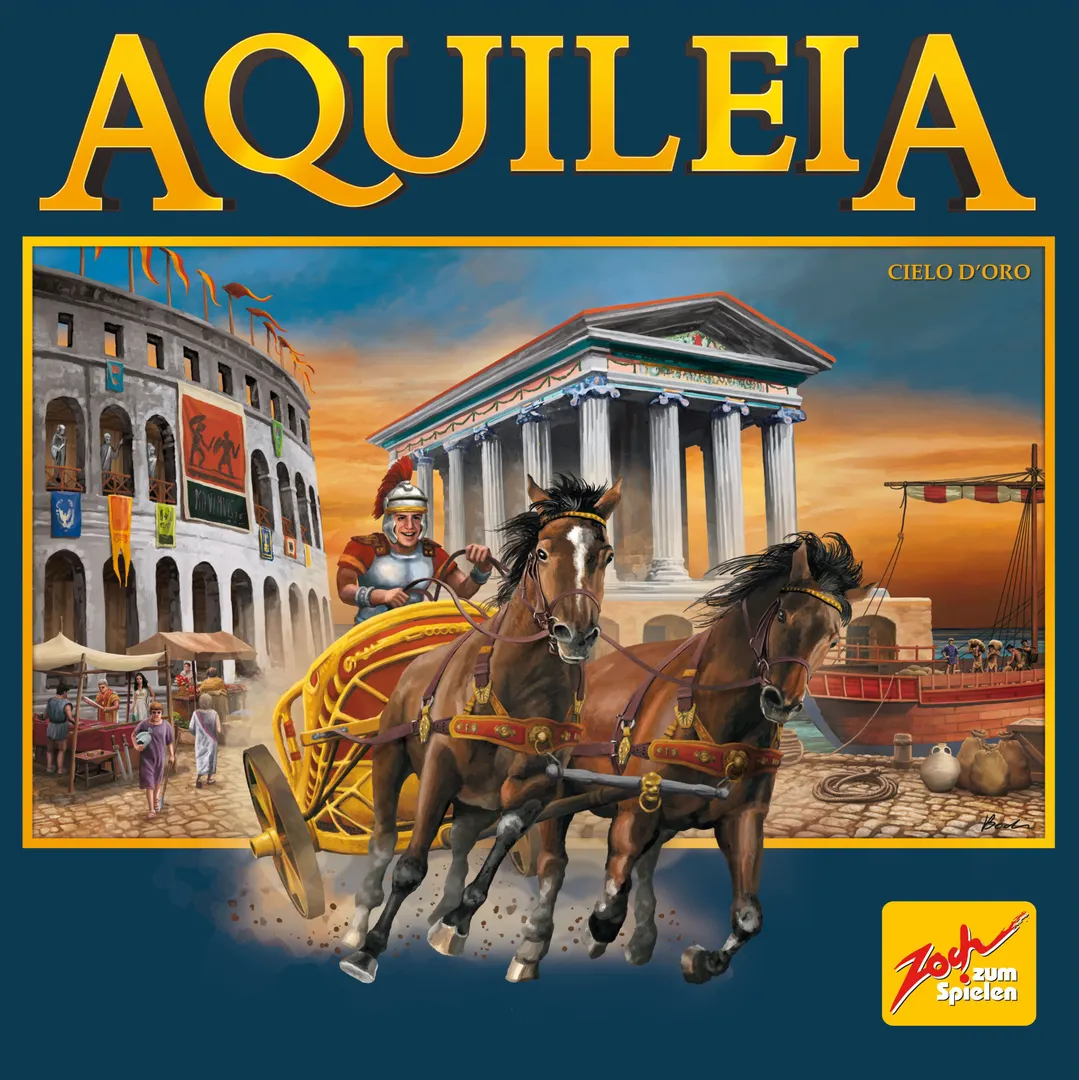
Aquileia è un gioco da tavolo pubblicato nel 2011 per 3–5 giocatori, con partite da 90 minuti e dai 12 anni in su. È stato ideato da Cielo d'Oro e le sue meccaniche principali sono Hand Management, Auction / Bidding e Dice Rolling.




In inglese
Aquileia, the second most important city of the Roman Empire, had been originally founded as an outpost against the Barbarian invaders. From its military origin comes the peculiar quadrilateral structure divided by the main streets. Later, the city developed to become an important political and cultural center and a prosperous trading city, especially for precious goods, thanks to its convenient and efficient river port. Important monuments such as the Gladiator Arena, the horse-racing Stadium, and the famous theater were built, as well as craftsmen's workshops, patrician villas which completed the architectural network of the city. In Aquileia, players want to become the most powerful figure in the city by trading and building. Each player, representing a wealthy Aquileian patrician, owns a certain number of henchmen (pawns) which he uses for these main activities: sports playing, culture, trading, and building. Each activity can bring expenses, earnings and sometimes victory points (VPs). Each round begins with a placement phase in which players take turns placing their henchmen on action spaces and their tiebreaker disc on the tiebreaker track. Placing the tiebreaker is mandatory; placing henchmen is not (but you probably want to place them). Once everyone has passed or placed all of their tokens, players resolve the action spaces in numerical order: The Mercatus allows players to buy weapons, arms and slave cards, collect money through a die roll, claim four blue dice for use with the Arena and Stadium, and trade one currency for another. (This is the only way to make change, and some actions require specific currencies; if you must pay bronze and have only silver and gold, then you cannot take that action!) At the Arena, players compare fighting strength, with that number determined by the starting strength on the action space claimed, the roll of three dice and the playing of slave and weapon cards. The winner gets three bronze coins and either double his strength in VPs or a slave card. The second and third best players receive lesser rewards. The Stadium is similar to the Arena, with the horse cards coming into play and the winner receiving gold or silver coins and his choice of two laurel cards; laurel cards deliver 3-10 VPs or are a multiplier for endgame scoring. The Theatrum brings a bid for a dual-colored laurel card, with players needing to ante and raise in particular currencies. In the Forum, players build villas and private banks, sometimes scoring points for doing so when they pay the specific costs with the proper coins. Finally, the Portus gives players a chance to activate their buildings, thereby earning them VPs or money. After six rounds, the game ends and players score VPs for their hidden point cards and the product of their villas' values times laurel cards of a matching color. (For example, a total of 8 points of blue villas and three blue villa cards equals 24 points.) The player with the most victory points wins.
Secondo il catalogo, Aquileia supporta da 3 a 5 giocatori. L’intervallo corrisponde al numero di giocatori indicato dall’editore, quindi il gioco si può preparare per qualsiasi gruppo entro quei limiti. Preparazione, alcune regole e punteggio possono comunque variare in base al numero di giocatori: controlla la configurazione esatta nel regolamento della tua edizione.
La durata indicata per Aquileia è di 90 minuti, la stima dell’editore per una partita completa. La durata effettiva dipende dal gruppo, dal numero di giocatori e dalla conoscenza delle regole: le prime partite durano di più, i gruppi esperti finiscono prima. Preparazione e spiegazione delle regole non sono comprese nella stima.
Il catalogo indica Aquileia dai 12 anni in su. È la raccomandazione dell’editore e tiene conto della lettura richiesta, della complessità delle regole e dei componenti piccoli, non solo del tema. I più giovani spesso possono giocare con l’aiuto di un adulto: controlla l’età consigliata sulla tua edizione e l’esperienza del tuo gruppo con i giochi da tavolo.
Aquileia ha un punteggio di complessità di 2,9 su 5 secondo i giocatori di BoardGameGeek, il che lo rende un gioco piuttosto leggero. Il punteggio riflette quanta conoscenza delle regole, pianificazione e decisioni richiede una partita tipica. I giochi impegnativi richiedono una prima spiegazione più lunga, quindi conviene usare una guida di preparazione.
Aquileia appartiene a queste categorie: Economic, Dice e Ancient. Le sue meccaniche principali sono Hand Management, Auction / Bidding e Dice Rolling. Le categorie descrivono il tema e l’ambientazione di un gioco, mentre le meccaniche descrivono ciò che i giocatori fanno davvero nel proprio turno. Ogni meccanica porta a una pagina del catalogo con giochi simili.
Gli autori accreditati di Aquileia sono: Cielo d'Oro. Questi crediti provengono dai dati pubblicati del gioco e indicano le persone responsabili della sua progettazione, non gli illustratori o gli editori. Le pagine degli autori su MeepleRules raccolgono altri titoli degli stessi autori, utili quando un gioco ti piace e ne cerchi di simili.
Il catalogo classifica Aquileia come gioco base. Si gioca da solo con i componenti presenti nella scatola e non richiede altri titoli. Le espansioni, se esistono, aggiungono nuovo contenuto o nuove regole e sono elencate separatamente nel catalogo con un collegamento a questo gioco base.