
- Valutazione BGG
- 6,9
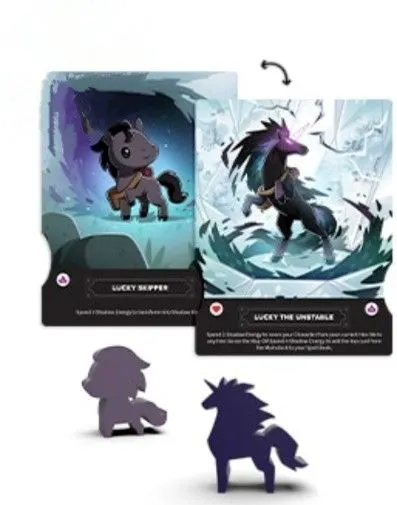
Casting Shadows: Lucky Skipper / Lucky the Unstable Player Board
- 2–4 giocatori
- 30–60 min
- Complessità 1,0/5
- 2023
2023
Aiuto con le regole di Casting Shadows
Spiegazioni chiare di turni, effetti delle carte e situazioni dubbie, con riferimenti alle fonti ufficiali e cronologia delle domande salvata.
Per 2 giocatori
Cosa vuoi sapere?
Le risposte vengono dal regolamento ufficiale, con la pagina da verificare.
Casting Shadows è un gioco da tavolo pubblicato nel 2023 per 2–4 giocatori, con partite da 30 a 60 minuti e dai 12 anni in su. È stato ideato da Ramy Badie e le sue meccaniche principali sono Player Elimination, Area Movement e Dice Rolling.


In inglese
Explore a dark, enchanting world and battle your opponents in this 2-4 player turn-based competitive strategic board game. Throughout the game, you'll collect resources, learn new spells, summon a companion, and - if you're lucky - unlock your Shadow Form, all in the quest to become the ultimate Shadow Caster. The last player standing after this supernatural showdown wins the game! The Standard edition of Casting Shadows inlcludes 73 standard-sized cards, 4 rules reference cards, 5 custom dice, 7 Hex tiles, 13 Resource tokens, 4 Player boards, and 4 meeples. How to Play Your turn consists of 3 phases: Phase 1 Take the 5 Resource dice and roll them in front of you to form your Resource Pool, which contains the Resources you can spend this turn. If you start your turn on a Hex tile that grants you a specific Resource, add the corresponding Resource token to your Resource Pool. Phase 2 During this phase, you get 4 Action points to spend, and you can use them to perform any of the Actions below in any order. Each Action costs 1 Action point. You can perform the same Action more than once on your turn if you still have Action points tospend. You do not have to spend all 4 Action points each turn, but unused Action points do not roll over to subsequent turns. Your Actions include: TRAVEL: Move your Character from your current Hex tile (the Hex tile where your Meeple currently stands) to any adjacent Hex tile. COLLECT: Move a Spell, Counterspell, or Resource card from next to your current Hex tile to your Spell Book by spending the required Resources shown in the card’s Collection Cost. After you Collect a Spell or Resource card, immediately replace it with the top card from the Main deck. If you Collect a Counterspell card from the Counterspell deck, you do not need to replace it with a card from the Main deck. REFRESH: Move the card next to your current Hex tile to the discard pile and replace it with the top card from the Main deck. You cannot Refresh a card from an Ancient Rune Hex tile or a Dusty Desert Hex tile. REROLL: Choose any number of rolled Resource dice and roll them again. You cannot Reroll Cursed Crystals. PROTECT: Remove 1 Cursed Crystal from your Resource Pool. Heads up: Any Cursed Crystals remaining in front of you will hurt you at the end of your turn! CAST: Spend Resources to use a Spell card effect from your Spell Book. You can use each Spell card effect only once per turn. In addition to an Action point cost, some Actions (such as COLLECT and CAST) require you to spend Resources. Remove spent Resources from your Resource Pool by returning that Resource to the central area of Resource dice and tokens. Phase 3 During this phase, you may absorb any remaining Shadow Fragments in your Resource Pool by moving your Shadow Tracker up by that amount. If you’ve absorbed enough Shadow Energy and you are in your Base Form, you may immediately transform into Shadow Form. How to Win When the dust settles and the echoes of the last spell fade, there can be only one victor. The last player standing is crowned the champion and wins the game. View the Rulebook
Secondo il catalogo, Casting Shadows supporta da 2 a 4 giocatori. L’intervallo corrisponde al numero di giocatori indicato dall’editore, quindi il gioco si può preparare per qualsiasi gruppo entro quei limiti. Preparazione, alcune regole e punteggio possono comunque variare in base al numero di giocatori: controlla la configurazione esatta nel regolamento della tua edizione.
La durata indicata per Casting Shadows è di 30–60 minuti, la stima dell’editore per una partita completa. La durata effettiva dipende dal gruppo, dal numero di giocatori e dalla conoscenza delle regole: le prime partite durano di più, i gruppi esperti finiscono prima. Preparazione e spiegazione delle regole non sono comprese nella stima.
Il catalogo indica Casting Shadows dai 12 anni in su. È la raccomandazione dell’editore e tiene conto della lettura richiesta, della complessità delle regole e dei componenti piccoli, non solo del tema. I più giovani spesso possono giocare con l’aiuto di un adulto: controlla l’età consigliata sulla tua edizione e l’esperienza del tuo gruppo con i giochi da tavolo.
Casting Shadows ha un punteggio di complessità di 2,3 su 5 secondo i giocatori di BoardGameGeek, il che lo rende un gioco piuttosto leggero. Il punteggio riflette quanta conoscenza delle regole, pianificazione e decisioni richiede una partita tipica. I giochi impegnativi richiedono una prima spiegazione più lunga, quindi conviene usare una guida di preparazione.
Casting Shadows appartiene a queste categorie: Fantasy, Animals e Children's Game. Le sue meccaniche principali sono Player Elimination, Area Movement e Dice Rolling. Le categorie descrivono il tema e l’ambientazione di un gioco, mentre le meccaniche descrivono ciò che i giocatori fanno davvero nel proprio turno. Ogni meccanica porta a una pagina del catalogo con giochi simili.
Gli autori accreditati di Casting Shadows sono: Ramy Badie. Questi crediti provengono dai dati pubblicati del gioco e indicano le persone responsabili della sua progettazione, non gli illustratori o gli editori. Le pagine degli autori su MeepleRules raccolgono altri titoli degli stessi autori, utili quando un gioco ti piace e ne cerchi di simili.
Il catalogo classifica Casting Shadows come gioco base. Si gioca da solo con i componenti presenti nella scatola e non richiede altri titoli. Le espansioni, se esistono, aggiungono nuovo contenuto o nuove regole e sono elencate separatamente nel catalogo con un collegamento a questo gioco base.