

- Posizione BGG
- BGG #660
- Valutazione BGG
- 7,6
Labyrinth: The War on Terror, 2001 – ?
- 1–2 giocatori
- 180 min
- Complessità 3,7/5
- 2010
2011
Aiuto con le regole di Democracy under Siege
Spiegazioni chiare di turni, effetti delle carte e situazioni dubbie, con riferimenti alle fonti ufficiali e cronologia delle domande salvata.
Per 2 giocatori
Cosa vuoi sapere?
Le risposte vengono dal regolamento ufficiale, con la pagina da verificare.
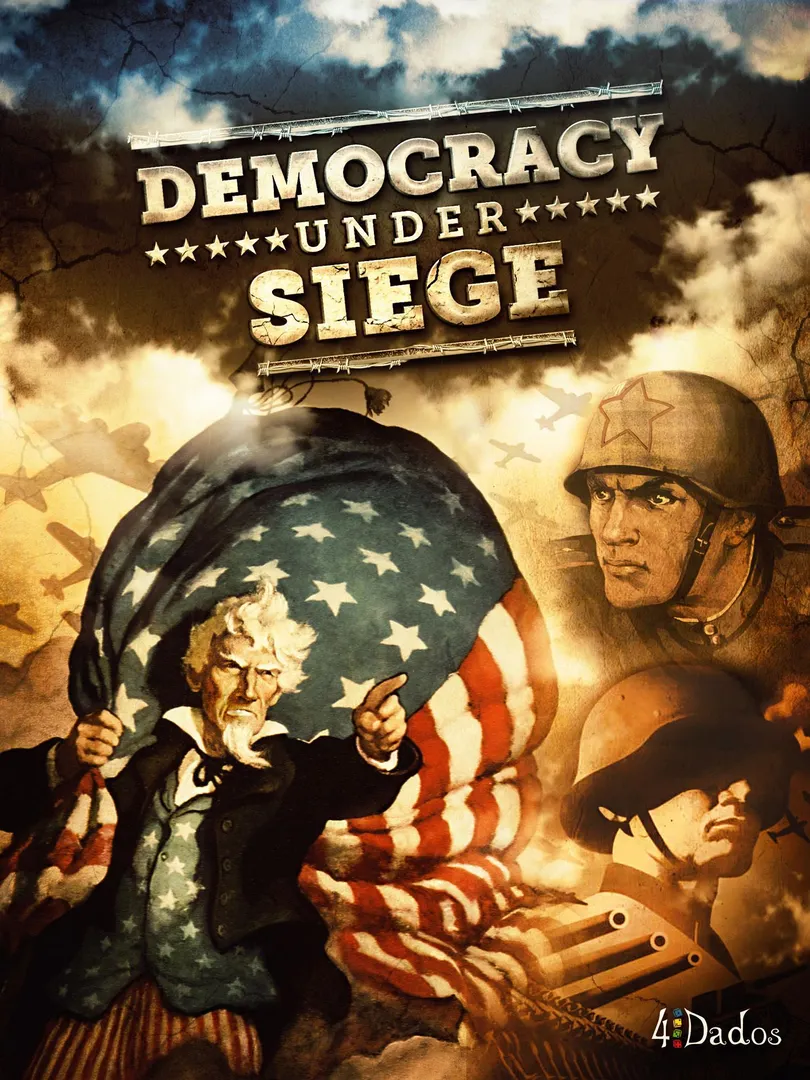
Democracy under Siege è un gioco da tavolo pubblicato nel 2011 per 2–3 giocatori, con partite da 150 a 240 minuti e dai 12 anni in su. È stato ideato da Luca Cammisa e le sue meccaniche principali sono Area Majority / Influence, Simulation e Action Points.




In inglese
Dateline: Germany, 1933 Jan. 30: Hindenburg names Hitler Chancellor. Feb. 27: The burning of the Reichstag. Hitler blames his political opponents and enacts repressive laws. Mar. 5: The Nazi Party wins the Federal elections amid a climate of fear and intimidation. From this point on, with a precise and constant rhythm, Hitler dismantles all of the democratic institutions of the fragile Weimar Republic and inaugurates a reign of terror, gradually establishing a ruthless and violent dictatorial regime. The above is history, but what would have happened if instead of bringing Europe into a maelstrom of war, the infamous Austrian corporal had abandoned his plan of global domination and taken the path of peace? Would World War II still have broken out? Or would the Nazi hierarchy and German industry still have pushed the Führer to war with Poland? What would the dream of a Greater Germany have been without Austria, Czechoslovakia, and the other German territorial claims? Would the Western plutocrats or the Soviet colossus have fought the fascist dictatorship anyway and nevertheless inexorably triggered global conflict? Democracy under Siege is an interactive simulation enabling you to explore all such questions. A card-driven strategy game, it reproduces the geopolitical conflicts and political struggles that led to the Second World War. The game covers the period 1933-1940 and is designed for two or three players. Each takes the role of one of the three ideologies — Democracy, Nazism and Communism — that struggled for power during the timeline of the game. (When played by two players, the two Ideologies exclusively under player control are Democracy and Nazism, while control of Communism alternates between the two players from turn to turn according to specific rules.) Each game turn represents one year and is divided into three or four rounds. Players choose one political action and one event per round and attempt to perform the political action by rolling a die and applying some modifiers. They can affect the outcomes of their attempts by expending the ideology's political prestige. Events are activated immediately before the political actions are attempted; no die roll is required. If the political action succeeds, the card effects are applied accordingly. In any case, even when the attempt is unsuccessful, the political action cards played provide a varying number of political points (PP) that can later be expended by the players to perform activities. After political actions, players perform their action round with the PP provided by political action cards. Players can influence the political allegiance of minor countries, exploit the economic resources belonging either to minor nations or to their controlled powers, recruit and activate coup cells to attempt coups d'etat to overthrow a minor country regime, send military forces to local conflicts or intervene in a civil war in a minor nation. All of these activities, as well as the effects of successful political actions, can bring victory points (VP) when the political allegiances of minor countries come under the influence or the control of Ideologies, or when territories or nations are conquered. At the end of each round, players check the outcomes of coup attempts, then proceed to a new round. During the clean-up phase at the end of each turn, players perform end-turn checks and calculate the production of military resources (MR) by the exploitation of economic resources claimed on the map. MR are put in the ideologies' force pool and expended to maintain the minor nations allegiances. The remaining MR provide additional VP and can be employed during the subsequent turns to intervene in local conflicts and civil wars. Democracy under Siege offers an accurate and detailed historical context, supported by 108 strategy cards. Players exploit historical events and political actions to achieve political supremacy. Wars are simulated by an abstract combat system that allows players to intervene and influence their outcomes. The main concepts reproduced in the game are the ideological struggles among the major powers, the race for armaments ahead of World War II and the buildup of a network of diplomatic links with minor nations. All of these elements combine to determine victory.
Secondo il catalogo, Democracy under Siege supporta da 2 a 3 giocatori. L’intervallo corrisponde al numero di giocatori indicato dall’editore, quindi il gioco si può preparare per qualsiasi gruppo entro quei limiti. Preparazione, alcune regole e punteggio possono comunque variare in base al numero di giocatori: controlla la configurazione esatta nel regolamento della tua edizione.
La durata indicata per Democracy under Siege è di 150–240 minuti, la stima dell’editore per una partita completa. La durata effettiva dipende dal gruppo, dal numero di giocatori e dalla conoscenza delle regole: le prime partite durano di più, i gruppi esperti finiscono prima. Preparazione e spiegazione delle regole non sono comprese nella stima.
Il catalogo indica Democracy under Siege dai 12 anni in su. È la raccomandazione dell’editore e tiene conto della lettura richiesta, della complessità delle regole e dei componenti piccoli, non solo del tema. I più giovani spesso possono giocare con l’aiuto di un adulto: controlla l’età consigliata sulla tua edizione e l’esperienza del tuo gruppo con i giochi da tavolo.
Democracy under Siege ha un punteggio di complessità di 3,7 su 5 secondo i giocatori di BoardGameGeek, il che lo rende un gioco di media complessità. Il punteggio riflette quanta conoscenza delle regole, pianificazione e decisioni richiede una partita tipica. I giochi impegnativi richiedono una prima spiegazione più lunga, quindi conviene usare una guida di preparazione.
Democracy under Siege appartiene a queste categorie: Wargame, Print & Play e Political. Le sue meccaniche principali sono Area Majority / Influence, Simulation e Action Points. Le categorie descrivono il tema e l’ambientazione di un gioco, mentre le meccaniche descrivono ciò che i giocatori fanno davvero nel proprio turno. Ogni meccanica porta a una pagina del catalogo con giochi simili.
Gli autori accreditati di Democracy under Siege sono: Luca Cammisa. Questi crediti provengono dai dati pubblicati del gioco e indicano le persone responsabili della sua progettazione, non gli illustratori o gli editori. Le pagine degli autori su MeepleRules raccolgono altri titoli degli stessi autori, utili quando un gioco ti piace e ne cerchi di simili.
Il catalogo classifica Democracy under Siege come gioco base. Si gioca da solo con i componenti presenti nella scatola e non richiede altri titoli. Le espansioni, se esistono, aggiungono nuovo contenuto o nuove regole e sono elencate separatamente nel catalogo con un collegamento a questo gioco base.