
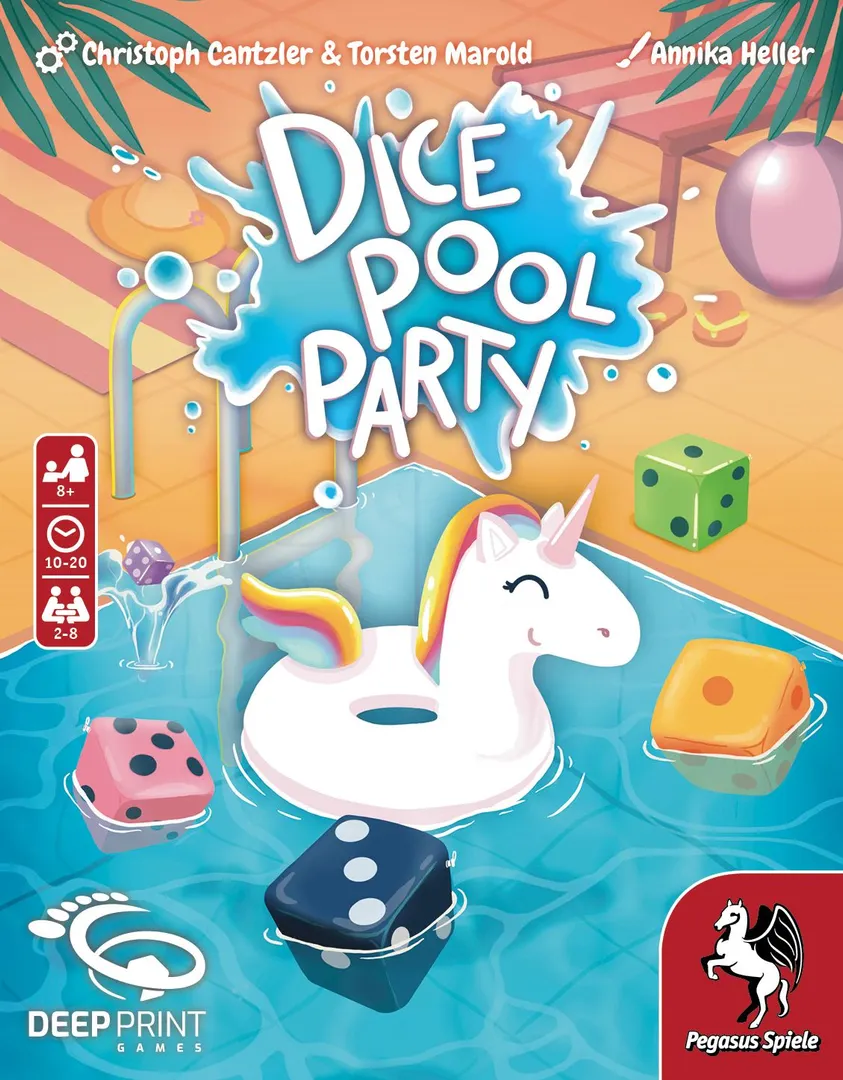
- Posizione BGG
- BGG #6824
- Valutazione BGG
- 6,7
Dice Pool Party
- 2–8 giocatori
- 10–20 min
- Complessità 1,1/5
- 2025
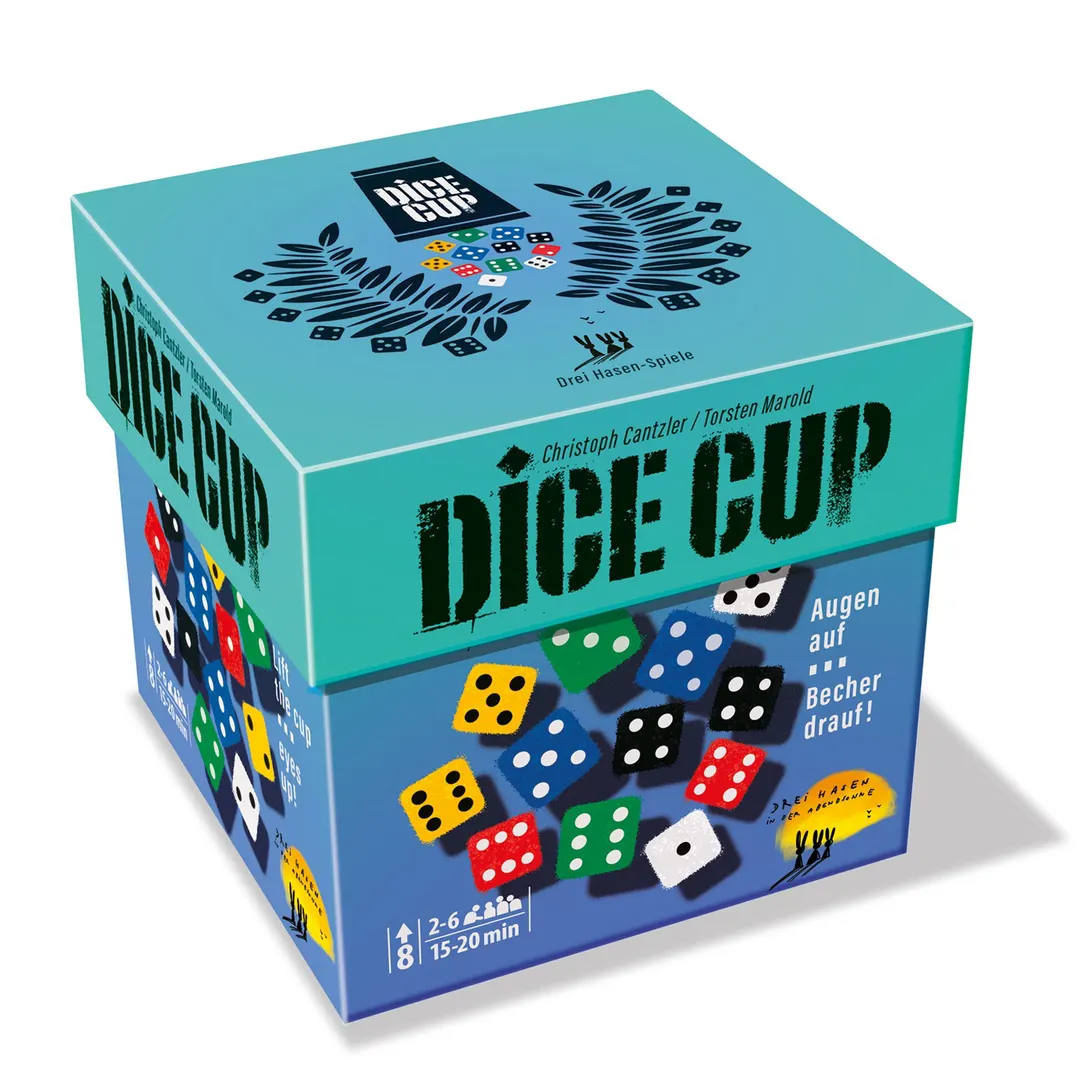
2022
Aiuto con le regole di Dice Cup
Spiegazioni chiare di turni, effetti delle carte e situazioni dubbie, con riferimenti alle fonti ufficiali e cronologia delle domande salvata.
Per 2 giocatori
Cosa vuoi sapere?
Le risposte vengono dal regolamento ufficiale, con la pagina da verificare.
Dice Cup è un gioco da tavolo pubblicato nel 2022 per 2–6 giocatori, con partite da 15 a 20 minuti e dai 8 anni in su. È stato ideato da Christoph Cantzler e Torsten Marold e le sue meccaniche principali sono Dice Rolling, Simultaneous Action Selection e Memory.
%2Fpic129091.jpg@webp)

In inglese
GAME IDEA The game is played in 12 rounds in which the dice fall anew each time. All see the same result but everybody from another perspective. Each player always tries to find the best scoring category for him. But attention: Each category is available only once per game! So far so easy, if only the dice would not always disappear under the cup again so fast … Who has grasped the best result in the short term? And in which category would eventually have been more to achieve? GOAL OF THE GAME The player with the highest total score in the end wins the DICE CUP-Challenge! PREPARATION Put the dice in the cup. Each player gets a scoring sheet and a pen – and writes down his name on the up right line intended for it. Now a starting player is chosen and off we go! GAME PLAY The starting player starts rolling the dice but still everybody plays always simultaneously. Each round consists of 8 steps: Put all dice in the cup. Your hand above it and shake it well. Turn around the cup with the dice and overthrow it on the table so all dice are hidden underneath the cup. Lift up the cup for about 3 seconds (to measure the time, slowly say the following slogan: „Lift the cup – eyes up“). The dice must be clearly visible for everybody for the same amount of time. Then the cup is put over the dice again carefully so that they are not turned over accidentally. Now each player sets a cross in the little circle of the box in the category he wants to value. You can use your hand as a sight screen. Once the cross is set it may not be changed anymore. When everybody is ready the player lifts the cup again and puts it aside so the dice result is visible for all players again. Now everybody values his result and writes the points in the corresponding field (Example Kim see valuation). Pass the cup on in clockwise direction. The next round starts. Important: Sometimes the dice lie on top of each other. Then the dice roll must be repeated immediately! VALUATION AND EXAMPLES Who has chosen „count fours only“ in the upper part, multiplies the number of fours with 4 (of fives with 5, of sixes with 6). E.g. three time 4: 3 x 4 = 12 points Who has set a cross for a colour, e.g. „blue“, in the middle part, only counts the eyes of the two dice in this colour and notes down the sum. Scoring of Kim 5 + 6 = 11 points Who has chosen „double“, may note down 10 points for each „double“ of the same colour. E.g. one „double“ (red) = 10 points Who has marked „all ones, twos and threes“, adds all dice pips which show ones, twos and threes. E.g. 1 + 1 + 1 + 2 + 2 + 3 + 3 = 13 points Who has chosen „DICE CUP“, adds the pips of all dice and notes down the sum. E.g. 1 + 1 + 1 + 2 + 2 + 3 + 3 + 4 + 4 + 4 +5 + 6 = 36 points After each valuation the respective selected category * The dot next to the red square is used for better is of course dropped for the current game. END OF THE GAME The game ends after 12 played rounds. In the last round the cup can be left aside after the third playing step, and the last valuation (for the respective individual last category) is done at once. Afterwards every player adds the points of the three parts on his scoring sheet, transmits the sum into the fields provided for this purpose and calculates the total amount. The player with the highest total amount wins the DICE CUP-Challenge! VARIATIONS: The „Eyes up time“ may vary as the players like or by experience. Pro players can shorten the time to 2 seconds, for example. Beginners and younger players may extend it. All players always have the same length of time available … It is also much fun to play several games simultaneously. The players have two or more columns in each category to fill in and value. Have fun playing!
Secondo il catalogo, Dice Cup supporta da 2 a 6 giocatori. L’intervallo corrisponde al numero di giocatori indicato dall’editore, quindi il gioco si può preparare per qualsiasi gruppo entro quei limiti. Preparazione, alcune regole e punteggio possono comunque variare in base al numero di giocatori: controlla la configurazione esatta nel regolamento della tua edizione.
La durata indicata per Dice Cup è di 15–20 minuti, la stima dell’editore per una partita completa. La durata effettiva dipende dal gruppo, dal numero di giocatori e dalla conoscenza delle regole: le prime partite durano di più, i gruppi esperti finiscono prima. Preparazione e spiegazione delle regole non sono comprese nella stima.
Il catalogo indica Dice Cup dai 8 anni in su. È la raccomandazione dell’editore e tiene conto della lettura richiesta, della complessità delle regole e dei componenti piccoli, non solo del tema. I più giovani spesso possono giocare con l’aiuto di un adulto: controlla l’età consigliata sulla tua edizione e l’esperienza del tuo gruppo con i giochi da tavolo.
Dice Cup ha un punteggio di complessità di 1,4 su 5 secondo i giocatori di BoardGameGeek, il che lo rende un gioco leggero. Il punteggio riflette quanta conoscenza delle regole, pianificazione e decisioni richiede una partita tipica. I giochi impegnativi richiedono una prima spiegazione più lunga, quindi conviene usare una guida di preparazione.
Dice Cup appartiene a queste categorie: Number, Dice e Memory. Le sue meccaniche principali sono Dice Rolling, Simultaneous Action Selection e Memory. Le categorie descrivono il tema e l’ambientazione di un gioco, mentre le meccaniche descrivono ciò che i giocatori fanno davvero nel proprio turno. Ogni meccanica porta a una pagina del catalogo con giochi simili.
Gli autori accreditati di Dice Cup sono: Christoph Cantzler e Torsten Marold. Questi crediti provengono dai dati pubblicati del gioco e indicano le persone responsabili della sua progettazione, non gli illustratori o gli editori. Le pagine degli autori su MeepleRules raccolgono altri titoli degli stessi autori, utili quando un gioco ti piace e ne cerchi di simili.
Il catalogo classifica Dice Cup come gioco base. Si gioca da solo con i componenti presenti nella scatola e non richiede altri titoli. Le espansioni, se esistono, aggiungono nuovo contenuto o nuove regole e sono elencate separatamente nel catalogo con un collegamento a questo gioco base.