
- Posizione BGG
- BGG #12.003
- Valutazione BGG
- 7,0
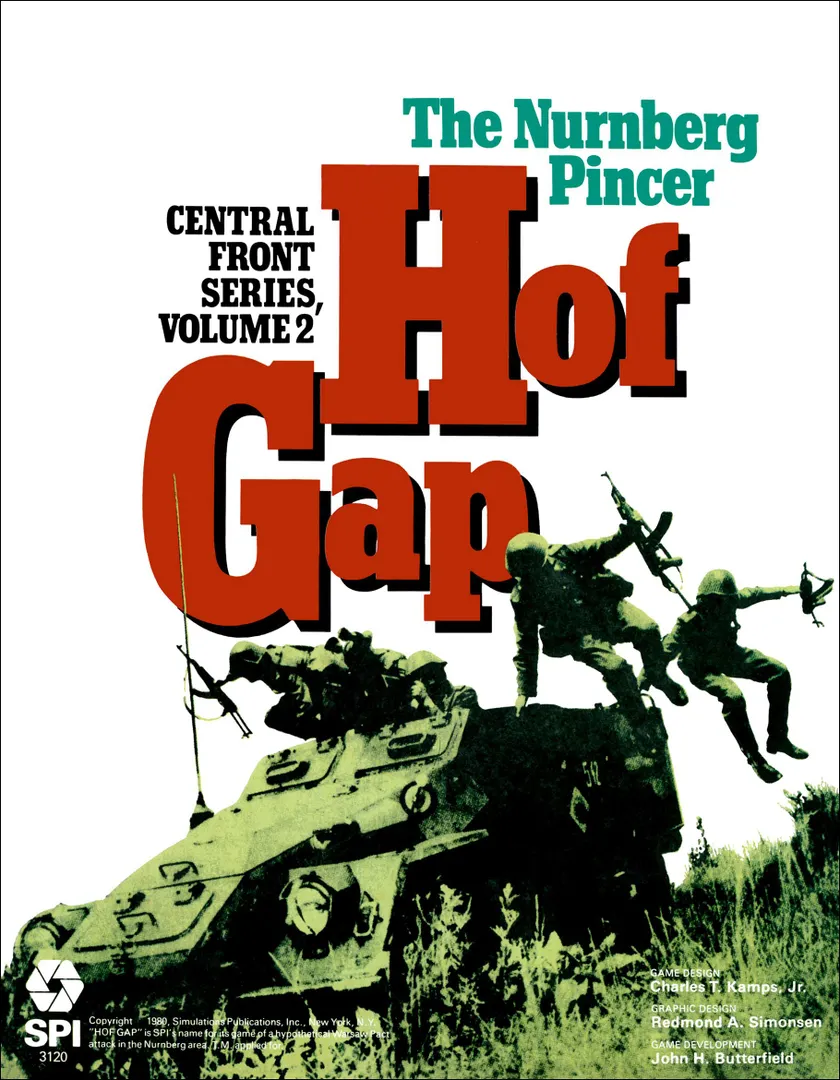
Hof Gap: The Nurnberg Pincer
- 2 giocatori
- 120 min
- Complessità 3,6/5
- 1980
1989
Aiuto con le regole di Donau Front
Spiegazioni chiare di turni, effetti delle carte e situazioni dubbie, con riferimenti alle fonti ufficiali e cronologia delle domande salvata.
Per 2 giocatori
Cosa vuoi sapere?
Le risposte vengono dal regolamento ufficiale, con la pagina da verificare.
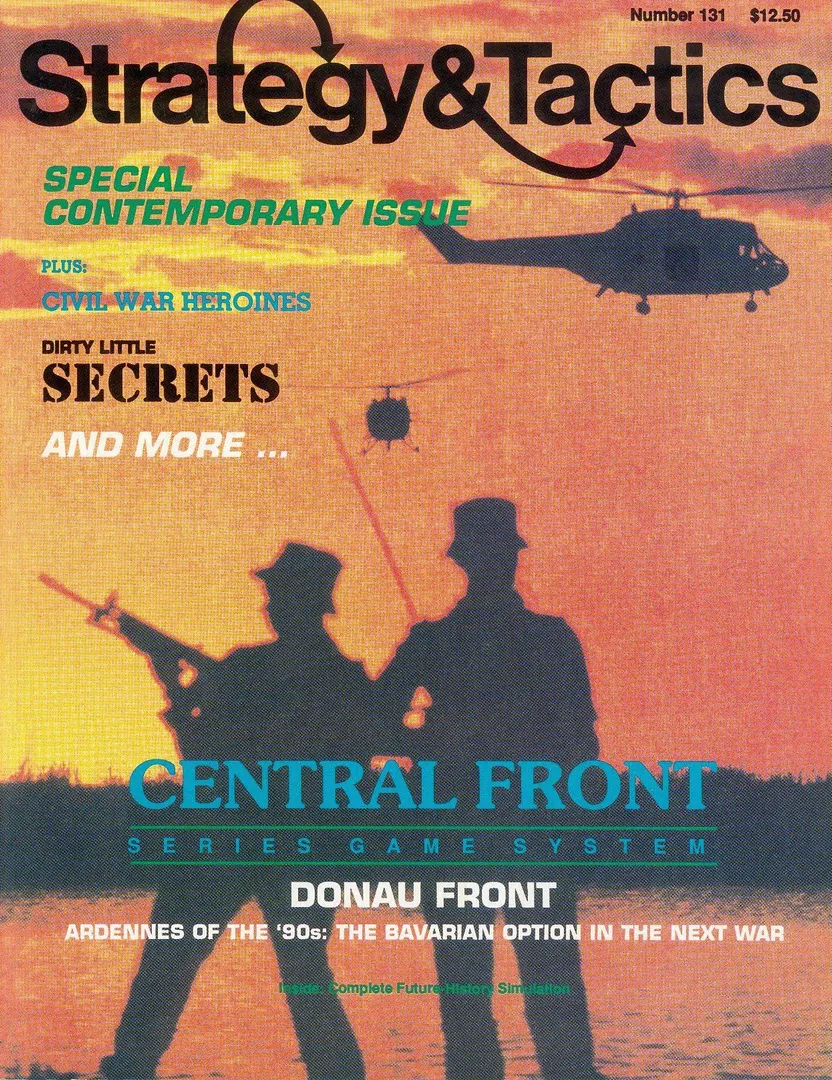
Donau Front è un gioco da tavolo pubblicato nel 1989 per 2 giocatori, con partite da 300 minuti e dai 12 anni in su. È stato ideato da Charles T. Kamps e le sue meccaniche principali sono Dice Rolling e Hexagon Grid.
In inglese
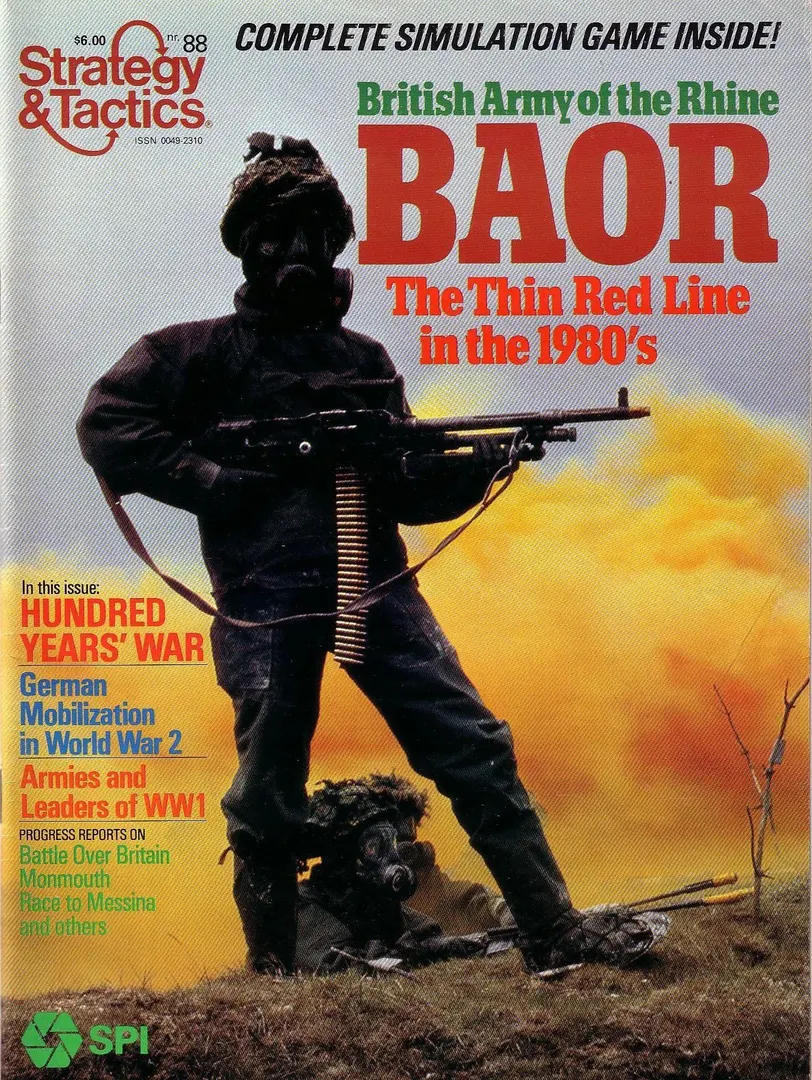
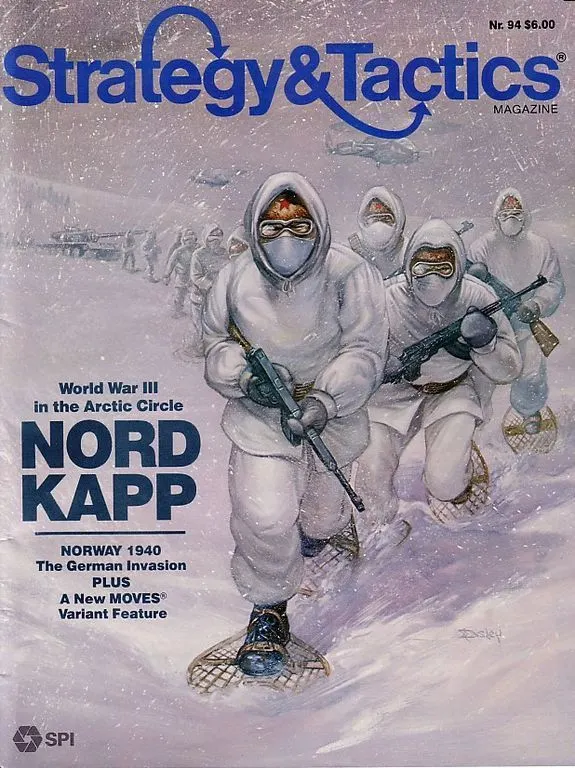
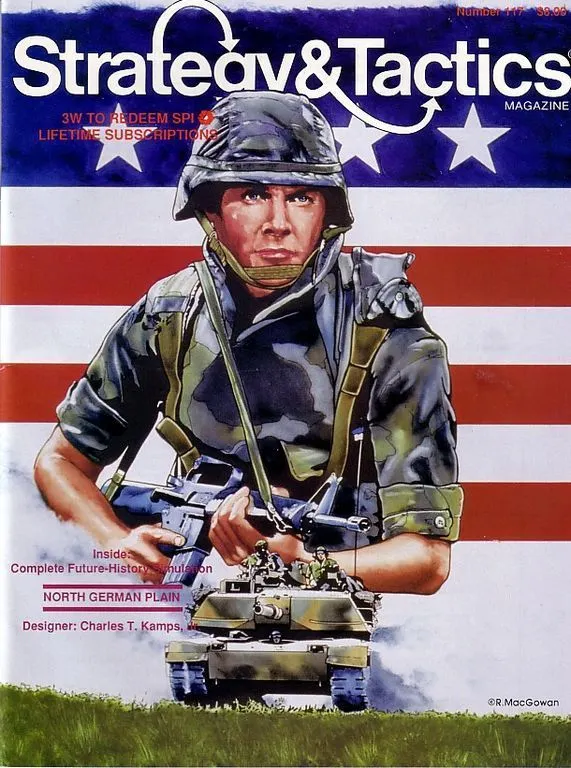
Donau Front: Ardennes of the ‘90s: The Bavarian Option in the Next War, is the second game in the renewed Central Front series of games which include: North German Plain, BAOR, Fifth Corps, and Hof Gap. Maps from all of the renewed series games may be linked and rules exist for a full Campaign game. Donau Front was first published in Strategy & Tactics magazine #131. The games are designed to depict hypothetical Warsaw Pact versus NATO conflict during the first five days of a future war. Victory is measured by the PACT player's attainment of certain objectives, and the NATO player's denial of these. Objectives range from advancing to a specific hex row, to occupying Munich. Four different objective types exist, so it is possible for both players to "win". Rules are provided to link this game with Hof Gap. Game Scale: Turn: 6 hour daylight & 12 hour nighttime turns Hex: 4 km Unit: Company to Brigade Game Inventory: One 22" X 34" mapsheet One countersheet (200 1/2" counters) One 16 page rules booklet (Central Front Standard Rules & Donau Front Exclusive Rules)
Secondo il catalogo, Donau Front supporta 2 giocatori. È il numero di giocatori indicato dall’editore, quindi il gioco è pensato esattamente per quel numero di partecipanti. Le varianti per gruppi di altre dimensioni, se esistono, sono descritte nel regolamento della tua edizione: consultalo prima di preparare una configurazione diversa.
La durata indicata per Donau Front è di 300 minuti, la stima dell’editore per una partita completa. La durata effettiva dipende dal gruppo, dal numero di giocatori e dalla conoscenza delle regole: le prime partite durano di più, i gruppi esperti finiscono prima. Preparazione e spiegazione delle regole non sono comprese nella stima.
Il catalogo indica Donau Front dai 12 anni in su. È la raccomandazione dell’editore e tiene conto della lettura richiesta, della complessità delle regole e dei componenti piccoli, non solo del tema. I più giovani spesso possono giocare con l’aiuto di un adulto: controlla l’età consigliata sulla tua edizione e l’esperienza del tuo gruppo con i giochi da tavolo.
Donau Front ha un punteggio di complessità di 2,5 su 5 secondo i giocatori di BoardGameGeek, il che lo rende un gioco piuttosto leggero. Il punteggio riflette quanta conoscenza delle regole, pianificazione e decisioni richiede una partita tipica. I giochi impegnativi richiedono una prima spiegazione più lunga, quindi conviene usare una guida di preparazione.
Donau Front appartiene a queste categorie: Wargame e Modern Warfare. Le sue meccaniche principali sono Dice Rolling e Hexagon Grid. Le categorie descrivono il tema e l’ambientazione di un gioco, mentre le meccaniche descrivono ciò che i giocatori fanno davvero nel proprio turno. Ogni meccanica porta a una pagina del catalogo con giochi simili.
Gli autori accreditati di Donau Front sono: Charles T. Kamps. Questi crediti provengono dai dati pubblicati del gioco e indicano le persone responsabili della sua progettazione, non gli illustratori o gli editori. Le pagine degli autori su MeepleRules raccolgono altri titoli degli stessi autori, utili quando un gioco ti piace e ne cerchi di simili.
Il catalogo classifica Donau Front come gioco base. Si gioca da solo con i componenti presenti nella scatola e non richiede altri titoli. Le espansioni, se esistono, aggiungono nuovo contenuto o nuove regole e sono elencate separatamente nel catalogo con un collegamento a questo gioco base.