
- Posizione BGG
- BGG #2120
- Valutazione BGG
- 7,4
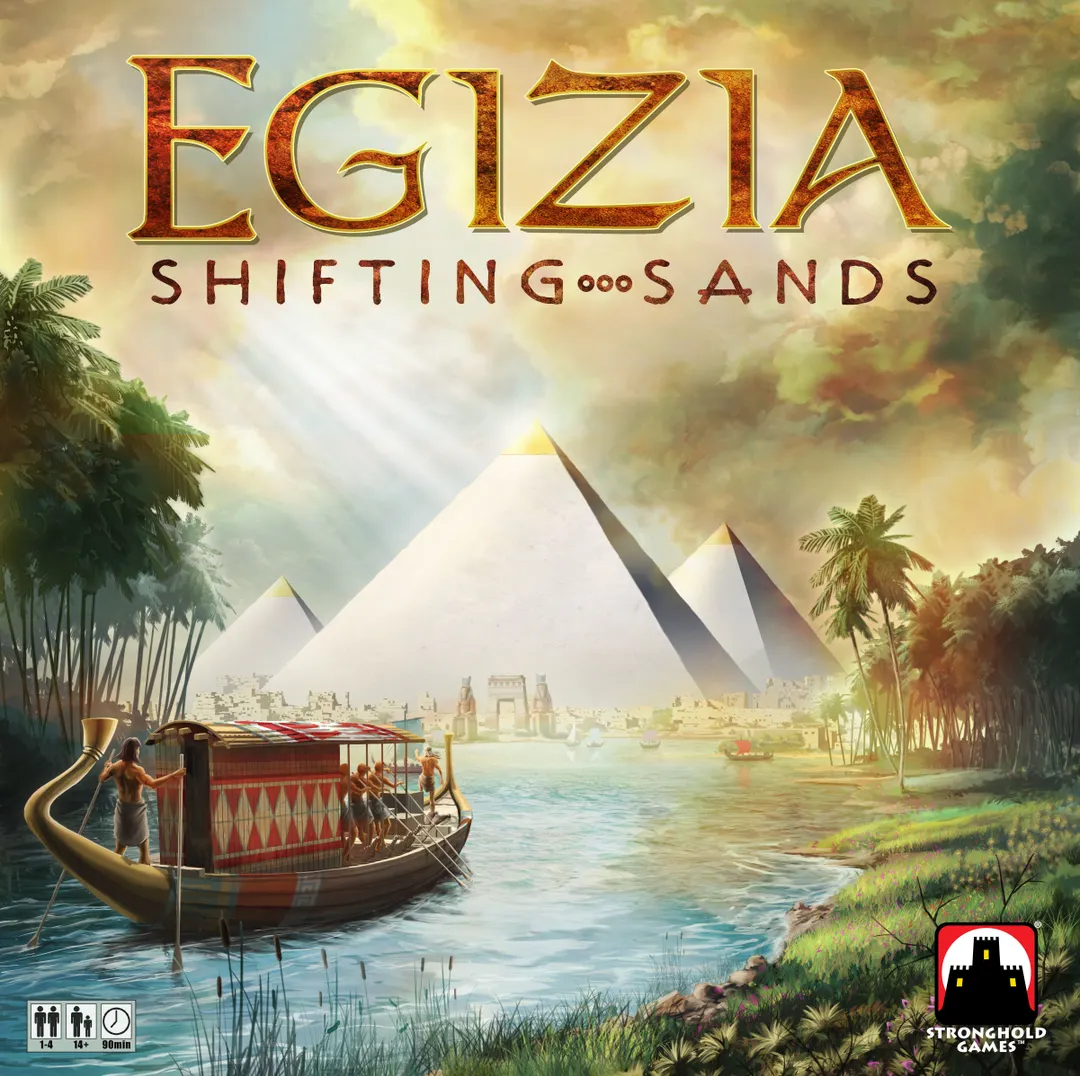
Egizia: Shifting Sands
- 2–4 giocatori
- 90 min
- Complessità 2,9/5
- 2019
2009
Aiuto con le regole di Egizia
Spiegazioni chiare di turni, effetti delle carte e situazioni dubbie, con riferimenti alle fonti ufficiali e cronologia delle domande salvata.
Per 2 giocatori
Cosa vuoi sapere?
Le risposte vengono dal regolamento ufficiale, con la pagina da verificare.
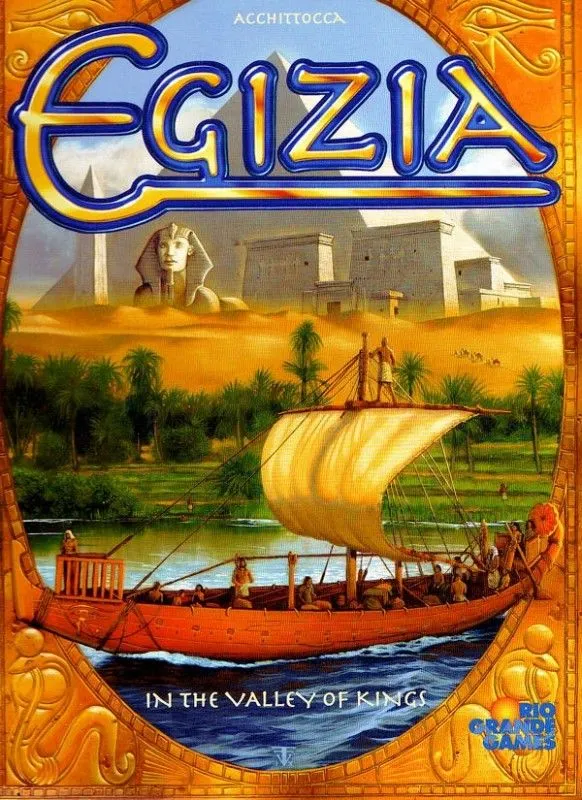
Egizia è un gioco da tavolo pubblicato nel 2009 per 2–4 giocatori, con partite da 90 minuti e dai 12 anni in su. È stato ideato da Stefano Luperto, Acchittocca, Antonio Tinto, Virginio Gigli e Flaminia Brasini e le sue meccaniche principali sono End Game Bonuses, Bias e Open Drafting.



In inglese
The players are builders in Ancient Egypt, competing to get the most fame building different monuments requested by the Pharaoh (the Sphinx, the Obelisk, the Temple, and the Pyramid). The game lasts 5 turns. In each turn, the players place their pawns on the board, along the banks of the Nile, getting the advantages shown on each square. On the right bank there are fixed squares where the players may get workers, improve their mercantile capabilities, influence the floods (and thus the fertility of the fields) and reserve the right to build the monuments (that are built only after all the placements are done). On the left bank the players may take cards that are deployed randomly on the 10 squares at the start of each turn; some of these cards are kept until the end of the game (cultivable fields, stone quarries, deities granting special advantages), while others are discarded after the use and offer multiple immediate advantages. In Egizia, the twist on the worker placement mechanic is that the players must place their pawns following the course of the Nile, moving northwards (from the top to the bottom of the board, that is seen from the Mediterranean Sea). In this way, each placement not only blocks the opponents from choosing the same square (except monuments, where multiple players are always allowed), but also forces the player to place his remaining pawns only on the squares below the one he just occupied (note that "pawns" are placed, since "workers" are one of the resources of the game, like grain and stones). When the placement phase is over, the workers of the players must be fed with the grain produced in the fields. The production of each field is based on the floods of the Nile, so some fields may not give grain each turn. If a player has not enough grain for all his workers, he has to buy it with Victory Points (the ratio is better for players with improved mercantile capabilities, recorded on a specific track on the board). After that, stones are received from the owned quarries and used to build the monuments (if the right to do was reserved earlier) along with the workers. When the game ends, the points scored during the game (mainly building the monuments) are added to the bonuses obtained fulfilling certain conditions on the Sphinx cards. Whoever has the highest total is the winner. Online Play Yucata (turn-based)
Secondo il catalogo, Egizia supporta da 2 a 4 giocatori. L’intervallo corrisponde al numero di giocatori indicato dall’editore, quindi il gioco si può preparare per qualsiasi gruppo entro quei limiti. Preparazione, alcune regole e punteggio possono comunque variare in base al numero di giocatori: controlla la configurazione esatta nel regolamento della tua edizione.
La durata indicata per Egizia è di 90 minuti, la stima dell’editore per una partita completa. La durata effettiva dipende dal gruppo, dal numero di giocatori e dalla conoscenza delle regole: le prime partite durano di più, i gruppi esperti finiscono prima. Preparazione e spiegazione delle regole non sono comprese nella stima.
Il catalogo indica Egizia dai 12 anni in su. È la raccomandazione dell’editore e tiene conto della lettura richiesta, della complessità delle regole e dei componenti piccoli, non solo del tema. I più giovani spesso possono giocare con l’aiuto di un adulto: controlla l’età consigliata sulla tua edizione e l’esperienza del tuo gruppo con i giochi da tavolo.
Egizia ha un punteggio di complessità di 2,8 su 5 secondo i giocatori di BoardGameGeek, il che lo rende un gioco piuttosto leggero. Il punteggio riflette quanta conoscenza delle regole, pianificazione e decisioni richiede una partita tipica. I giochi impegnativi richiedono una prima spiegazione più lunga, quindi conviene usare una guida di preparazione.
Egizia appartiene a queste categorie: Ancient e Farming. Le sue meccaniche principali sono End Game Bonuses, Bias e Open Drafting. Le categorie descrivono il tema e l’ambientazione di un gioco, mentre le meccaniche descrivono ciò che i giocatori fanno davvero nel proprio turno. Ogni meccanica porta a una pagina del catalogo con giochi simili.
Gli autori accreditati di Egizia sono: Stefano Luperto, Acchittocca, Antonio Tinto, Virginio Gigli e Flaminia Brasini. Questi crediti provengono dai dati pubblicati del gioco e indicano le persone responsabili della sua progettazione, non gli illustratori o gli editori. Le pagine degli autori su MeepleRules raccolgono altri titoli degli stessi autori, utili quando un gioco ti piace e ne cerchi di simili.
Il catalogo classifica Egizia come gioco base. Si gioca da solo con i componenti presenti nella scatola e non richiede altri titoli. Le espansioni, se esistono, aggiungono nuovo contenuto o nuove regole e sono elencate separatamente nel catalogo con un collegamento a questo gioco base.