
- Posizione BGG
- BGG #5813
- Valutazione BGG
- 7,8
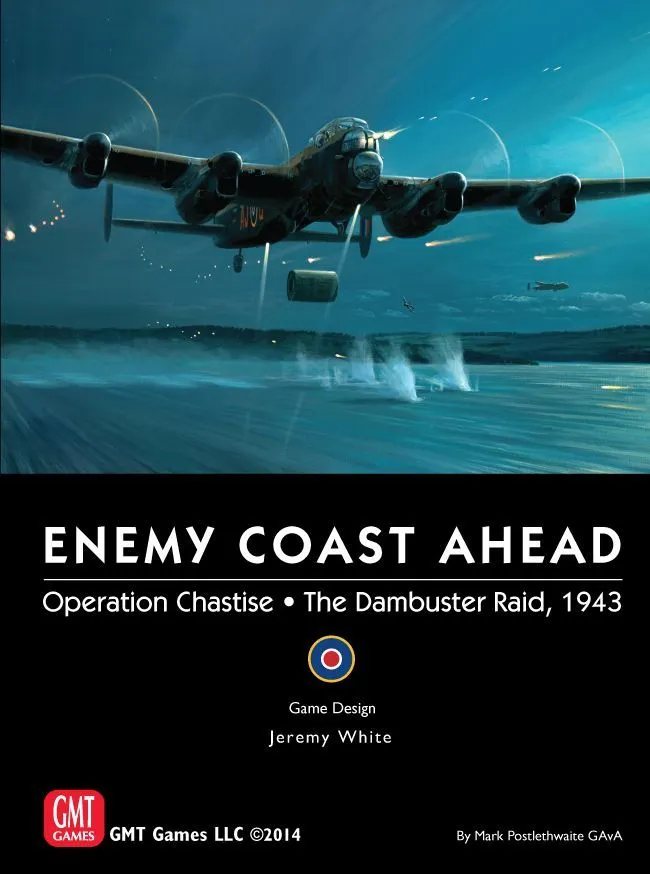
Enemy Coast Ahead: Operation Chastise – The Dambuster Raid
- 1–3 giocatori
- Complessità 3,2/5
- 2014
2017
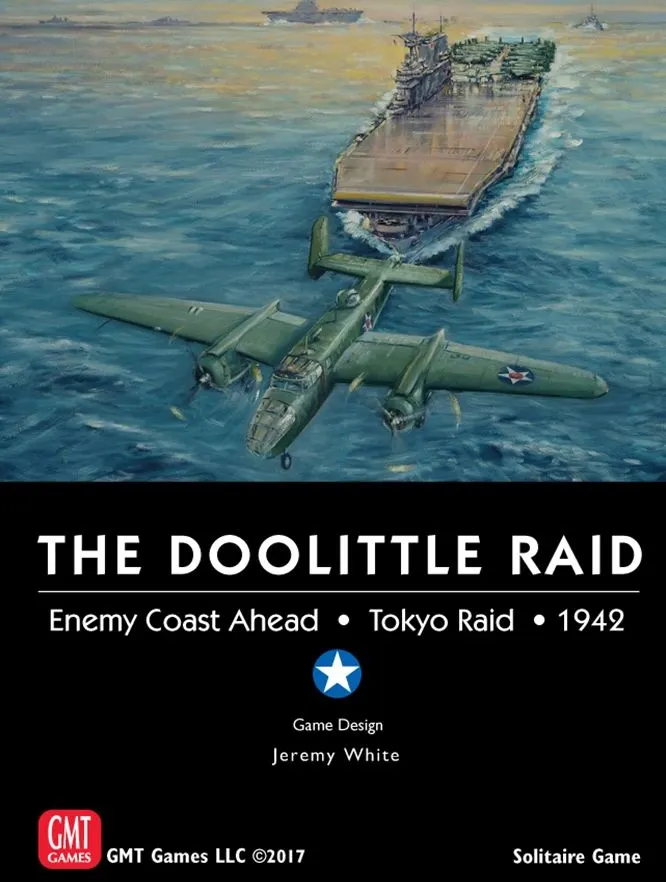
Aiuto con le regole di Enemy Coast Ahead: The Doolittle Raid
Spiegazioni chiare di turni, effetti delle carte e situazioni dubbie, con riferimenti alle fonti ufficiali e cronologia delle domande salvata.
Per 1 giocatore
Cosa vuoi sapere?
Le risposte vengono dal regolamento ufficiale, con la pagina da verificare.
Enemy Coast Ahead: The Doolittle Raid è un gioco da tavolo pubblicato nel 2017 per 1–3 giocatori, con partite da 20 a 360 minuti e dai 14 anni in su. È stato ideato da Jeremy White e le sue meccaniche principali sono Area Movement, Dice Rolling e Cooperative Game.


In inglese
Enemy Coast Ahead: The Doolittle Raid uses the game format to explore the first raid on the Japanese home islands by the United States during World War Two. It is a solitaire game challenging the player to conduct a successful mission where the criteria for success is not purely military. The player must organize, equip, and train a squadron of B-25 “Mitchell” medium bombers to attack a distant and rather dangerous target. The game not only covers the raid from launch to landing, it extends the story on both ends. Threatened from the air and from the sea, the player must do his utmost to strike the Japanese capital, avenging the attack on Pearl Harbor, and then land his aircraft safely. If the raid goes poorly it may boost Japanese morale and deflate the mood in the United States. Getting the B-25s close enough to launch is vital, as is the recovery of aircraft and crewmen, but above all, the player’s main dilemma will be secrecy. The risk is great. Failure could mean the loss of an entire squadron, or worse, the sinking of a precious aircraft carrier. Will the Doolittle Raid add to the dismal news of Pearl Harbor, Guam, Wake Island, and Bataan, or will it signal the turning of the tide? The History Washington – April 21, 1942: After two days of rumor prompted by Japanese radio broadcasts, President Franklin Delano Roosevelt finally agrees to a press conference. Deftly avoiding difficult questions, he claims insufficient information to neither confirm nor deny the biggest news story of the four month old war. To placate tenacious journalists, however, he tells the press that the attack on Kobe, Osaka, Nagoya, and Tokyo by United States aircraft, was launched from a mysterious base he would only call “Shangri-La,” an imaginary island from the recently published novel Lost Horizon. His impish grin, if not his words, tell the press that the top secret operation dubbed Special Aviation Project Number One has indeed been a success. That same day China’s foreign minister hands a telegram to Army Air Corps Chief Hap Arnold. It has taken some time to arrive in Washington, an indication that all may not be well with the mission. Dictated two days ago by the commander of that top secret operation, a distraught Lt. Colonel James Doolittle, it reads: Mission to bomb Tokyo has been accomplished. On entering China we ran into bad weather and it is feared that all planes crashed. Telegram in hand, Arnold immediately admits to the commander of the Joint Chiefs of Staff that the mission has failed. No bombers have been recovered. After sending that telegram, Doolittle himself expects a court martial, confiding to his engineer that they’ll tie him to a desk for the rest of the war, if he’s lucky. Days later he is astonished to learn of his promotion to Brigadier General, and even more so when he is notified that the president recommended the Congressional Medal of Honor. The Doolittle Raid remains an enigmatic and contradictory episode of World War Two, defying easy interpretation even to this day. Was it a victory or a debacle? Was it a minor footnote in the annals of that war or a significant military event? Was it a desperate bid to avenge the attack on Pearl Harbor, or, a harbinger signaling death and horror soon to visit Japanese cities from the sky? Narrative Sequence Much like chapters in a story, the game is organized in six narrative segments, chronologically arranged. Each poses its own set of challenges and prompts decisions that establish the environment and conditions of subsequent chapters. Planning Naval Flight Over Targets Recovery Debriefing Historical Scenarios Besides play of the full narrative, the game offers a number of historical dissections, each a scenario focusing on a fragment of the raid. They are also a handy way to learn the game, since each scenario uses only part of the rules. For example, Scenario One covers Doolittle’s flight over Tokyo, using only the 8.5x11 Target Map and the Attack Segment. An alternative scenario looks at a night raid by that flight, as Doolittle originally planned it. After playing one or two small scenarios using only the Attack segment’s rules, a larger scenario can be played adding the Flight segment. Graduate next to an even larger scenario that starts with the Naval segment. In this way a player can learn the game in program fashion, little by little, studying the history of the raid by playing it as he learns. Player Aid Folders: The game comes with several 11” x 17” bi-fold aids allowing the play of each game segment with minimal study of the rule book. The mapsheet is designed to interlock with other game components, including those play aids, in order to make the player’s experience fluid.
Secondo il catalogo, Enemy Coast Ahead: The Doolittle Raid supporta da 1 a 3 giocatori. L’intervallo corrisponde al numero di giocatori indicato dall’editore, quindi il gioco si può preparare per qualsiasi gruppo entro quei limiti. Preparazione, alcune regole e punteggio possono comunque variare in base al numero di giocatori: controlla la configurazione esatta nel regolamento della tua edizione.
La durata indicata per Enemy Coast Ahead: The Doolittle Raid è di 20–360 minuti, la stima dell’editore per una partita completa. La durata effettiva dipende dal gruppo, dal numero di giocatori e dalla conoscenza delle regole: le prime partite durano di più, i gruppi esperti finiscono prima. Preparazione e spiegazione delle regole non sono comprese nella stima.
Il catalogo indica Enemy Coast Ahead: The Doolittle Raid dai 14 anni in su. È la raccomandazione dell’editore e tiene conto della lettura richiesta, della complessità delle regole e dei componenti piccoli, non solo del tema. I più giovani spesso possono giocare con l’aiuto di un adulto: controlla l’età consigliata sulla tua edizione e l’esperienza del tuo gruppo con i giochi da tavolo.
Enemy Coast Ahead: The Doolittle Raid ha un punteggio di complessità di 3,0 su 5 secondo i giocatori di BoardGameGeek, il che lo rende un gioco di media complessità. Il punteggio riflette quanta conoscenza delle regole, pianificazione e decisioni richiede una partita tipica. I giochi impegnativi richiedono una prima spiegazione più lunga, quindi conviene usare una guida di preparazione.
Enemy Coast Ahead: The Doolittle Raid appartiene a queste categorie: Wargame, World War II e Aviation / Flight. Le sue meccaniche principali sono Area Movement, Dice Rolling e Cooperative Game. Le categorie descrivono il tema e l’ambientazione di un gioco, mentre le meccaniche descrivono ciò che i giocatori fanno davvero nel proprio turno. Ogni meccanica porta a una pagina del catalogo con giochi simili.
Gli autori accreditati di Enemy Coast Ahead: The Doolittle Raid sono: Jeremy White. Questi crediti provengono dai dati pubblicati del gioco e indicano le persone responsabili della sua progettazione, non gli illustratori o gli editori. Le pagine degli autori su MeepleRules raccolgono altri titoli degli stessi autori, utili quando un gioco ti piace e ne cerchi di simili.
Il catalogo classifica Enemy Coast Ahead: The Doolittle Raid come gioco base. Si gioca da solo con i componenti presenti nella scatola e non richiede altri titoli. Le espansioni, se esistono, aggiungono nuovo contenuto o nuove regole e sono elencate separatamente nel catalogo con un collegamento a questo gioco base.