

- Posizione BGG
- BGG #7576
- Valutazione BGG
- 7,4
The Next War: Modern Conflict in Europe
- 2 giocatori
- 360 min
- Complessità 4,2/5
- 1978
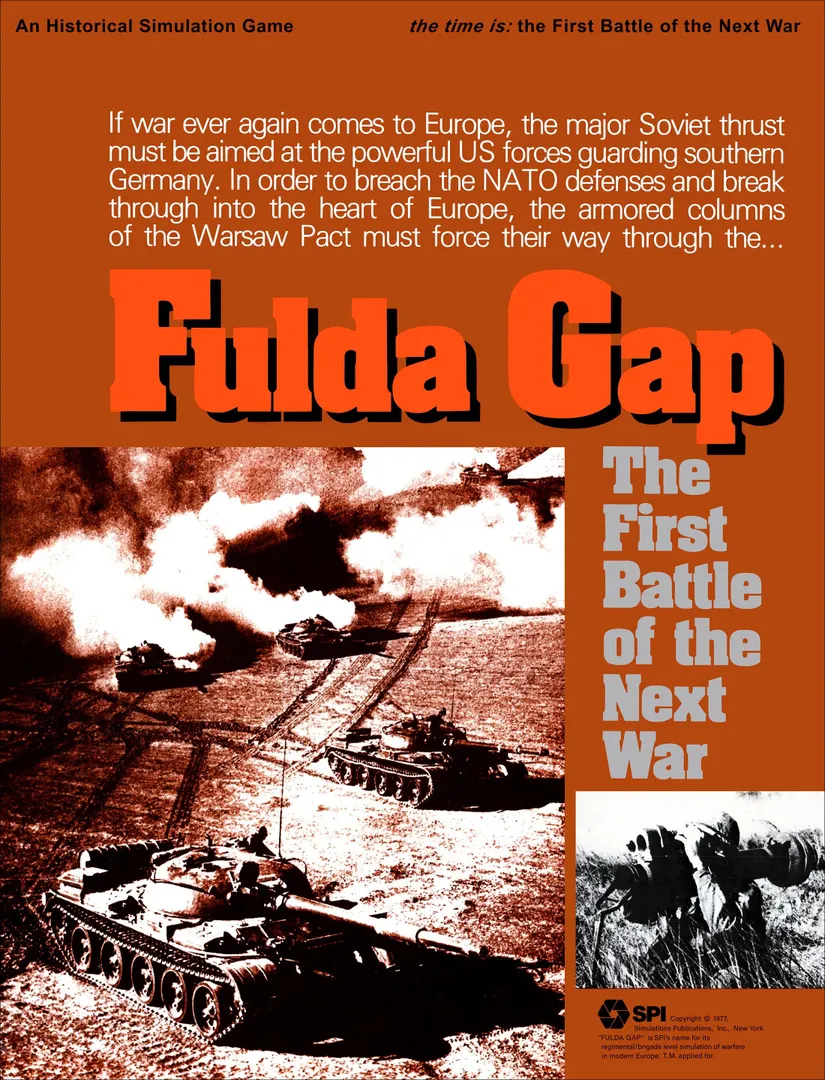
1977
Aiuto con le regole di Fulda Gap: The First Battle of the Next War
Spiegazioni chiare di turni, effetti delle carte e situazioni dubbie, con riferimenti alle fonti ufficiali e cronologia delle domande salvata.
Per 2 giocatori
Cosa vuoi sapere?
Le risposte vengono dal regolamento ufficiale, con la pagina da verificare.
Fulda Gap: The First Battle of the Next War è un gioco da tavolo pubblicato nel 1977 per 2 giocatori, con partite da 300 minuti e dai 12 anni in su. È stato ideato da Jim Dunnigan e le sue meccaniche principali sono Dice Rolling, Hexagon Grid e Simulation.
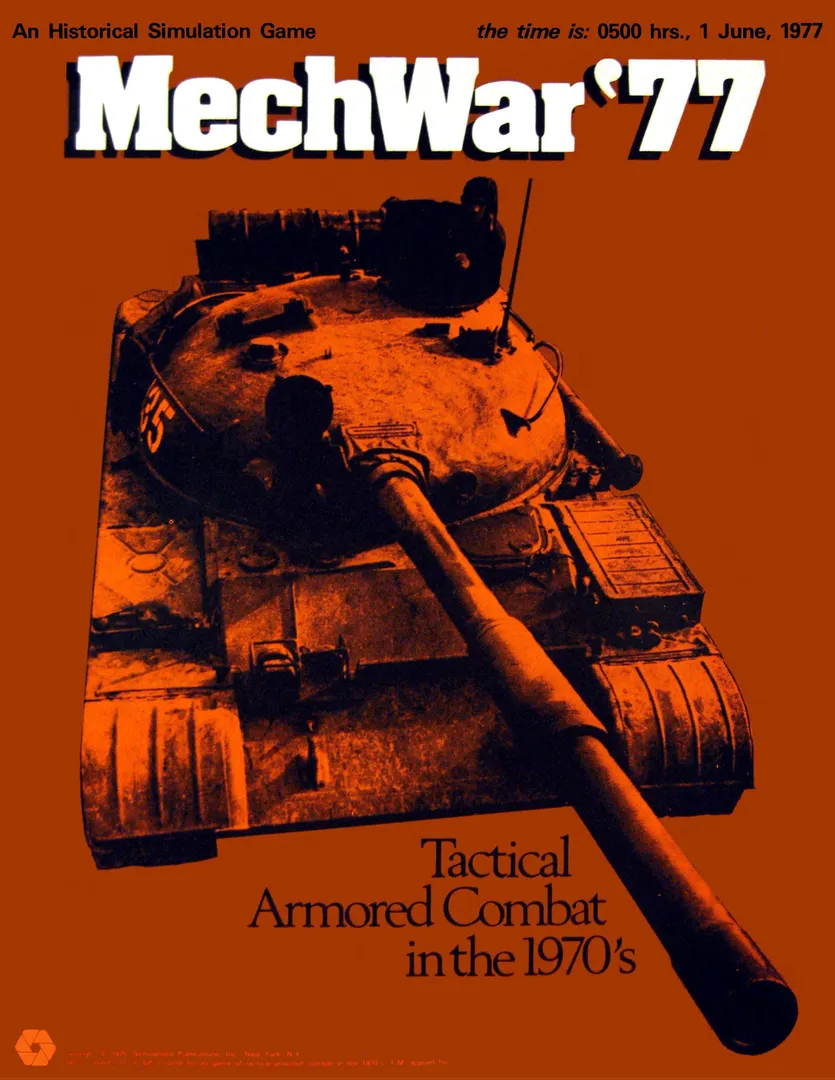





In inglese
"Fulda Gap: The First Battle of the Next War", is a regimental/brigade level wargame simulation of a possible Warsaw Pact assault into West Germany through the area of relatively open terrain centered around the town of Fulda sometime in the near future. Success would allow the Pact armies to drive a wedge between the NATO forces deployed to the north and south, seize several important logistic centers, and perhaps establish a bridgehead across the Rhine River. Of all the scenarios for a coming world war, none has received more attention than the possibility of a future NATO-Warsaw Pact confrontation. For 25 years, the armies of East and West have faced one another across a divided Germany, each knowing that it is in this region that the course of any war will be decided. There are two types of games: the Standard Game and the Advanced Game. Preferably, the Players should become familiar with the Standard Garne first and then increase the level of complexity until they find a rules mix with which they are most comfortable. The key to the game lies in the combination of a unique combat system and a new untried unit procedure. Basically, each ground combat unit consists of three "steps" and an untried status. As a unit enters combat, its actual strength— which may be greater or less than its normal face-value — must be determined. Combat results are expressed in terms of "retreat points" which must be expended either by retreating and/or by taking step losses. Since the owning player controls the path and method of retreat, there is a wide range of possible outcomes from each combat situation. Fulda Gap Shows the likely impact of a great number of factors on modern warfare. Supply and movement systems stress the importance of roads and autobahns; rules are provided to reflect the importance of divisional integrity, artillery, helicopters, airmobile units, replacements, Soviet doctrine, field fortifications, and disengagement. And players wishing to increase the complexity of the game may use an innovative air system. Extensive rules also cover chemical and nuclear warfare. Game Scale: Game Turn: 1 day Hex: 3.88 miles / 6.25 kilometers Units: Regiment & Brigade Game Inventory: One 22 x 34" full color map One dual-side printed countersheet (400 1/2" counters) One 16-page Fulda Gap rulebook One dual-side printed Turn Record/Reinforcement Track Two dual-side printed Charts & Tables folder (4 pages, Combat, Terrain tables, etc) Solitaire Playability: High Complexity Level: Medium Players: 2 or more Playing Time: 4-15 hours
Secondo il catalogo, Fulda Gap: The First Battle of the Next War supporta 2 giocatori. È il numero di giocatori indicato dall’editore, quindi il gioco è pensato esattamente per quel numero di partecipanti. Le varianti per gruppi di altre dimensioni, se esistono, sono descritte nel regolamento della tua edizione: consultalo prima di preparare una configurazione diversa.
La durata indicata per Fulda Gap: The First Battle of the Next War è di 300 minuti, la stima dell’editore per una partita completa. La durata effettiva dipende dal gruppo, dal numero di giocatori e dalla conoscenza delle regole: le prime partite durano di più, i gruppi esperti finiscono prima. Preparazione e spiegazione delle regole non sono comprese nella stima.
Il catalogo indica Fulda Gap: The First Battle of the Next War dai 12 anni in su. È la raccomandazione dell’editore e tiene conto della lettura richiesta, della complessità delle regole e dei componenti piccoli, non solo del tema. I più giovani spesso possono giocare con l’aiuto di un adulto: controlla l’età consigliata sulla tua edizione e l’esperienza del tuo gruppo con i giochi da tavolo.
Fulda Gap: The First Battle of the Next War ha un punteggio di complessità di 3,2 su 5 secondo i giocatori di BoardGameGeek, il che lo rende un gioco di media complessità. Il punteggio riflette quanta conoscenza delle regole, pianificazione e decisioni richiede una partita tipica. I giochi impegnativi richiedono una prima spiegazione più lunga, quindi conviene usare una guida di preparazione.
Fulda Gap: The First Battle of the Next War appartiene a queste categorie: Wargame e Modern Warfare. Le sue meccaniche principali sono Dice Rolling, Hexagon Grid e Simulation. Le categorie descrivono il tema e l’ambientazione di un gioco, mentre le meccaniche descrivono ciò che i giocatori fanno davvero nel proprio turno. Ogni meccanica porta a una pagina del catalogo con giochi simili.
Gli autori accreditati di Fulda Gap: The First Battle of the Next War sono: Jim Dunnigan. Questi crediti provengono dai dati pubblicati del gioco e indicano le persone responsabili della sua progettazione, non gli illustratori o gli editori. Le pagine degli autori su MeepleRules raccolgono altri titoli degli stessi autori, utili quando un gioco ti piace e ne cerchi di simili.
Il catalogo classifica Fulda Gap: The First Battle of the Next War come gioco base. Si gioca da solo con i componenti presenti nella scatola e non richiede altri titoli. Le espansioni, se esistono, aggiungono nuovo contenuto o nuove regole e sono elencate separatamente nel catalogo con un collegamento a questo gioco base.