

- Posizione BGG
- BGG #9829
- Valutazione BGG
- 8,0
Fatal Alliances: The Great War 1914-1918
- 2–6 giocatori
- 240–1200 min
- Complessità 4,1/5
- 2016
2018
Aiuto con le regole di Gallipoli, 1915: Churchill's Greatest Gamble
Spiegazioni chiare di turni, effetti delle carte e situazioni dubbie, con riferimenti alle fonti ufficiali e cronologia delle domande salvata.
Per 1 giocatore
Cosa vuoi sapere?
Le risposte vengono dal regolamento ufficiale, con la pagina da verificare.
Gallipoli, 1915: Churchill's Greatest Gamble è un gioco da tavolo pubblicato nel 2018 per 1–4 giocatori, con partite da 240 minuti e dai 16 anni in su. È stato ideato da Geoffrey Phipps e le sue meccaniche principali sono Dice Rolling, Grid Movement e Hexagon Grid.






In inglese
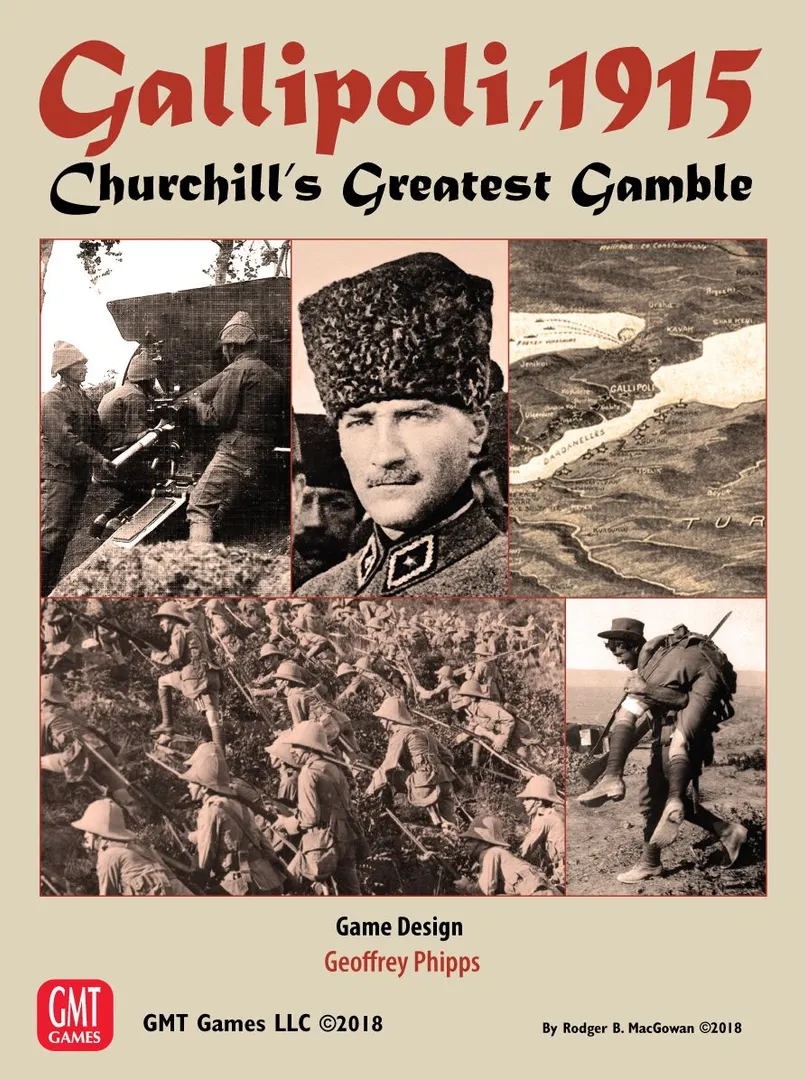
"Gallipoli, 1915: Churchill's Greatest Gamble", realistically covers the first three days of the campaign, a time of wild maneuver, of decisive attacks parried by the timely arrival of reinforcements, and the onset of trench warfare. Speed - but not reckless haste - is the key to success. On 25th April 1915, Winston Churchill, First Lord of the Admiralty, launched a hastily assembled force of British, Australian, New Zealand and French troops against the Turkish defenses on the Gallipoli peninsula. Their goal was to capture the forts that guarded the Dardanelles. With that achieved, the British and French Fleets would sail to Constantinople, topple the Ottoman government, and open up a supply line to Russia. However, defending the beaches was an equal number of Turkish divisions, hardened in the recent Balkan Wars, led by well-trained Turkish officers, supported by advisors from the German General Staff. An hour before dawn, in complete silence, the Anzacs rowed ashore at Ari Burnu, a place later to be famous as Anzac Cove. The Royal Navy had landed them in the wrong place! Huge dirt cliffs and scrub-choked washouts confronted them, rather than a beach and low dunes. Nevertheless inland they went, overrunning the Turkish pickets, only to become hopelessly confused by the night landing, jigsaw terrain, and inexperience. Several miles inland, a gifted Turkish Officer, Mustafa Kemal, was reviewing his regiment after night maneuvers above Ari Burnu. Kemal's quick and furious counter-attack saved the day for the Ottomans, and set him on the path to become the founder of modern Turkey. Further south, at Cape Helles, the Lancashire Fusiliers won six Victoria Crosses - before breakfast - as they ripped through the barbed wire on the beach. The invaders never reached even their first day's objectives, although the Turks only avoided defeat by a hair's breadth. With a different plan, they might have thrown the invaders back into the sea. The map scale is 400 metres per hex and covers the entire peninsula from north of Anzac Cove to Cape Helles, based on the 1922 British Ordnance Survey (i.e. from Anzac to Helles, including all the forts in between). Players can choose to land at the historical beaches, or create their own plans. This wargame system emphasizes command and control. Players command by Brigade and Regiment. To be successful, a player must plan for the eventual exhaustion of their troops, rotating them out of line to rest and recover stragglers. The result is an accurate modeling of the tempo of these battles. Infantry combat is ranged rifle and MG fire, culminating in close assault. Artillery is powerful but ultimately limited. Shrapnel from the standard field guns is deadly against troops in the open, but only the rare howitzers firing high-angle HE can deal with trenches. Daylight turns are two hours, night turns are four hours.
Secondo il catalogo, Gallipoli, 1915: Churchill's Greatest Gamble supporta da 1 a 4 giocatori. L’intervallo corrisponde al numero di giocatori indicato dall’editore, quindi il gioco si può preparare per qualsiasi gruppo entro quei limiti. Preparazione, alcune regole e punteggio possono comunque variare in base al numero di giocatori: controlla la configurazione esatta nel regolamento della tua edizione.
La durata indicata per Gallipoli, 1915: Churchill's Greatest Gamble è di 240 minuti, la stima dell’editore per una partita completa. La durata effettiva dipende dal gruppo, dal numero di giocatori e dalla conoscenza delle regole: le prime partite durano di più, i gruppi esperti finiscono prima. Preparazione e spiegazione delle regole non sono comprese nella stima.
Il catalogo indica Gallipoli, 1915: Churchill's Greatest Gamble dai 16 anni in su. È la raccomandazione dell’editore e tiene conto della lettura richiesta, della complessità delle regole e dei componenti piccoli, non solo del tema. I più giovani spesso possono giocare con l’aiuto di un adulto: controlla l’età consigliata sulla tua edizione e l’esperienza del tuo gruppo con i giochi da tavolo.
Gallipoli, 1915: Churchill's Greatest Gamble ha un punteggio di complessità di 4,3 su 5 secondo i giocatori di BoardGameGeek, il che lo rende un gioco impegnativo. Il punteggio riflette quanta conoscenza delle regole, pianificazione e decisioni richiede una partita tipica. I giochi impegnativi richiedono una prima spiegazione più lunga, quindi conviene usare una guida di preparazione.
Gallipoli, 1915: Churchill's Greatest Gamble appartiene a queste categorie: Wargame e World War I. Le sue meccaniche principali sono Dice Rolling, Grid Movement e Hexagon Grid. Le categorie descrivono il tema e l’ambientazione di un gioco, mentre le meccaniche descrivono ciò che i giocatori fanno davvero nel proprio turno. Ogni meccanica porta a una pagina del catalogo con giochi simili.
Gli autori accreditati di Gallipoli, 1915: Churchill's Greatest Gamble sono: Geoffrey Phipps. Questi crediti provengono dai dati pubblicati del gioco e indicano le persone responsabili della sua progettazione, non gli illustratori o gli editori. Le pagine degli autori su MeepleRules raccolgono altri titoli degli stessi autori, utili quando un gioco ti piace e ne cerchi di simili.
Il catalogo classifica Gallipoli, 1915: Churchill's Greatest Gamble come gioco base. Si gioca da solo con i componenti presenti nella scatola e non richiede altri titoli. Le espansioni, se esistono, aggiungono nuovo contenuto o nuove regole e sono elencate separatamente nel catalogo con un collegamento a questo gioco base.