

- Posizione BGG
- BGG #9028
- Valutazione BGG
- 7,2
Great War at Sea: Jutland
- 2 giocatori
- 30–120 min
- Complessità 3,1/5
- 2006
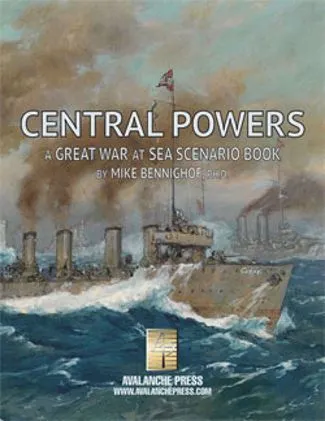
Aiuto con le regole di Great War at Sea: Central Powers
Spiegazioni chiare di turni, effetti delle carte e situazioni dubbie, con riferimenti alle fonti ufficiali e cronologia delle domande salvata.
Cosa vuoi sapere?
Le risposte vengono dal regolamento ufficiale, con la pagina da verificare.
Great War at Sea: Central Powers è un’espansione di Great War at Sea: Dreadnoughts pubblicata nel 2015 per 1–2 giocatori, con partite da 30 a 180 minuti e dai 12 anni in su. È stato ideato da Michael Bennighof e le sue meccaniche principali sono Dice Rolling, Secret Unit Deployment e Hexagon Grid.








In inglese
From the publisher's website: In Great War at Sea: Triple Alliance, we explored the notion of Italy remaining true to her alliance partners, Germany and Austria-Hungary, during the outbreak of the First World War in 1914. Staff officers from all three fleets prepared detailed operational plans, yet when war came in August 1914 Italy refused to join her Alliance partners and those plans would never be used. The joint staffs foresaw an aggressive Triple Alliance, one attemtping to seize control of the Mediterranean from the British and French. Our book Triple Alliance looked at the first year of such a naval war in a set of 43 new scenarios for our Great War at Sea: Mediterranean boxed game. Central Powers picks up that story in September 1915, with Italy, Austria-Hungary and Germany still struggling against Britain and France as new warships join the fleets of both sides. The fleets are almost evenly matched, with a slight Allied superiority in numbers matched by the Central Powers' central position. In this war, the fighting on the Mediterranean Sea has been just as bloody and destructive as that on the land fronts. Central Powers is a book supplement for the Great War at Sea series based on this naval war that never happened, but was probably more likely to have occurred than the actual events. It is not a complete game; ownership of our Mediterranean and Jutland boxed games and Triple Alliance, Dreadnoughts and Zeppelins supplements is required to enjoy all of the scenarios. The book includes 90 new playing pieces. The French receive their powerful Normandie- and Lyons-class super-dreadnoughts, and a pair of battle cruisers as well. And there's a quartet of French light cruisers proposed before the war but never built, that would have been very useful in fleet actions. With the Royal Navy unwilling to detach too much strength from the Grand Fleet facing the Germans across the North Sea, it falls on the other Allies to bolster this very active naval front. The Americans enter the Mediterranean naval war with their oldest dreadnoughts and newest pre-dreadnoughts, plus a large squadron of the armored cruisers. The Japanese are present as well with a squadron of battleships and one of cruisers. Plus there are four re-armed Austrian light cruisers (there have to be Austrians) and an Italian seaplane carrier (with seaplanes). The forty-two (42) scenarios continue the Triple Alliance story line through to the end of the Great War; since the book shares the special rules of Triple Alliance, we have more room for the story! It's a unique project, telling the alternative history of the entire Triple Alliance Mediterranean naval war in a series of game scenarios.
Secondo il catalogo, Great War at Sea: Central Powers supporta da 1 a 2 giocatori. L’intervallo corrisponde al numero di giocatori indicato dall’editore, quindi il gioco si può preparare per qualsiasi gruppo entro quei limiti. Preparazione, alcune regole e punteggio possono comunque variare in base al numero di giocatori: controlla la configurazione esatta nel regolamento della tua edizione.
La durata indicata per Great War at Sea: Central Powers è di 30–180 minuti, la stima dell’editore per una partita completa. La durata effettiva dipende dal gruppo, dal numero di giocatori e dalla conoscenza delle regole: le prime partite durano di più, i gruppi esperti finiscono prima. Preparazione e spiegazione delle regole non sono comprese nella stima.
Il catalogo indica Great War at Sea: Central Powers dai 12 anni in su. È la raccomandazione dell’editore e tiene conto della lettura richiesta, della complessità delle regole e dei componenti piccoli, non solo del tema. I più giovani spesso possono giocare con l’aiuto di un adulto: controlla l’età consigliata sulla tua edizione e l’esperienza del tuo gruppo con i giochi da tavolo.
Great War at Sea: Central Powers ha un punteggio di complessità di 3,0 su 5 secondo i giocatori di BoardGameGeek, il che lo rende un gioco di media complessità. Il punteggio riflette quanta conoscenza delle regole, pianificazione e decisioni richiede una partita tipica. I giochi impegnativi richiedono una prima spiegazione più lunga, quindi conviene usare una guida di preparazione.
Great War at Sea: Central Powers appartiene a queste categorie: Wargame, Nautical e Expansion for Base-game. Le sue meccaniche principali sono Dice Rolling, Secret Unit Deployment e Hexagon Grid. Le categorie descrivono il tema e l’ambientazione di un gioco, mentre le meccaniche descrivono ciò che i giocatori fanno davvero nel proprio turno. Ogni meccanica porta a una pagina del catalogo con giochi simili.
Gli autori accreditati di Great War at Sea: Central Powers sono: Michael Bennighof. Questi crediti provengono dai dati pubblicati del gioco e indicano le persone responsabili della sua progettazione, non gli illustratori o gli editori. Le pagine degli autori su MeepleRules raccolgono altri titoli degli stessi autori, utili quando un gioco ti piace e ne cerchi di simili.
Il catalogo classifica Great War at Sea: Central Powers come espansione di Great War at Sea: Dreadnoughts. Le espansioni aggiungono contenuti, regole o scenari al gioco base e di solito non si possono giocare da sole, quindi per usarla ti serve Great War at Sea: Dreadnoughts. Controlla che la tua edizione di Great War at Sea: Dreadnoughts sia compatibile, perché alcune espansioni sono state riviste tra un’edizione e l’altra.