
- Posizione BGG
- BGG #30.763
- Valutazione BGG
- 4,6
Zola
- 2 giocatori
- 20–60 min
- Complessità 1,8/5
- 2021

2003
Aiuto con le regole di Impasse
Spiegazioni chiare di turni, effetti delle carte e situazioni dubbie, con riferimenti alle fonti ufficiali e cronologia delle domande salvata.
Per 2 giocatori
Cosa vuoi sapere?
Le risposte vengono dal regolamento ufficiale, con la pagina da verificare.
Impasse è un gioco da tavolo pubblicato nel 2003 per 2 giocatori, con partite da 20 a 60 minuti e dai 5 anni in su. È stato ideato da Mark Steere e le sue meccaniche principali sono Race, Square Grid e Grid Movement.




In inglese
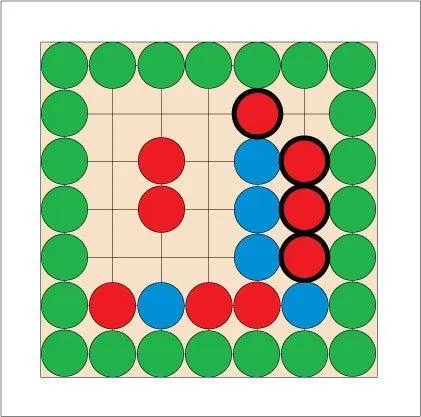
Impasse is a board game which is played with a Checkers set. More than just “new rules for an old game,” Impasse is a unique, robust alternative to Checkers. Draws and ties cannot occur in Impasse. The first player to remove all of his checkers from the board wins. Basic moves Players take turns moving their own checkers. There are three types of basic moves in Impasse: the single slide, the double slide, and the transpose. If you have any basic moves available at the outset of your turn, you must make one (and only one). You cannot pass on your turn. You will never have occasion to handle your opponent’s checkers. A single checker can be slid diagonally forward (away from the owner), in a straight line along any number of consecutive, unoccupied squares. A double is a stack of two like-colored checkers. Doubles can be slid diagonally backward in a straight line along any number of consecutive, unoccupied squares. If you have a single adjacent to one of your doubles, and in a nearer row than the double, you can take the top checker of that double and transfer it onto the single. A transpose can only be made backward (toward the owner), not forward. Crown When you come to have a single in your furthest row, by way of a slide, a transpose, or the impasse rule (see below), you must immediately “crown” that single with another one of your on-board singles while it is still your turn. If you don’t have another on-board single, simply leave your lone single in your furthest row for the time being. If you come to have another on-board single during a later turn (via the bear off rule or impasse rule [see below]), and if you still have a single in your furthest row, you must immediately stack your new single onto your furthest row single while it is still your turn. Bear off When you come to have a double in your nearest row, by way of a slide or a transpose, you must immediately “bear off” or remove the top checker of that double from the board while it is still your turn. Once removed from the board (via bear off or impasse), a checker is not reintroduced into play. Impasse If you have no basic moves available at the outset of your turn you are at an “impasse,” and you must remove exactly one of your checkers from the board - either a single or the top checker of a double. You cannot make any of the three basic move types during your turn, following removal of said checker - although you may be required to perform a crown while it it still your turn. If you come to have two singles in your furthest row (the second single via the impasse rule), you must immediately choose one of the two singles and stack it onto the other while it is still your turn. The winner’s last checker is removed via the impasse rule.
Secondo il catalogo, Impasse supporta 2 giocatori. È il numero di giocatori indicato dall’editore, quindi il gioco è pensato esattamente per quel numero di partecipanti. Le varianti per gruppi di altre dimensioni, se esistono, sono descritte nel regolamento della tua edizione: consultalo prima di preparare una configurazione diversa.
La durata indicata per Impasse è di 20–60 minuti, la stima dell’editore per una partita completa. La durata effettiva dipende dal gruppo, dal numero di giocatori e dalla conoscenza delle regole: le prime partite durano di più, i gruppi esperti finiscono prima. Preparazione e spiegazione delle regole non sono comprese nella stima.
Il catalogo indica Impasse dai 5 anni in su. È la raccomandazione dell’editore e tiene conto della lettura richiesta, della complessità delle regole e dei componenti piccoli, non solo del tema. I più giovani spesso possono giocare con l’aiuto di un adulto: controlla l’età consigliata sulla tua edizione e l’esperienza del tuo gruppo con i giochi da tavolo.
Impasse ha un punteggio di complessità di 1,6 su 5 secondo i giocatori di BoardGameGeek, il che lo rende un gioco leggero. Il punteggio riflette quanta conoscenza delle regole, pianificazione e decisioni richiede una partita tipica. I giochi impegnativi richiedono una prima spiegazione più lunga, quindi conviene usare una guida di preparazione.
Impasse appartiene a queste categorie: Abstract Strategy. Le sue meccaniche principali sono Race, Square Grid e Grid Movement. Le categorie descrivono il tema e l’ambientazione di un gioco, mentre le meccaniche descrivono ciò che i giocatori fanno davvero nel proprio turno. Ogni meccanica porta a una pagina del catalogo con giochi simili.
Gli autori accreditati di Impasse sono: Mark Steere. Questi crediti provengono dai dati pubblicati del gioco e indicano le persone responsabili della sua progettazione, non gli illustratori o gli editori. Le pagine degli autori su MeepleRules raccolgono altri titoli degli stessi autori, utili quando un gioco ti piace e ne cerchi di simili.
Il catalogo classifica Impasse come gioco base. Si gioca da solo con i componenti presenti nella scatola e non richiede altri titoli. Le espansioni, se esistono, aggiungono nuovo contenuto o nuove regole e sono elencate separatamente nel catalogo con un collegamento a questo gioco base.